
 Worksheets
Unit 2: Land Based Empires Quiz
Total questions: 50
Worksheet time: 33mins
Which was NOT a similarity amongst the Ottoman and Mughal Empires
Use of gunpowder to advance their empires and military
Islam as the official state religion
Both empires taxed non Muslims
Both empires were, for the most part, religiously tolerant

What religion did the Ottoman Empire help spread throughout their empire?
Buddhism
Christianity
Shintoism
Islam
What city did the Ottoman Empire conquer in 1453 putting an end to the Byzantium Empire?
Rome
Constantinople
Athens
Vienna
____ were an elite guard of Ottoman soldiers.
sinans
ulema
pashas
janissaries
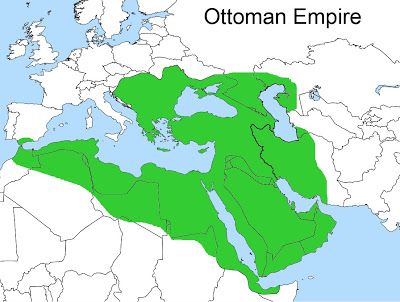
Which continents did the Ottoman Empire have some control over? Click all that apply.
Europe
Asia
Africa
North America
South America
Which technology, first developed by the Chinese, enabled the Ottoman Empire to expand militarily into western Asia, Europe, and northern Africa?
woodblock printing
wheelbarrow
gunpowder
magnetic compass
Suleman was known to westerners as the Magnificent, but to many others he was known as the
Gravedigger
Enlightened
Lawgiver
Peace Maker
Due to its diverse population, the Ottomans were known for
Forcing its subjects to convert to Islam
Creating harsh laws against Christians and Jews
Allowing many non-muslims into the government
Allowing religious practice for all, at a price
Which of the following was a system in which the Ottomans took Christian boys, converted them to Islam, and had them work in the military and government?
Millet System
Sultan System
Vizier System
Devshirme System

Who was the founder of the Mughal Empire ?
Babur
Akbar
Humayun
Jahangir
The greatest mughal emperor was __________---
Jahangir
Akbar
Shah Alam
None
Akbar was interested in religion and social customs of different people
True
False
The Mughal Empire was situated in what modern nation?
Iran
India
Saudi Arabia
Turkey
Akbar treated people of all religions with equal respect
True
False
Akbar the Great improved his empire in all these areas EXCEPT:
tax system
religious tolerance
economic improvements
world wide exploration
This ruler was a religious conservative who did not allow freedom of religion.
Akbar
Aurangzeb
Shah Jahan
Babur
Eventually, which major European country will colonize in India
Germany
Great Britain
Spain
Italy
Definition Match: Shogun
A warlord which governed an area of land on behalf of the emperor
Dominant warlord who held political and martial power in Japan
The military government of Japan
A government based on a strict social hierarchy and land for service
Definition Match: Feudalism
A warlord which governed an area of land on behalf of the emperor
Dominant warlord who held political and martial power in Japan
The military government of Japan
A government based on a strict social hierarchy and land for service
During the Edo (Tokugawa) period, which position below held the most power on the social hierarchy?
Shogun
Daimyo
Emperor
Samurai

Hereditary ruler with little real power
Samurai
Daimyo
Shogun
Emperor

Appointed by the Emperor as a military ruler
Bakufu
Daimyo
Shogun
Samurai

Wealthy land owner, also the head of a clan group
Bakufu
Samurai
Shogun
Daimyo
Who was at the bottom of to social hierarchy in Shogunate Japan?
Peasant farmers
Merchants
Artisans
Ronin


The Ming Dynasty built up the Great Wall in order to keep out who?
The Huns
The Mongols
The Ottomans
The Japanese
Which term describes the ability to rule given to each Chinese dynasty?
Neo-Confucianism
Bureaucracy
The Mandate of Heaven
The 5 Great Relationships
Why were European traders often frustrated by the Chinese?
China did not have anything interesting to trade.
The prices of China's goods were very high.
They were forced to practice Chinese religions.
China's rulers would not allow Europeans to trade in many cities.
The Ming dynasty was successful politically in part because
its officials had to take civil service exams to be appointed.
the blue-and-white porcelain vases were very popular.
a series of naval voyages sent 62 ships to the eastern coast of Africa to bring back exotic items.
manufactured goods were produced in workshops and factories in higher numbers than ever.
Who ruled the Qing dynasty?
the Ming
the Han
the Manchu
the Japanese
The Yong Le Emperor sent Zheng He on his voyages to
generate new trade and wealth for China.
help Zheng he become wealthy and powerful.
find new territories to conquer.
show the world the power of Chinese civilization.
What is contribution from the Ancient Chinese?
wheelbarrow
fireworks
gunpowder
All of them
Paper
What did Ming/Qing China and Tokugawa Japan have in common?
Both were Muslim empires
All approved and wanted Western culture and trade with Europe
Both used gunpowder to advance their empires
They all stayed isolated to keep European influences and trade out
Which is NOT an important Chinese invention
Gunpowder
The Printer/Moveable Type
The Compass
Sailboat

