
 Worksheets
The work of the sea
Total questions: 100
Worksheet time: 2hrs 6mins
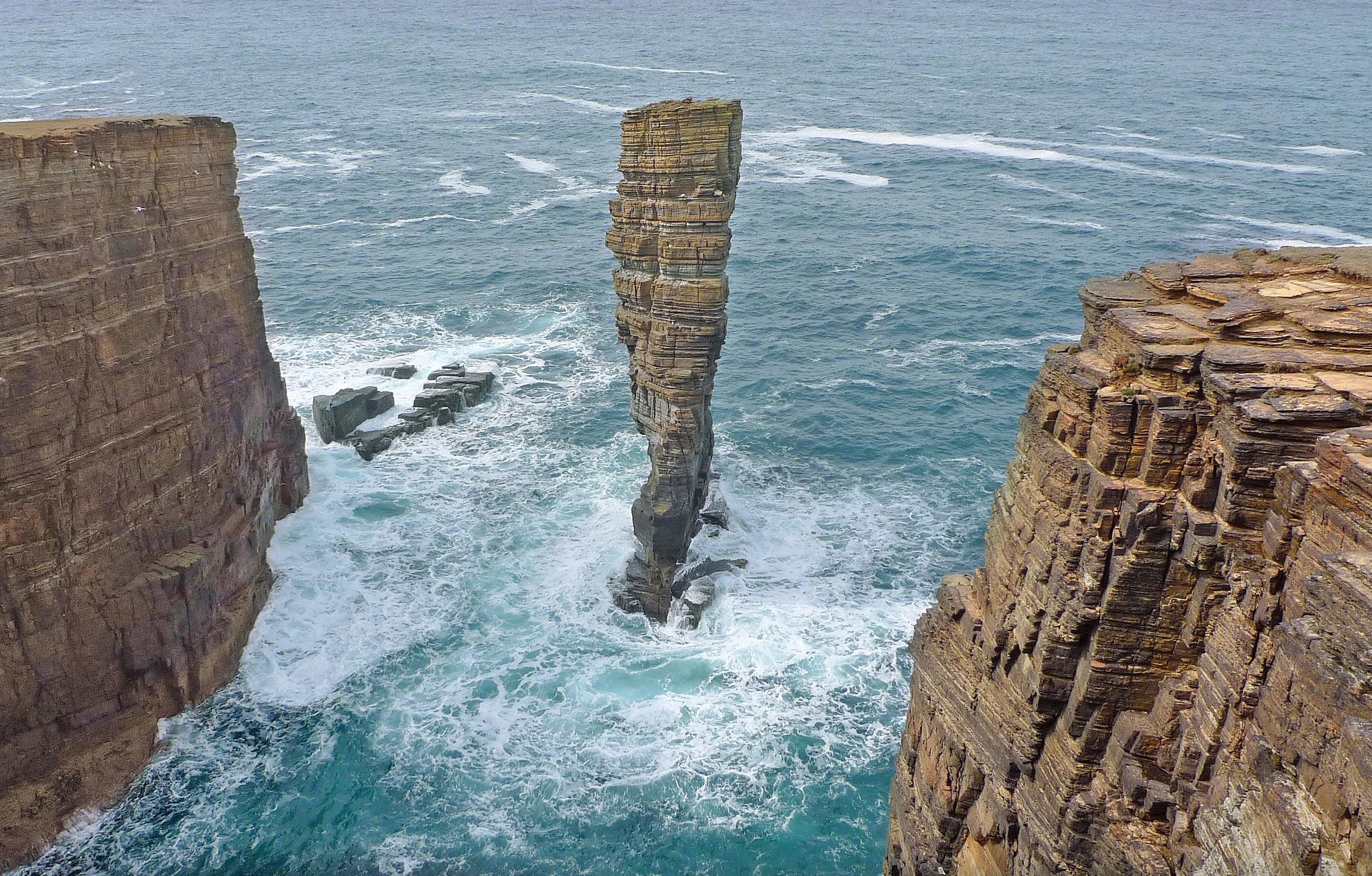
Identify the landform type.
Sea Stack
Sea Stump
Arch
Bay


____________ happens when wave energy is low.
Erosion
Transportation
Deposition
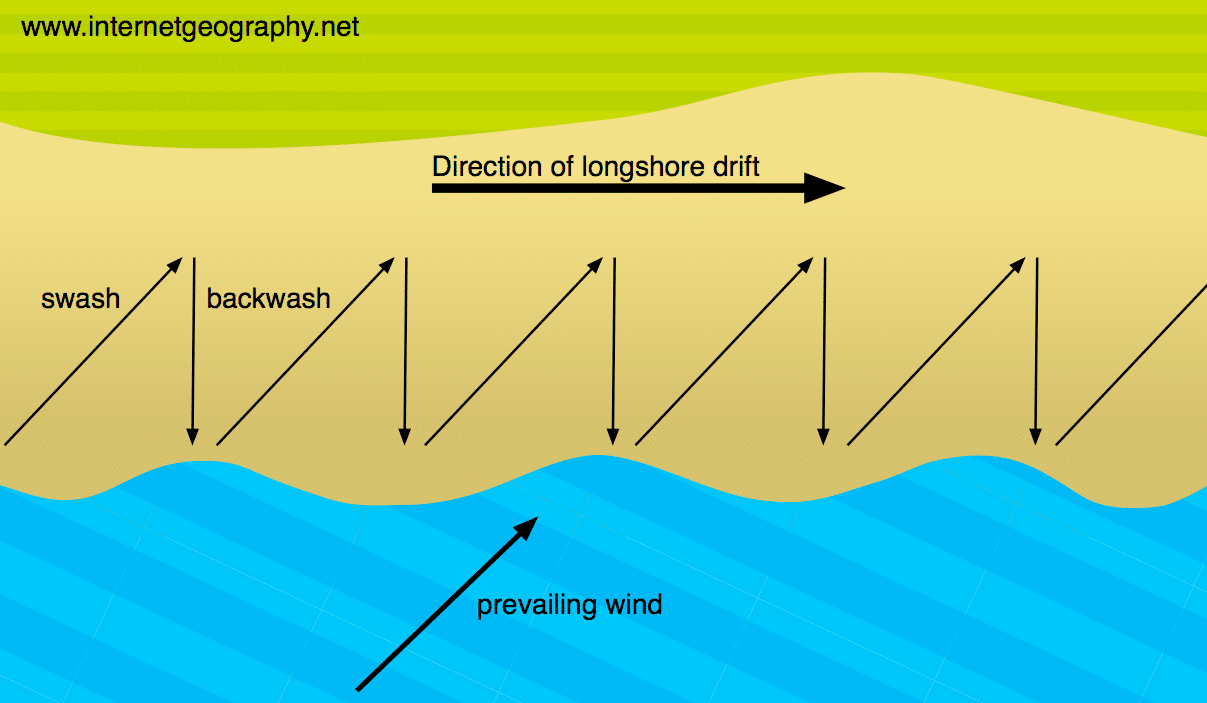
The diagram shows the process of longshore drift. Why do the wave swashes approach the beach at an angle?
Gravity
Wind direction
The moon
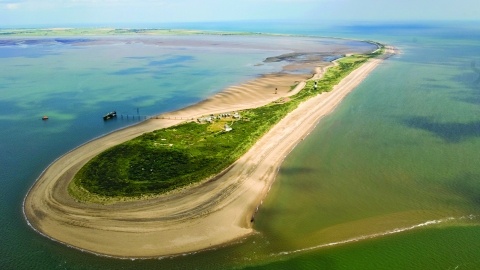
This is an example of a (a) .
What is coastal deposition?
When the sea wears away the land
When the sea moves sand or pebbles from one place to another
When the sea drops sand or pebbles onto the land
When the government builds defences to protect the land
Which 3 of these landforms are created by coastal deposition?
Bars
Stacks
Spits
Wave-cut platforms
Beaches
A _______ is a long, narrow finger of sand or shingle jutting out into the sea from the land.
Beach
Sand dune
Spit
Bar
When waves drop sand on the beach, it is...
Weathering
Erosion
Deposition
What process(es) is responsible for creating an arch?
Weathering and erosion
Deposition
Water
Erosion and deposition
Common occupation of the people living on the coastal plains is
Desert Safari
Fishing

Select the odd one out
Sand dune
Spit
Tombolo
Wave cut platform

Name the erosional coastal landform
(a)
Select the odd one out
Traction
Saltation
Abrasion
Suspension
Constructive waves are low in height, have a long wave length and a stronger backwash
True
False

Identify the coastal landform
Tombolo
Bar
Spit
Sand dune

_______ can either form a beach by depositing sand or destroy a beach by eroding the sand.
waves
currents
tides
all of these

Which process change Earth's surface.
Erosion
Deposition
all above

Sea caves are coastal landform made by
Erosion
Deposition
Waves are generated by
wind blowing over water
sun blowing on the sea
tidal movements
rotation of the Earth
A _______ is a long, narrow finger of sand or shingle jutting out into the sea from the land.
Beach
Sand dune
Spit
Bar
A process such as longshore drift is not a landform.
True
False
When waves drop sand on the beach, it is...
Weathering
Erosion
Deposition
What is responsible for creating sand dunes?
Water
Wind
Ice
What is called when sand moves by jumps and bounces?
Saltation
Sediment
Erosion
Slip face
What is the colour change in a sand dune succession?
green, grey, brown
yellow, green, grey
yellow, green, brown
yellow, grey, brown
What process(es) is responsible for creating an arch?
Weathering and erosion
Deposition
Water
Erosion and deposition
A ________ is a place where the land meets the ocean and sea.
bay
coast
lagoon

Identify this coastal landform.
sea
lagoon
bay
shore
Which of the following features is NOT formed by wave erosion?
cave
cliff
spit
stack
Select the response which lists the features in the order that they are formed.
arch , cave , stack
cave , arch , stack
cave , stack , arch
stack , arch , cave
Why might a bay form?
On a discordant coastline the softer rock will be rapidly eroded away, leaving the harder rock to form headlands
On a concordant coastline weaknesses allow the water to work its way in and eventually erode a large area
A collapsed volcanic crater is flooded leaving a sheltered area
Former river valleys are flooded and form ports that gradually turn into bays

How are sand dunes formed?
The sea pushes the sand into hills
The wind blows the sand into hills
They are man made
Rivers push the sand into hills
Why does the sea deposit sediment?
It runs out of coastline
It loses energy
There is a change in rock type
Which of the below transportation processes describes traction?
Minerals dissolve in the water
Large boulders are rolled along the seabed by waves
Sand sized particles bounce along the seabed in a ‘leap frog’ movement
Small particles are carried along within the water flow
What causes waves?
Magnetic pull of the Earth
Gravity
Wind
Rocks
What are the characteristics of a constructive wave?
Weak swash and strong backwash
Strong swash and weak backwash
Weak swash and weak backwash
Strong swash and strong backwash
Which type of wave removes sediment from a beach?
Constructive
Destructive

Erosion has created the following land form
Runnel
Spit
Arch
Headland
Attrition describes the process of
When a hard rock grinds a softer rock into sand particles
Fish grinding rocks with their teeth
Sand being moved along the coastline
Wave energy rubbing rocks against each other

These rocks are likely to be a result of..
solution
attrition
abrasion
hydraulic action
Constructive waves have strong backwash and weak swash
True
False

What is this erosional feature?
Canyon
Lagoon
Bay
Wave cut platform

Identify the landform in this photo
Sea cave
Sea Spit
Sand Bar
Tombolo
Which of the following geographical term means the wind which predominantly blows over a period of time?
Wind speed
Monsoon
Prevailing wind
Fetch
Which of the following is NOT a type of coastal erosional processes?
Solution
Saltation
Hydraulic Action
Attrition
The strength of the wave is dependent on ... (click all suitable options.)
wave direction
wind speed
fetch
wind duration
The process when rock particles knock against the base of the cliff causing parts of the cliff to breakdown.
Attrition
Solution
Hydraulic Action
Abrasion
Air is trapped the cracks of cliffs by the force incoming waves. The pressure buildup causes the joints to weaken and rocks to shatter.
Abrasion
Attrition
Hydraulic Action
Solution
Define the term "erosion"
The destruction of a coastline
The build up of minerals and sand
The wearing away and breakdown of rocks and material
Forming landforms
During longshore drift the swash is pushed up the beach by
the fetch
the waves
the prevailing wind
gravity

Groynes are used to..
Stop people coming on to the beach
Stop erosion
Stop the movement of material by longshore drift
To stop people leaving their boats there
Beaches are
places where sediment is stable and unchanging.
permanent coastal features.
places along the coast where sediment is reworked and deposited.
always composed of sand.

Bays are created by:
Deposition
Erosion
Weathering
Transportation

Atoll
Isthmus
Island
Beach

Name this erosional coastal landform
Cliff
Stump
Cave
Bay
Headland
Select all erosional landforms that are typically formed within a headland
Cliff
Blowhole
Wavecut platform
Cave
Arch

Name this erosional coastal landform
Geo
Blowhole
Headland
Cliff
What differentiates between a stack and a stump?
A stump is shorter than a stack
A stump can be covered at high tide
A stack is made of more resistant rock
A stack was never a stump, but a stump was always a stack

Name this erosional coastal landform
Bay
Stump
Headland
Cliff
Wavecut platform
local residents
environmental groups
local councils
national governments
tourist boards
Which of these processes is not a mass movement?
Slump
Abrasion
Rockfall
Slide
Which of the following is not a characteristic of a destructive wave?
Strong backwash
Low frequency
Steep wave
Cause erosion
Which terms would you associate with the process longshore drift? Tick all that apply.
Prevailing wind
Swash
Backwash
Abrasion
Which of the following are hard engineering coastal management strategies? Tick all that apply.
Rock armour
Beach nourishment
Groynes
Sea wall
Dune regeneration
Which of these are types of erosion?
Abrasion
Attrition
Saltation
Hydraulic action
Corrosion or solution

With a ................................... wave, the swash is stronger than the backwash.
destructive
constructive
swash
backwash

With a ................................... wave, the backwash is stronger than the swash.
destructive
constructive
swash
backwash
Waves are generated by
wind blowing over water
sun blowing on the sea
tidal movements
rotation of the Earth

