
 Worksheets
Unit 2b - Cell Transport & Osmosis & Enzymes
Total questions: 236
Worksheet time: 3hrs 4mins
A person would never have pure water put into their veins in a hospital because their cells would...
Shrink/Dehydrate
Expand
Stay the same
If there is 5 percent water inside a cell and 5 percent water outside a cell
more water will move inside the cell
more water will move outside the cell
There will be no net movement of water, it moves into and out of the cell at the same time.


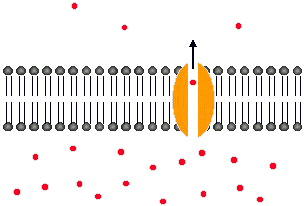
Need help from channel proteins. No energy required.

Uses energy.

Doesn't need energy
Which process occurs by osmosis?
A. plant roots absorbing mineral ions from the soil
B. plant roots absorbing water from the soil
C. the small intestine absorbing fatty acids into the blood
D. the small intestine absorbing glucose into the blood


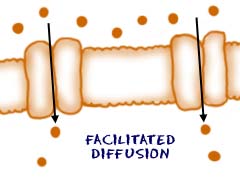


when some molecules can cross the membrane while others cannot.

What are the two types of cell transport?
Passive and Active
Active and Facilitated
Passive and Facilitated
None of the above

In passive transport, substances move across the cell membrane ________ the concentration gradient
AGAINST
ALONG
WITH
BETWEEN
Which example describes diffusion?
Water moving across a semi-permeable membrane
Baking cookies and smelling them throughout the house
Ions moving through an ion channel
All of the above

What macromolecule is embedded into the lipid bilayer and helps to transport molecules?
Carbohydrate
Lipid
Protein
Nucleic Acid

Which describes a hypotonic environment?
Too much water in the cell will cause the cell to burst - the percentage of water is higher outside the cell than inside the cell
Too little water in the cell will cause the cell to shrink - the percentage of water is lower outside the cell than inside the cell
Concentrations of water are equal inside and outside the cell

Which describes a hypertonic environment?
Too much water in the cell will cause the cell to burst - the percentage of water is higher outside the cell than inside the cell
Too little water in the cell will cause the cell to shrink - the percentage of water is lower outside the cell than inside the cell
Concentrations of water are equal inside and outside the cell

Which describes an isotonic environment?
Too much water in the cell will cause the cell to burst - the percentage of water is higher outside the cell than inside the cell
Too little water in the cell will cause the cell to shrink - the percentage of water is lower outside the cell than inside the cell
Concentrations of water are equal inside and outside the cell

The movement of particles from an area of high concentration to an area of low concentration
active transport
osmosis
diffusion
random movement

When material passes into and out of a cell at equal rates and there is no difference in concentration between the inside and outside of the cell, the cell is in a state of...
dynamic equilibrium
diffusion
osmosis
active transport
If a cell is placed in an environment with MORE oxygen OUTSIDE the cell than inside, the cell will...
gain oxygen
lose oxygen
gain water
lose water

The movement of materials that requires energy is called...
active transport
passive transport
massive transport
proactive transport

The movement of materials from an area of low concentration to an area of high concentration would require...
glucose
energy (ATP)
fish
chips

A process in which cells surround and engulf substances that are TOO BIG to enter the cell is known as...
Pinocytosis
Phagocytosis
Endocytosis
Receptor-mediated

When a cell forms a vesicle around unwanted particles and expels it OUT of the cell.
Pinocytosis
Endocytosis
Receptor-mediated
Exocytosis
When a cell forms a vesicle around unwanted particles and expels it OUT of the cell.
Pinocytosis
Endocytosis
Receptor-mediated
Exocytosis


Why are diffusion and osmosis important to cells?
It allows them to take in materials/substances without using energy.
It allows them to reproduce.
It allows them to absorb sunlight.
It allows cells to use all energy.

When the smell of perfume spreads throughout a room, it is an example of ....
passive transport
diffusion
active transport
osmosis
to pump a solute across a membrane against its gradient requires work; the cell must expend energy
active transport
passive transport
osmosis
gated channels
Which statement is correct? (choose 2)
In passive transport; particles move against the concentration gradient
In passive transport; particles move up the concentration gradient
In passive transport; particles move with the concentration gradient
In passive transport; particles move down the concentration gradient


Which choice correctly identifies the process responsible for the movement of each type of molecule represented in the diagram?
Oxygen = active transport
Oxygen = diffusion
Oxygen = active transport
Oxygen = diffusion


Which CELL contains MORE particles than are found in the surrounding solution?
Left
Center
Right


Examine the diagram and determine, based on the concentrations of salt, if salt will move into or out of the cell.
INTO
OUT OF

Which is NOT a function of the membrane?
it forms a selective barrier
it has receptors for chemical messages
it is the control center of the cell
it is involved in self recognition
Plasma membranes are selectively permeable. This means
anything can pass in and out
the membrane regulates the passage of the material in and out of the cell
glucose cannot enter the cell
cholesterol cannot enter
Membrane phospholipids
have hydrophobic heads that face the center of the membrane and are shielded from water
have hydrophilic tails that face outward
remain fluid because they are tightly packed
none of these
Which of the following substances would have the most trouble crossing the membrane by diffusing through the bilayer?
water
oxygen
carbon dioxide
a sodium ion
The fluid mosaic model describes a membrane consisting of
a phospholipid bilayer with embedded proteins
2 layers of phospholipids with proteins in between
individual proteins and phospholipids that can drift
both a and c

Which structure is the hydrophilic polar head of the phospholipid molecule?
F
D
C
A1

Which structure is the hydrophobic tail of the phospholipid molecule?
E
B
G
A2

The majority of the plasma membrane is composed of ______.
phospholipids
proteins
carbohydrates
cholesterol

What property does the phospholipid bilayer give to a plasma membrane?
provides the barrier between the inside and outside of the cell
communicates between cells
conducts electrical impulses in nerve cells
allows cells to bind to each other
Which type of biological macromolecule is the main component of the plasma membrane?
carbohydrate
lipid
protein
nucleic acid

This image is an example of a phospholipid. Which part of a phospholipid is HYDROPHOBIC?
the phosphate "head"
the lipid "tails"
This image is an example of a phospholipid. Which part of a phospholipid is HYDROPHILIC?
the phosphate "head"
the lipid "tails"

Where can PROTEINS be found when part of a plasma membrane?
On the outside of the membrane
On the inside of the membrane
Embedded part of the way into the membrane
Embedded the whole way through the membrane
All of the above
What is the "big idea" of the fluid mosaic model of plasma membranes?
the plasma membrane creates a specialized FLUID that looks like a MOSAIC.
the plasma membrane is a MOSAIC.
the fluid mosaic model is NOT related to the plasma membrane.
a plasma membrane is a MOSAIC of components that move FREELY and FLUIDLY.
What does "hydrophobic" mean?
water loving, associates with water
water fearing, does not associate with water
a world war II submarine
an example would be solutes like sugar or salt
What does "hydrophilic" mean?
water loving, associates with water
water fearing, does not associate with water
a world war II submarine
an example would be solutes like oil or fat
Which are example is hydrophobic in nature.
Oil
Sugar
Salt
Water

Hydrophilic
G
I
E
F
Hydrophobic
G
I
E
F
Active transport
A
B
E
F
Channel Protein
A
B
C
D
Carrier Protein
A
B
C
D
Membrane Protein
A
B
C
D
Phospholipid Bilayer
A
B
C
D
Lipid tails
E
F
G
I
Phosphate head
E
F
G
I
In an isotonic solution which way will the water flow
it will not flow at all
it will flow into the cell
it will flow both ways at equal rates
out of the cell

Which Type of solution is the middle cell placed in?
Hypertonic
Hypotonic
Isotonic
Robotonic

Which molecule is in equilibrium? How can you tell?
Molecule A; equal amounts inside and outside
Molecule B; passive movement into the cell
Molecule C; equal amounts inside and outside
Molecule C; all molecules are inside the cell


The concentration of red molecules outside the cell is higher than the concentration inside the cell. The red molecules cannot penetrate the cell. What will happen to the cell?
Water will leave the cell, and the cell will shrink.
Water will enter the cell, and the cell will expand.

This egg has shrunk, what type of solution was it placed in?
hypotonic solution
hypertonic solution
isotonic solution

Nemo and other ocean dwelling fish cannot survive in freshwater because......
freshwater is hypertonic to Nemo's cells and will result in water leaving them causing the cells to shrink
freshwater is hypotonic to Nemo's cells and will result in water leaving them causing the cells to shrink
freshwater is hypertonic to Nemo's cells and will result in water entering them causing the cells to swell and burst
freshwater is hypotonic to Nemo's cells and will result in water enter them causing the cells to swell and burst

Elodea is a freshwater plant. When it is placed in saltwater what will happen to its cells?
They will become turgid because water is entering the cell, making them firm
They will become flaccid because water is entering and leaving the cell at equal rates, making them a little soft
They will be plasmolyzed because water is leaving the cell, making them shrink significantly

After examining this diagram showing the concentration of water inside and outside of the cell, identify the tonicity of the solution.
hypertonic
hypotonic
isotonic

After examining this diagram showing the concentration of water inside and outside of the cell, identify the tonicity of the solution.
isotonic
hypotonic
hypertonic

Movement of SOLUTE through the cell membrane from high to low concentration is called.....
diffusion
active transport
facilitated diffusion
osmosis
What is the difference between active and passive transport?
Active is high to low; Passive is low to high
Active uses no cell energy; Passive uses cell energy
Passive is high to low and uses no energy; Active uses energy and is low to high
Passive uses no cell energy


If the semipermeable membrane allows the green chemical to pass through it freely, where will the green chemical move?
right to left
left to right
up and down

The membrane does not allow the green molecules to pass through it. What will happen next?
Water will flow into side A.
Water will flow into side B.
Water will stay still.
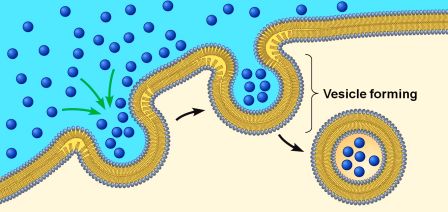
When is the potassium channel open?
during rest only
during repolarization only
during depolarization only
all the time
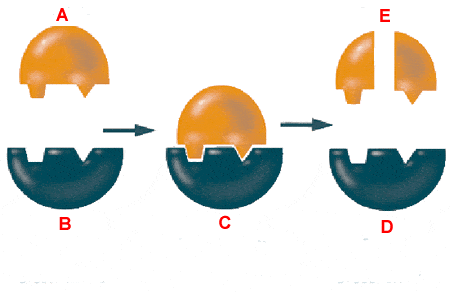
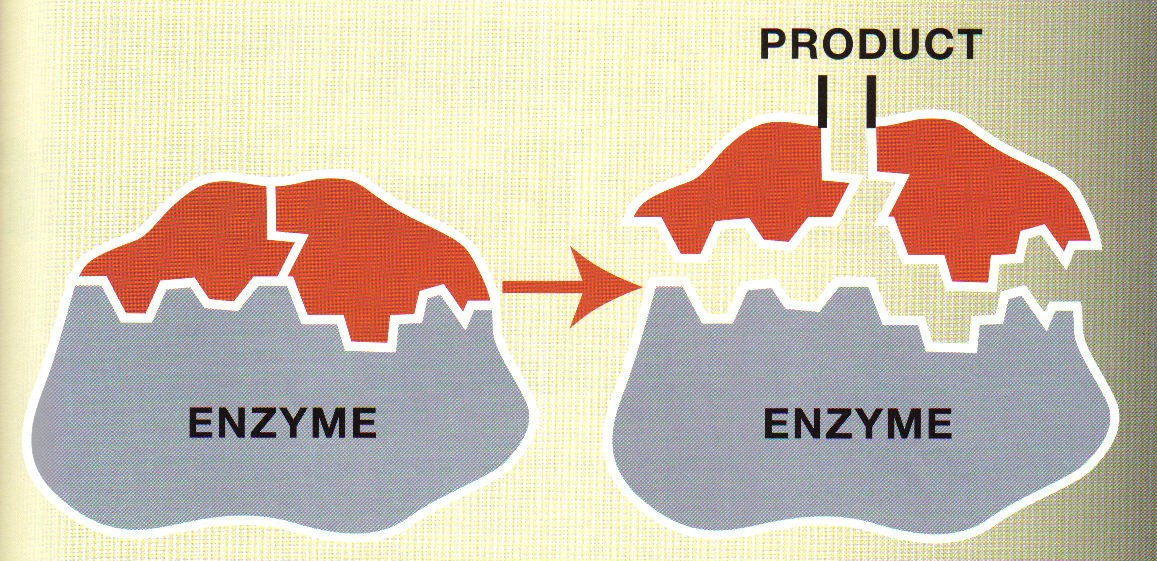
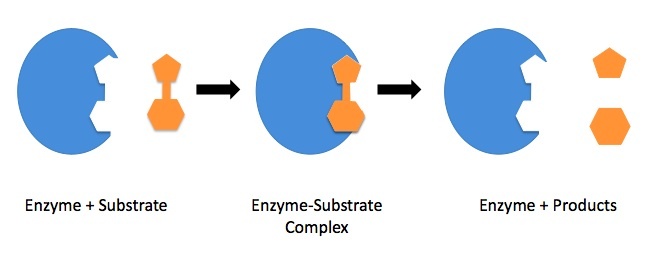
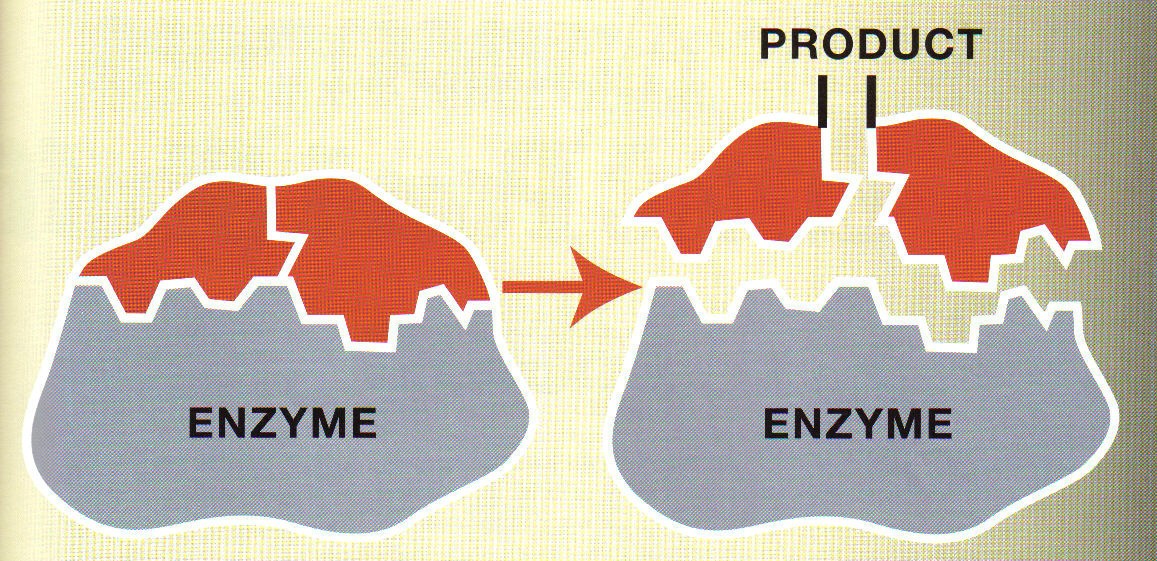
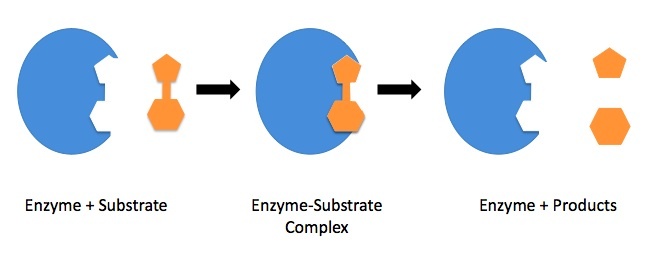
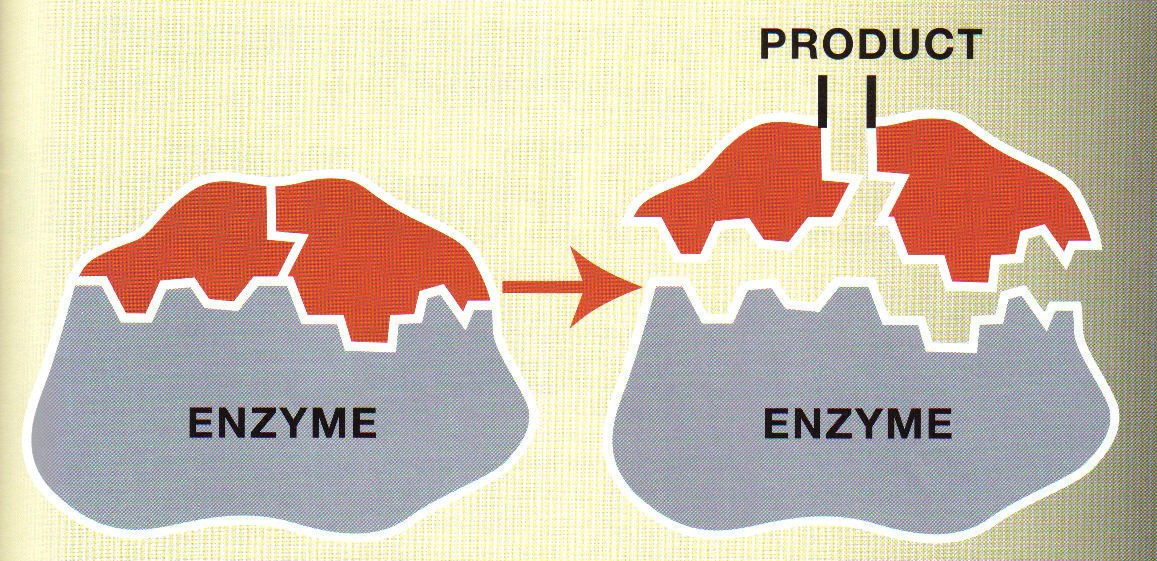
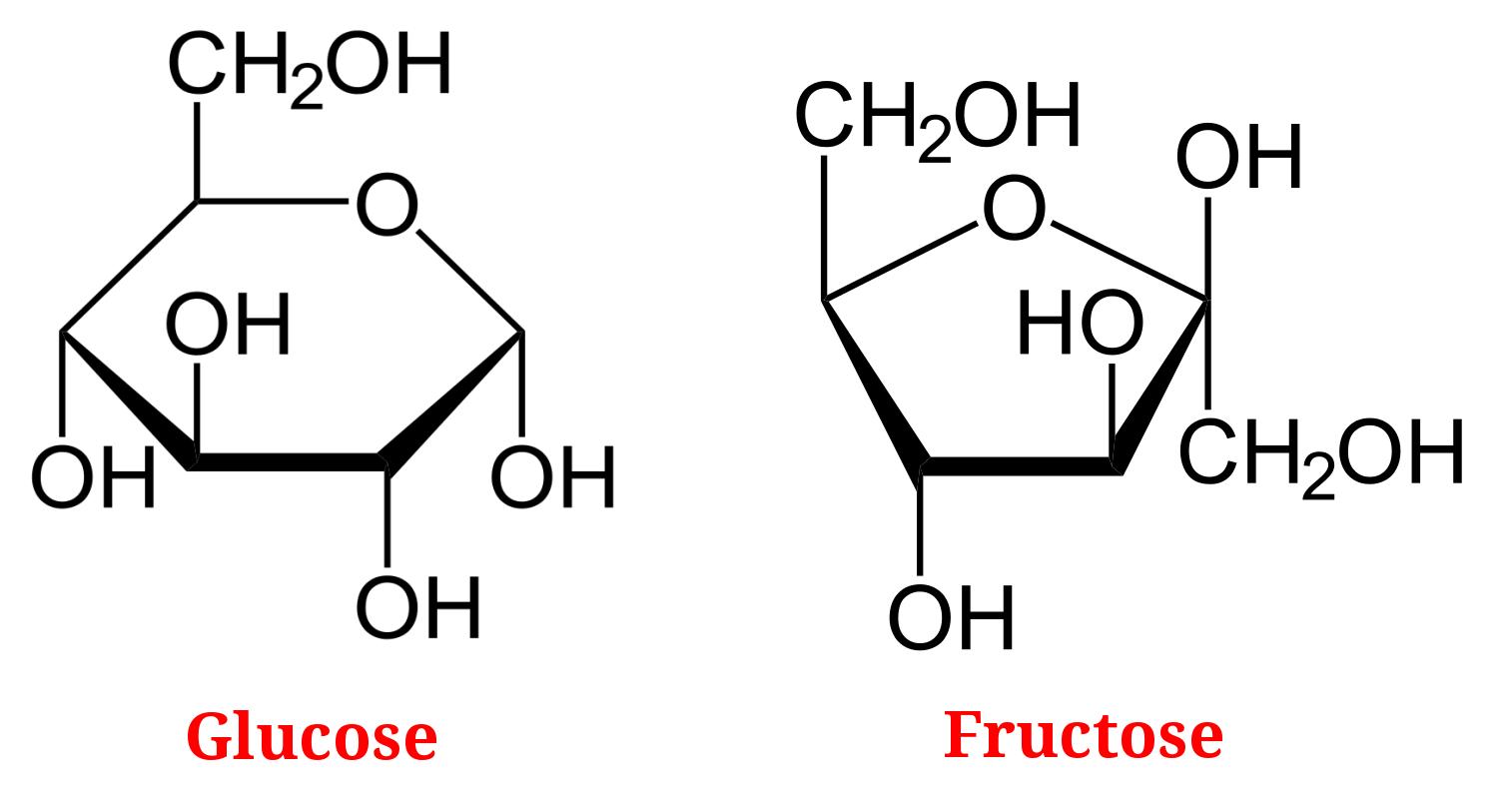
An enzyme that changes glucose and fructose into sucrose would be a(n):
example of an enzyme that adds substrates together (Synthesis)
example of an enzyme that breaks down a substrate
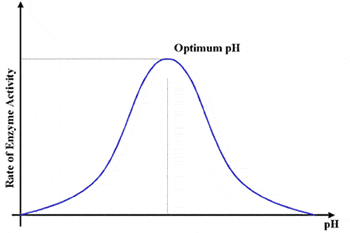
Which explanation best fits the graph for pH's effect on an enzyme?
As the pH gets closer to neutral the enzyme starts to denature
Extreme pH numbers distort the active site
There are more collisions between substrates and active sites near the optimal pH
Low pHs cause more H-bonds to happen near the active site
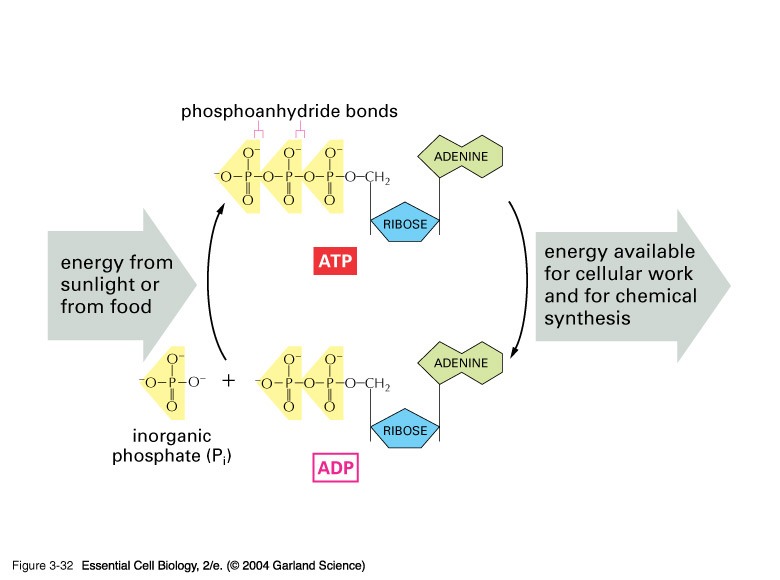
Which of the following is an enzyme?
Kinase
Glucose
Glycerol
Amino Acids
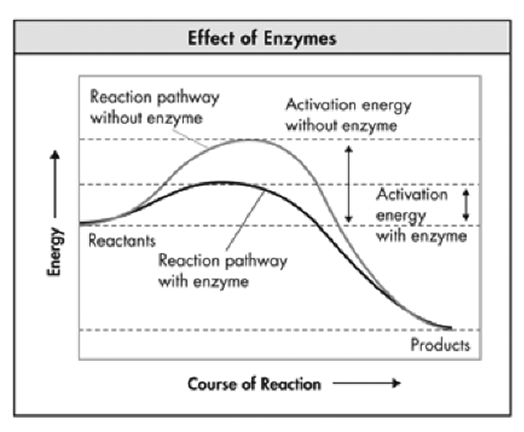
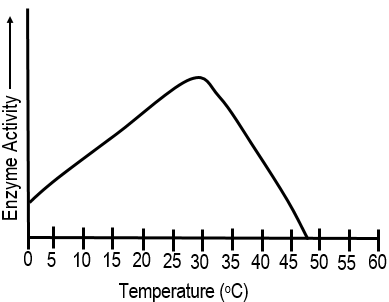
Enzymes are an example of
Lipids
Carbohydrate
Protein
Nucleic Acid
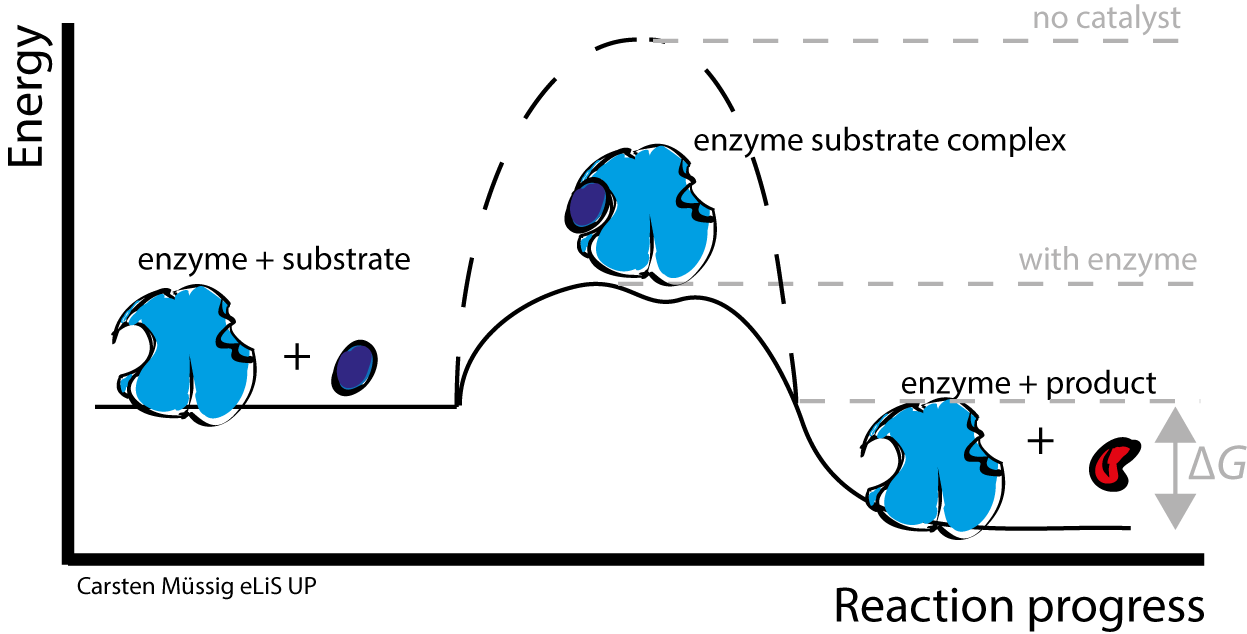
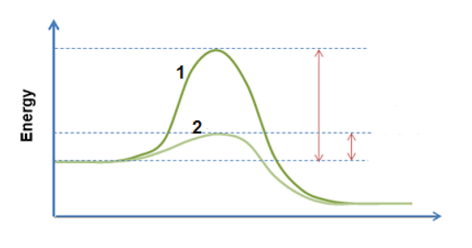
What is the purpose of an enzyme?
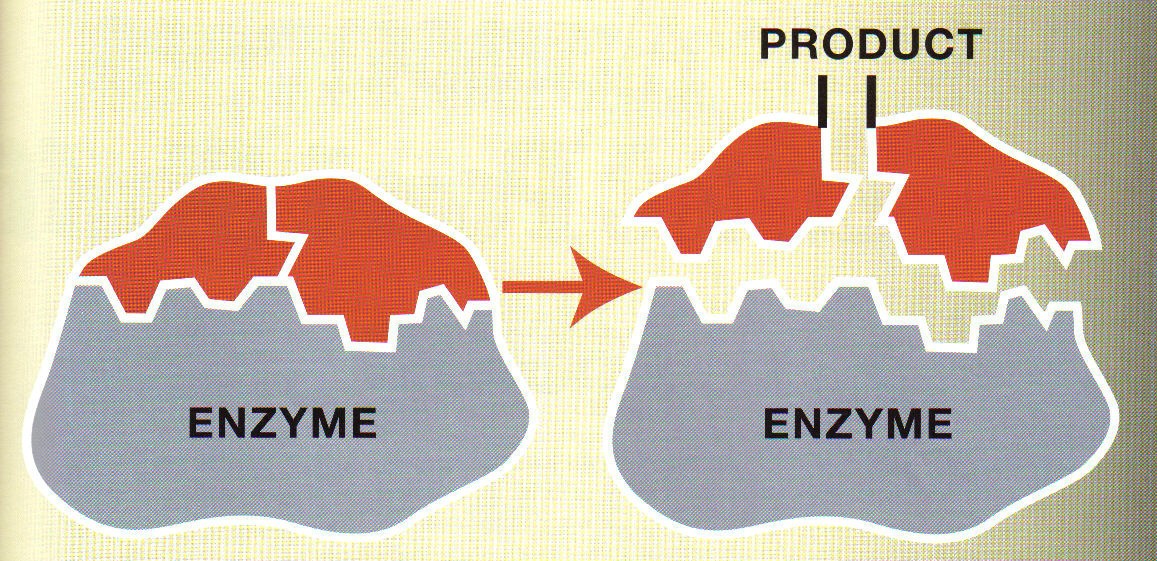
give a place for the reaction to occur
raise activation energy
lower the amount of energy needed to start a chemical reaction
control how many reactions occur
A chemical reaction results in _______________ being made.
Products
Molecules
Reactants
Substances
In a chemical reaction, bonds are broken and new bonds are formed that create new substances. An enzyme that breaks down a substrate will be breaking the bonds in the ________________.
Reactants
Products
Atoms
Catalysts
Which of the following do not affect enzymes ability to function?
pH
substrate concentration
temperature
water
In general, enzymes do NOT:
bind permanently to their substrates
have names ending in -ase
have their function changed with extremely high temperatures
react with a specific substrate
Enzymes are found in
our cells
animals
plants
all of the options are correct
Enzyme function depends on which of the following conditions? Check all that apply!
temperature
water
diffusion
pH
Enzymes are specific for a specific substrate.
True
False
If an enzyme is denatured it means it
works
does not work
If the temperature of the environment is not correct the enzyme may not work.
True
False
Enzymes work best at a specific pH.
True
False


Which best identifies the result of a change in an enzyme amino acid sequence?
The 3D shape of the protein will be unaffected.
The 3D shape of the protein will be somewhat affected.
The 3D shape of the protein will be distorted but still catalyze
reactions.
The 3D shape of the protein will be distorted and not catalyze the intended reaction.
Why are enzymes considered reusable?
Enzymes are made of unusually strong materials.
Enzymes are constantly renewed by other enzymes.
Enzymes are constantly regenerated by respiration.
Enzymes are not changed when they catalyze a chemical reaction.

An enzyme is located in the small intestine, which has a pH between 7 and 9.
Based on this information, which statement is most accurate?
The enzyme is a lipid and requires an acidic environment.
The enzyme is a protein and requires a basic environment.
The enzyme is a carbohydrate and requires an acidic environment.
The enzyme is a protein and requires an acidic to basic environment.
Which will most likely occur if there is a significant change in the temperature or pH of an enzyme?
The enzyme will become one of the products.
The enzyme will be unable to catalyze the reaction.
The enzyme will change the products of the reaction.
The enzyme will cause the rate of reaction to increase.
The enzyme amylase can digest carbohydrates, but it cannot digest proteins.
Which explains the effect of amylase on the digestion of carbohydrates compared to proteins?
Amylase is a protein, so it is restricted to acting on non-protein
molecules such as carbohydrates.
Amylase can digest carbohydrates because it is an enzyme, but
proteins cannot be digested by enzymes.
Amylase can digest carbohydrates because carbohydrates, unlike proteins, are excellent sources of cellular energy.
Amylase lowers the activation energy required for the digestion of carbohydrates, but has no impact on the activation energy required to digest proteins.
Many enzymes in the human body function best at 37°C. What is the most likely result of a great increase in body temperature?
Enzymes become hormones.
Enzymes become denatured.
Enzymes become more active.
Enzymes become more sluggish.
When a student drops a piece of liver into a beaker of hydrogen peroxide, the peroxide bubbles vigorously as the peroxide decomposes into water and oxygen.
However, if the student cooks the liver first, the reaction
fails to occur. What is the best explanation for these results?
Boiling the liver altered the shape of the enzyme in the liver so that it could not interact with the peroxide.
Heating the liver killed the germs that caused the bubbling reaction.
Lower temperatures result in a higher rate of enzyme activity.
Heating the liver removed the water and oxygen from the hydrogen peroxide.
Catalyze means to
slow down
speed up
close down
lower
Which of the following best explains why enzymes are necessary for reactions in our cells?
The reactions are too slow to meet the needs of the cell if enzymes are missing.
Enzymes supply the oxygen necessary for the reactions.
Enzymes change reactants from solid to liquid during the reactions.
The reactions take up too much space in the cell if enzymes are missing.
Changes in pH and temperature can ___________________ an enzyme which causes it to lose its shape and affects its function.
puncture
denature
double
delete
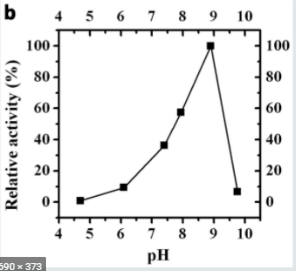
What is the optimal pH for this enzyme?
6
10
9
7
The ____________________ mechanism describes how each substrate must fit into the enzyme.
lock and key
hammer and nail
jigsaw puzzle
seesaw
Once a new product leaves an enzyme, the enzyme is unchanged and ready for the next substrate. What is this called?
fragile
reusable
specific
catalyst
All of the following affect the functioning of an enzyme EXCEPT:
pH
temperature
metabolism
enzyme concentration, substrate concentration, inhibitor molecules
All of the following affect the functioning of an enzyme EXCEPT:
pH
temperature
metabolism
enzyme concentration, substrate concentration, inhibitor molecules
A baby is locked in the car on a hot day. What is most likely to happen to the child?
The child's body will adjust and cause it to maintain homeostasis
The child's enzymes will denature causing chemical reactions to speed up in the body, which will lead to death.
The child's enzymes will denature causing chemical reactions to slow down in the body, which will lead to death.
The activation energy for chemical reactions will remain unchanged and therefore the child will live.
Enzymes are _______________ that _____________________ chemical reactions by ____________ the amount of activation energy required to start the reaction.
carbohydrates, slow down, lowering
proteins, speed up, increasing
lipids, speed up, lowering
proteins, speed up, lowering

What is the optimal temperature of this enzyme?
60
40
70
30

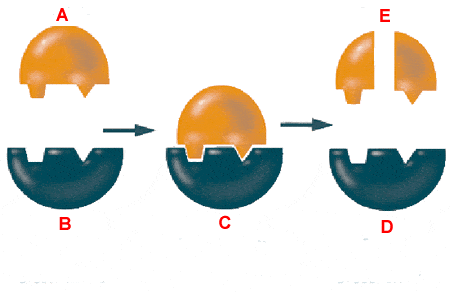
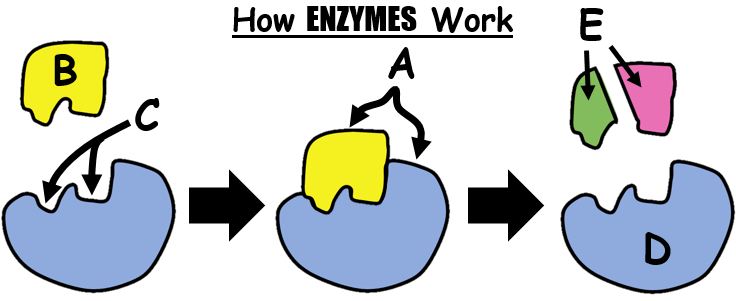
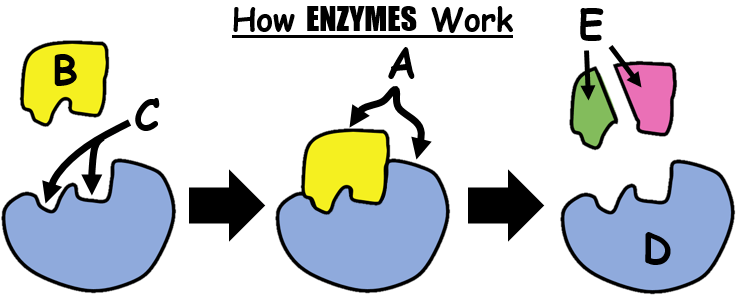
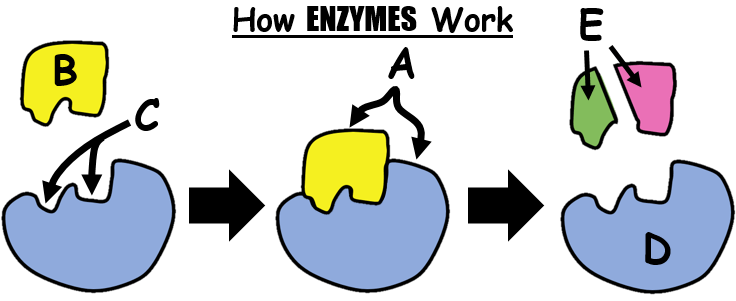
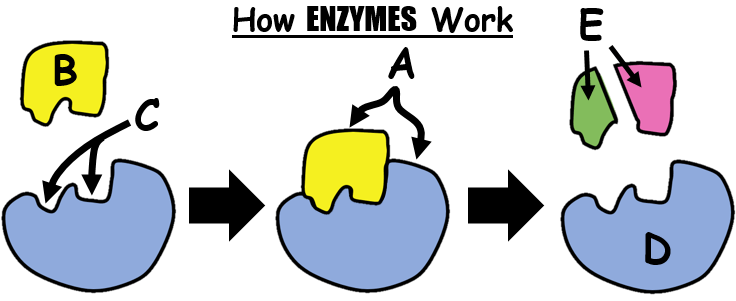
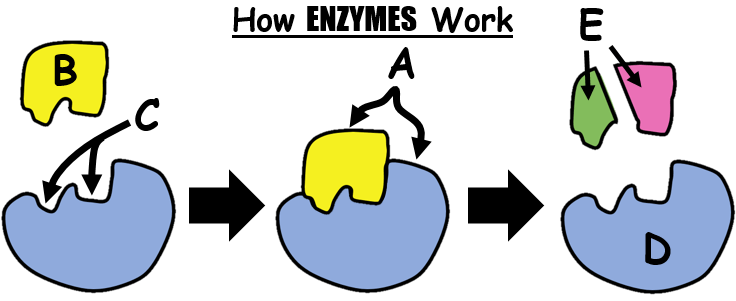
Which letter represents the product?
A
B
C
D

Which enzyme represents the substrate?
A
B
C
D

Which letter represents the enzyme?
A
B
C
D

Organisms living in a bog environment must be able to tolerate nitrogen-poor acidic conditions. Bog plants such as the Venus flytrap and sundew are able to obtain their nitrogen by attacking and consuming insects. These plants produce chemicals that break down the insects into usable compounds.
These chemicals present in the bog plants that break down the insects mentioned in the reading passage are most likely...
hormones
lipids
enzymes
carbohydrates
they produce
An enzyme that aids in the synthesis of polymers from monomers is involved in a chemical reaction that is
Bonding together small substrates to make large reactants.
Bonding together large substrates to make small reactants.
Breaking apart small substrates to make large reactants.
Breaking apart large substrates to make small reactants.
What is an enzyme that aids in the metabolic process of digestion doing?
Bonding together small substrates to make large reactants.
Bonding together large substrates to make small reactants.
Breaking apart small substrates to make large reactants.
Breaking apart large substrates to make small reactants.
The speed at which an enzyme converts its substrate into a product is called the
rate of reaction
optimum enzyme reactivity
activation energy
Higher substrate concentrations
Create a faster reaction rate
Increases the amount of enzyme and substrate interactions per second
Decreases the amount of enzyme and substrate interactions per second
Slows the reaction rate
Lower substrate concentrations
Create a faster reaction rate
Increases the amount of enzyme and substrate interactions per second
Decreases the amount of enzyme and substrate interactions per second
Slows the reaction rate
What is the function (job) of an Enzyme? (Check all that Apply)
Regulate the body’s activities without using too much energy.
Catalyze chemical reactions in living things, many of which would never happen without an enzyme.
Speed up biological metabolic processes

Base your answer on the graph and on your knowledge of biology. The most likely result of mixing both enzymes with their substrates in a single test tube is that
only gastric protease would be active if the pH of the mixture was basic
intestinal protease would be more active than gastric protease at pH 4.
both enzymes would exhibit some activity at pH 5.
gastric protease would be more active than intestinal protease at pH 6

Base your answer on the graph and on your knowledge of biology. Which is a true statement about the relationship between pH and enzyme action?
All enzymes work best at a neutral pH.
Adding more acid does not affect the rate of activity of an enzyme.
Enzymes function only in a pH range of 4.0 to 5.5.
The activity of an enzyme is affected by pH.

Base your answer on the reactions shown in the graphic. The X in each reaction represents various
energy sources
final products
reactants
enzymes

Which statement best describes the enzyme represented in the graphs?
A. This enzyme works best at a temperature of 35°C and a pH of 8.
This enzyme works best at a temperature of 50°C and a pH of 12.
Temperature and pH have no effect on the action of this enzyme.
This enzyme works best at a temperature above 50°C and a pH above 12.

A process that occurs in the human body is shown in the diagram. What would happen if a temperature change caused the shape of the active site to be altered?
The dipeptide would digest faster.
The dipeptide would digest slower or not at all.
The amino acids would combine faster.
The amino acids would combine slower or not at all.

The graph shows the relative rates of action of four enzymes, A, B, C, and D. Which two enzymes would function in a region of the human body having a neutral pH?
enzymes A and B
enzymes B and C
enzymes C and D
enzymes B and D
Which characteristic allows enzymes to function in a specific way?
Enzymes are complex compounds composed of starch.
Each enzyme has a characteristic shape.
Enzymes are long, complex fats.
Each enzyme is made up of four subunits.
A colony of bacteria growing on a culture medium is successfully synthesizing an organic compound. Which procedure would be least likely to have an effect on this synthesis?
adding more subunits of the organic compound to the medium
lowering the pH of the medium
raising the temperature of the colony from 20°C to 30°C
increasing the number of hormone molecules in the colony
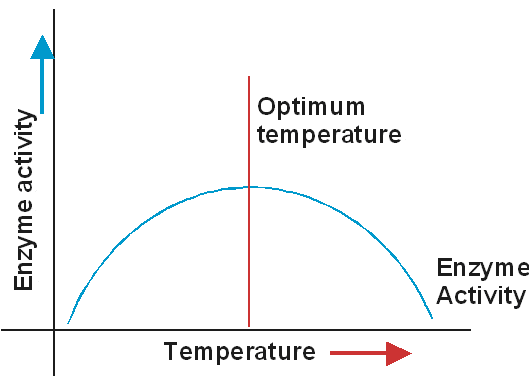
Enzymes have an optimum temperature at which they work best. Temperatures above and below this optimum will decrease enzyme activity. Which graph best illustrates the effect of temperature on enzyme activity?


All chemical breakdown processes in cells directly involve
reactions that are controlled by catalysts
enzymes that are stored in mitochondria
the production of catalysts in vacuoles
enzymes that have the same genetic base sequence
Meat tenderizer contains an enzyme that interacts with meat. If meat is coated with a tenderizer and then placed in a refrigerator for a short time, how would the enzyme be affected?
It would be broken down.
Its activity would slow down.
Its shape would change.
It would no longer act as an enzyme.

