
 Worksheets
Chemical Changes and Reactions Review
Total questions: 40
Worksheet time: 50mins
A combination of two or more substances that are not chemically combined
mass
mixture
physical property
solubility
a change to a substance that occurs without forming a new substance
chemical change
physical change
solubility
density
The total mass of the reactants before a chemical reaction is the same as the total mass of the products after the reaction
states of matter
law of conservation of mass
density
physical property
starting substances in a chemical reaction (left side of arrow)
states of matter
law of conservation of mass
products
reactants
The temperature of the solution dropped 18 °C and there was no color change.
physical change
chemical reaction

PbCl2 + AgNO3 → Pb(NO3)2 + AgCl
NH3 + HCl → NH4Cl
Al(OH)3 → Al2O3 + H2O
In a reaction A + B ----> C, reactant A has 5g and product C has 9g. How many grams does reactant B have?
4g
5g
9g
14g
32 g of Oxygen completely reacts with 8 g of Hydrogen to produce _____ g Water
8
12
24
40
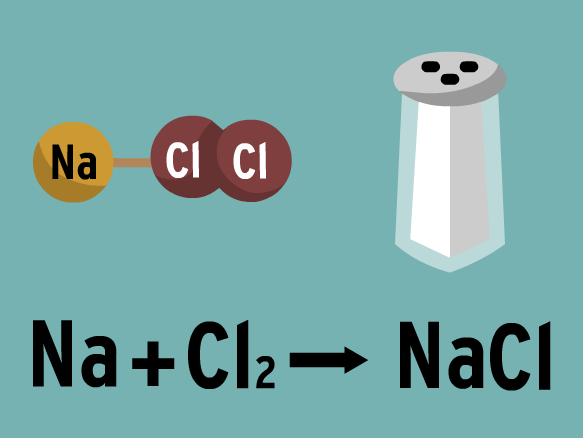
In a chemical reaction, 4 grams of sodium must combine with how many grams of chlorine to produce 10 grams of table salt?
4 grams
6 grams
8 grams
10 grams

Why does this picture demonstrate the Law of Conservation of Mass?
the number of atoms of each element are the same on both sides
they start out separate and end up combined
the same elements are used
it doesn't demonstrate the Law of Conservation of Mass
Use the information and equation to answer the following question.
Aluminum metal reacts with hydrochloric acid solution as described by the following chemical equation.
2 Al (s) + 6 HCl (aq) → 2 AlCl3 (aq) + 3 H2 (g) + heat
Which of the following indicators of
The shiny metal will disappear and a solid precipitate will form
The shiny metal will disappear and bubbles will appear
The pH in the reaction flask will rise and a precipitate will form
The reaction flask will feel cold and bubbles will appear
Use the models to answer the following question.
Model 1 Model 2
H2O2(l) → H2O2(g) H2O2(aq) → H2O(l) + O2(g)
Which of the following statements BEST explain which figure is a model of a chemical change?
Model 1, because H2O2 created a product
Model 1, because H2O2 changes state of matter
Model 2, because new substances are produced
Model 2, because there are 3 states of matter present

Which statement best explains that a chemical reaction has taken place?
The mass of the reactants is equal to the mass of the products.
The number and size of the atoms are different on either side of the equation.
The protons rearrange to form two new products that have the same amount of protons.
The atoms of the reactant rearrange and are present in the same amount in the products.
A chemistry teacher adds red food coloring to water and students observe the dye spreading out to fill the container. Is the teacher demonstrating a physical or chemical change?
Physical change because a new substance was formed.
Chemical change because a new substance was formed.
Physical change because red dye mixed with the water.
Physical change because red dye reacted with the water.
Use the information and chemical equation to answer the following question.
A team of chemists discover a new chemical reaction.
2 NaCl + MgF2 ---> 2 NaF + MgCl2
Which type of reaction will this equation be classified as?
Double Replacement because Cl and F are changing places
Double Replacement because two NaF are produced
Single Replacement because Cl and F are changing places
Single Replacement because one MgCl2 is produced

A zinc production company uses the above chemical reaction.
What mass of zinc can the company expect to produce?
5 g
10 g
25 g
40 g

Nitrogen reacts with hydrogen according to the equation. Examine the graphic above and decide which statement best applies to it.
Which statement BEST applies the law of conservation of matter to the model and equation?
The Law of Conservation of Matter is upheld because the number of atoms is the same on both sides of the equation.
The Law of Conservation of Matter is upheld because the number of molecules exactly matches the balanced equation.
The Law of Conservation of Matter is disproved because the arrangement of the atoms are different between the reactants and products.
The Law of Conservation of Mass is disproved because the number of atoms is the different on both sides of the equation

