wayground logo

Free Printable Worksheets

Font size

S
M
L
XL
Worksheets

Energy Unit Review

Total questions: 40

Worksheet time: 2hrs 0mins

Name
Class
Date
1.
Suppose three people were going sledding. What is one way to increase their potential energy?
a)
Wax the runners on the Wax the runners on the sled.
b)
Pull faster
c)
Find a taller hill
d)
Wait until the snow is deeper.
2.
What type of energy is occurring as a sled is moving down the hill?
a)
Potential energy
b)
Kinetic energy
c)
Thermal energy
d)
Moving energy
3.
A battery is added to a circuit to make a light bulb light. What two types of energy are being used?
a)
Chemical and electrical
b)
Thermal and solar
c)
Mechanical and chemical
d)
Electrical and kinetic
4.
Animals use energy from food to move. What type of energy transformation is occurring?
a)
Mechanical to chemical
b)
Chemical to mechanical
c)
Heat to mechanical
d)
Thermal to mechanical
5.
Green plants transform the Sun’s energy to food in a process called photosynthesis. What type of energy transformation is occurring?
a)
Solar to mechanical
b)
Solar to chemical
c)
Heat to chemical
d)
Radiation to heat
6.
The Law of Conservation of energy states that energy cannot be _____ or ______.
a)
Created; transformed
b)
Transformed; destroyed
c)
Created; destroyed
d)
Kinetic; potential
7.
On A recent camping trip, Destiny was making smores by the campfire and was using a metal stick to roast the marshmallows. When she placed the stick in the fire, it became too hot to hold. What type of heat energy transfer was occurring?
a)
Conduction
b)
Convection
c)
Radiation
d)
Thermal
8.
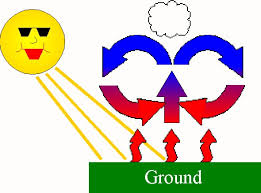
Sebastion and his brother have bunk beds in their bedrooms. Sometimes Sebastion, in the upper bunk, gets much warmer than his brother in the lower bunk. What type of energy transfer does this illustrate?
a)
Conduction
b)
Convection
c)
Radiation
d)
Thermal
9.
If you stick a metal spoon into a hot pot of soup, the handle of the spoon gets hot because
a)
the hot soup causes a chemical reaction to the metal of the spoon
b)
the heat from the hot soup is conducted through the spoon
c)
the hot soup heats the air around the spoon
d)
the heat from the soup causes a physical change in the handle of the spoon
10.
Which of the following is an example of kinetic energy?
a)
a swimmer standing on a diving board
b)
a plate on the edge of a counter
c)
firewood stacked in a fireplace
d)
a child jumping rope
11.
Potential energy increases when
a)
a wagon is pushed up a hill
b)
water is poured out of a bucket
c)
a frog jumps out of a tree into a pond
d)
a car stopping at a red light
12.

Which of the following pictures represents particles in a solid?

a)
b)
c)
d)

None of the options represent particle in a dolid.

13.

The molecules of which of the following would have the most kinetic energy?

a)

an ice cube

b)

a glass of cold water

c)

boiling water

d)

a cup of warm tea

14.

Temperature is a way to measure the ___________ energy of particles of matter.

a)

potential

b)

kinetic

c)

chemical

d)

electrical

15.

On a hot summer day, we like to drink ice cold water. When holding the glass in your hand, the water begins to warm up quickly due to energy transfer.


Use an arrow to show which direction the energy transfers (from the water to the hand or the hand to the water).

a)
b)
16.

What kind of energy transformation needs to occur for drivers to see the flashing warning signal on this school zone sign?

a)

electrical to sound

b)

light to electrical

c)

thermal to electrical

d)

microwave to electrical

17.

These panels are called "Solar Panels". We can collect light energy from the sun in these panels and transform the light energy to another form of energy to power our homes and building with the. Which statement BEST describes what happens when the light energy is transformed to power our homes and buildings?

a)

The solar panels collect light energy from the sun and transform the light energy to sound energy to power our radios.

b)

The solar panels collect thermal energy from the sun and transform the thermal energy to light energy so we can watch TV at night.

c)

The solar panels collect light energy from the sun and transform the light energy to electrical energy to power our homes and buildings.

d)

The solar panels collect thermal energy from the sun and transform the thermal energy to mechanical energy so we can power our homes and buildings.

18.

________________is the type of energy an object has because of its motion; many of the forms of energy fall under this type of energy, such as mechanical energy, thermal energy, and radiant energy.

a)

Kinetic Energy

b)

Potential Energy

c)

Chemical Energy

d)

Electrical Energy

19.

___________________ is the type of energy that is stored in an object; energy that an object has because of its position relative to other objects. (Example: pulled back rubber band)

a)

Kinetic Energy

b)

Potential Energy

c)

Solar Energy

d)

Mechanical Energy

20.

_____________________ is energy that comes from the sun.

a)

Nuclear Energy

b)

Chemical Energy

c)

Electrical Energy

d)

Solar Energy

21.

________________ is the energy released when the nucleus of an atom is split apart (during fission) or combined with another nucleus (during fusion).

a)

Solar Energy

b)

Thermal Energy

c)

Mechanical Energy

d)

Nuclear Energy

22.

_____________________ is the energy that is stored in the bonds between atoms. (Examples: food, batteries)

a)

Chemical Energy

b)

Nuclear Energy

c)

Potential Energy

d)

Electrical Energy

23.

___________________ is energy in the form of heat

a)

Radiant Energy

b)

Mechanical Energy

c)

Thermal Energy

d)

Potential Energy

24.

_________________________ is energy that does not need matter to travel; light.

a)

Potential Energy

b)

Thermal Energy

c)

Nuclear Energy

d)

Radiant Energy

25.

______________________ is a form of kinetic energy that an object has because of its motion or its position; Movement energy (Example: wind makes a windmill’s arm turn and creates electricity).

a)

Nuclear Energy

b)

Mechanical Energy

c)

Radiant Energy

d)

Solar Energy

26.

___________________ is the ability to do work by movement of electric charge (electricity)

a)

Chemical Energy

b)

Potential Energy

c)

Thermal Energy

d)

Electrical Energy

27.
The amount of energy required to raise the temperature 1ºC for every kilogram is called____?
a)
Thermal Energy
b)
Specific Heat
c)
Temperature
d)
Kinetic Energy
28.
What is the symbol for Thermal Energy?
a)
Q
b)
t
c)
m
d)
C
29.
What unit do you use to measure Thermal Energy?
a)
J/Kg ºC
b)
Kg
c)
ºC
d)
J
30.
Water has a specific heat of 4184 J/KgºC.  Wood has a specific heat of 1760 J/KgºC.  What material needs more energy to raise the temperature 1ºC
a)
Wood
b)
Water
c)
Both are the same
31.
Copper, Stainless Steel, Carbon Steel, and Zinc were all heated using the same thermal energy.  What material would be the coolest after being heated?
a)
Copper
b)
Carbon Steel
c)
Zinc
d)
Stainless Steel
32.
How does heat flow?
a)
Always from cold to warm
b)
Always from warm to cold
c)
Both warm to cold & cold to warm
d)
It depends on the temperature
33.
Warm air rises and the cool air sinks demonstrates this type of heat transfer. 
a)
conduction
b)
convection
c)
radiation
d)
Insolation 
34.
What kind of heat transfer happens when the sun heats your body?
a)
Conduction
b)
Radiation
c)
Convection
d)
Density
35.
When you iron a shirt, the shirt gets warm.  This type of heat transfer is an example of
a)
condensation
b)
conduction
c)
convection
d)
radiation
36.
Warm air is __________ dense than cold air and rises creating convection currents.
a)
more
b)
less
37.
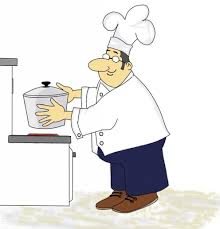
The man takes the hot pot off the stove with his bare hands and his hands get burned.  This is an example of 
a)
conduction
b)
convection
c)
radiation
38.
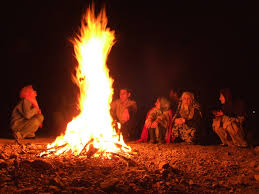
A group of friends gather around a fire to stay warm.  This is an example of
a)
conduction
b)
convection
c)
radiation
39.
"Lava lamps" contain colored liquids. These liquids form globs that rise to the top due to
a)
conduction
b)
convection
c)
radiation
40.
A crayon placed on a dark driveway in bright sunlight melted into a colorful puddle. What caused the crayon to melt?
a)
Solar radiation heated the driveway and then heat transferred to the crayon by conduction.
b)
Solar radiation heated the driveway and then heat transferred to the crayon by radiation.
c)
Solar convection heated the driveway and then heat transferred to the crayon by radiation.
d)
Solar convection heated the driveway and then heat transferred to the crayon by conduction.