wayground logo

Free Printable Worksheets

NEW

Font size

S
M
L
XL
Worksheets

Introduction to Anatomy Ch1-1.5

Total questions: 50

Worksheet time: 35mins

Name
Class
Date
1.

The head is ________________to the feet

a)

Anterior

b)

Superior

c)

Posterior

d)

Inferiror

2.

Which body part is most distal in relation to the chest

a)

Head

b)

Hands

c)

Ribs

d)

Shoulders

3.
Which division of the skeleton contains the head, neck and trunk?
a)
Axial
b)
Appendicular
4.
Which division of the skeletal system forms the bones of the upper and lower limbs?
a)
Appendicular
b)
Axial
5.
Rapid growth during puberty causes your body to release more and more growth hormones. As you grow, more and more growth hormones are released until puberty is reached, and then the hormones stop.
a)
Positive Feedback Response
b)
Negative Feedback Loop 
6.
When glucose levels in the blood rise, your brain sends a signal to your pancreas. The pancreas releases insulin, which opens channels in cell membranes to allow glucose to enter the cell, lowering blood sugar levels. 
a)
Positive Feedback Response
b)
Negative Feedback Loop 
7.
When you are cold, you shiver and your blood vessels contract, which warms you up. When you are hot, you sweat and your blood vessels expand, which cools you down.  
a)
Positive Feedback Response
b)
Negative Feedback Loop 
8.

What is the basic unit of structure and function of all LIVING organisms?

a)

organism

b)

species

c)

cell

d)

tissue

e)

organ system

9.

Which of these is NOT a characteristic of life?

a)

movement

b)

growth

c)

excretion

d)

sleeping

e)

reproduction

10.

Homeostasis refers to:

a)

changing internal conditions

b)

stable external conditions

c)

stable internal conditions

d)

changing external conditions

e)

none of these is correct

11.

Small structures within cells that carry on specific functions are:

a)

organelles

b)

tissues

c)

molecules

d)

parasites

e)

hormones

12.

The sum of all chemical reactions in the body is called

a)

metabolism

b)

assimilation

c)

growth

d)

digestion

13.

Which of the following is the most complex level of organization?

a)

cell

b)

organ

c)

organ system

d)

organelle

14.
The study of structure is called ___________.
a)
homeostasis
b)
anatomy
c)
physiology
d)
interrelation
15.

Measuring an organ's size would relate more closely to the science of ...

a)

anatomy

b)

physiology

c)

both anatomy and physiology

16.

Measuring the acid content of the stomach would relate more closely to the science of ...

a)

anatomy

b)

physiology

c)

both anatomy and physiology

17.
Dissection would relate more closely to the science of ...
a)
anatomy
b)
physiology
18.

The branch of biology that deals with the normal functions of living organisms and their parts. is...

a)

anatomy

b)

physiology

c)

both anatomy and physiology

19.

Physics (the study of matter, energy and motion) of the human body would relate more closely to the science of ...

a)

anatomy

b)

physiology

c)

both anatomy and physiology

20.

What is formed when cells of the same type join to perform a common task?

a)

cell

b)

tissue

c)

organ

d)

system

21.

Which of these is NOT required for life?

a)

water

b)

food

c)

Thinking

d)

oxygen

e)

pressure

22.

Using X-Rays and MRI to create pictures of internal structures is which type of anatomy?

a)

Regional

b)

Surface

c)

Sytemic

d)

Anatomical imaging

23.

The study of the body's organization by areas is which type of anatomy?

a)

Structural

b)

Regional

c)

Systemic

d)

Surface

24.

Studying systems in the body such as the skeletal system is which type of anatomy?

a)

Systemic

b)

Regional

c)

Physiology

d)

surface

25.

Which term does not belong

a)

Atom

b)

Cell

c)

Tissue

d)

Alive

26.

A cactus shows all of the following characteristics EXCEPT:

a)

need water

b)

growth

c)

movement

d)

respond to environment

27.
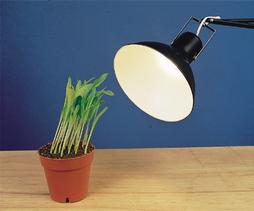
A plant growing towards the light is an example of 
a)
reproduction.
b)
responding to a stimuli.
c)
metabolism.
d)
homeostasis.
28.
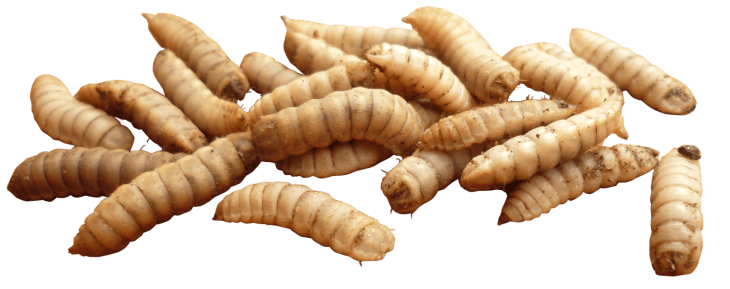
A maggot changing into a fly is an example of 
a)
reproduction.
b)
growth and development.
c)
homeostasis.
d)
evolution.
29.
The maintenance of an organism’s internal environment is called:
a)
compensating
b)
homeostasis
c)
balancing
d)
routine
30.
The "cause" for something to happen is the
a)
response
b)
effect
c)
stimulus
d)
homeostasis
31.
Green plants produce their own food through the process of photosynthesis.
a)
All living things use energy
b)
All living things contain cells
c)
All living things maintain homeostasis
d)
All living things grow
32.
What is the main source of energy on Earth?
a)
stars
b)
moon
c)
water
d)
sun
33.
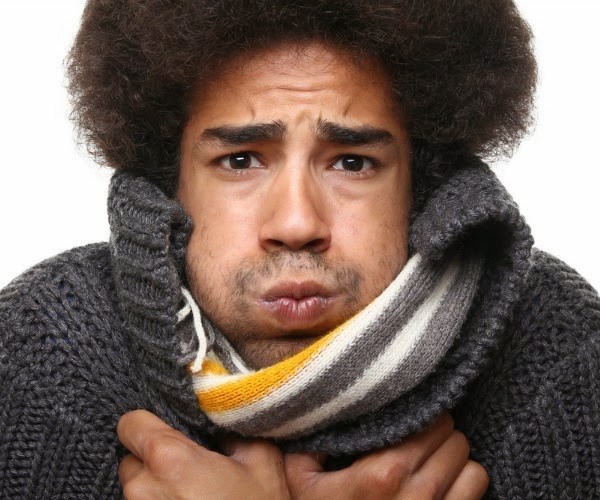
The image seen here is of a person shivering due to cold temperature. This is an example of an organism maintaining ________________ in action!
a)
Homeostasis
b)
Adaptations
c)
Evolution
d)
Development
34.
The process whereby an organism produces more of its own kind
a)
development
b)
adaptation
c)
homeostasis
d)
reproduction
35.
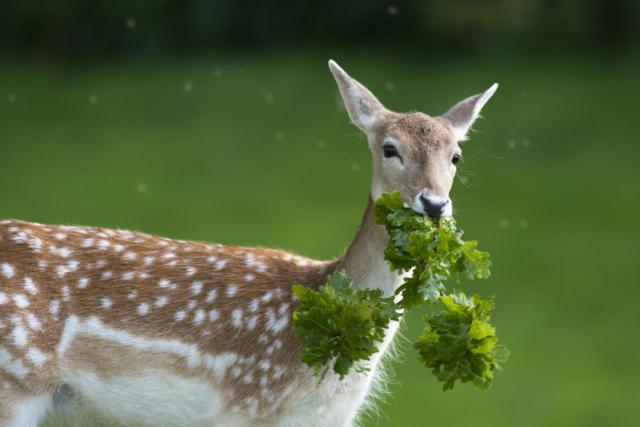
A plant using sunlight to make food to use or a deer eating leaves from a shrub are examples of
a)
universal genetic codes.
b)
organisms made of cells.
c)
responding to a stimulus.
d)
metabolism.
36.
 All organisms contain instruction molecules that help determine which traits the organism will have is an example of 
a)
universal genetic code (DNA/RNA)
b)
metabolism
c)
evolution
d)
growth and development
37.

Which does not belong?

a)

Heart

b)

Lungs

c)

Stomach

d)

Toes

38.

Which does not belong?

a)

Muscle tissue

b)

Nervous tissue

c)

Lungs

d)

Connective tissue

39.

Measuring an organ (weight, size...)

a)

Anatomy

b)

Physiology

40.

Observing a moving/functioning heart

a)

Anatomy

b)

Physiology

41.

Can be studied in non-living specimens

a)

Anatomy

b)

Physiology

42.

Study of the functions of the body based on physics

a)

Anatomy

b)

Physiology

43.

Walking, riding a bike

a)

Movement

b)

Excretion

c)

Digestion

d)

Growth

44.

Elimination of bodily wastes

a)

Digestion

b)

Excretion

c)

REPRODUCTION

d)

Growth

45.

Keeps the body's internal environment sperate from the external environment

a)

Boundaries such as skin and cell membranes

b)

Metabolism

46.

Located toward the middle of your body

a)

Lateral

b)

Medial

c)

Distal

d)

Proximal

47.

The type of anatomy in which you can see the structures with your naked eye?

a)

Microscopic

b)

Gross

c)

Histology

48.

The study of tissues

a)

Cytology

b)

Histology

c)

Embryology

49.

Study of the development of a hiuma from the embryo stage through adulthood

a)

Emryology

b)

Histology

c)

Developmental anatomy

d)

Regional anatomy

50.

Study of the fromation, growth and development of the embryo

a)

Histology

b)

Embryology

c)

Developmental anatomy