
Font size
 Worksheets
Human Bio Revision - Respiratory + Circulatory
Total questions: 81
Worksheet time: 2hrs 49mins
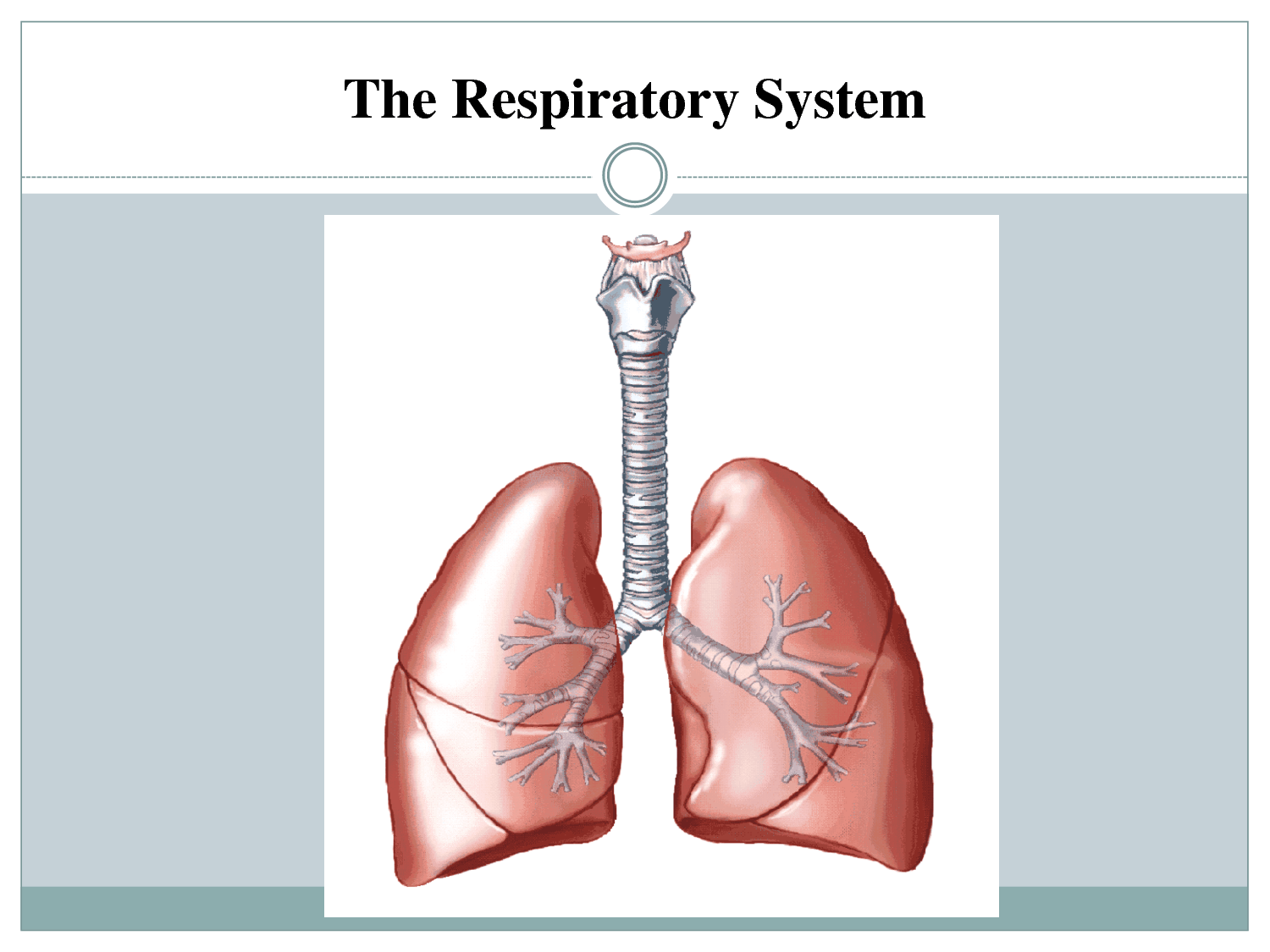
What is the main function of the respiratory system?
to provide oxygen and remove carbon dioxide from the body
o break down food and absorb nutrients
to remove oxygen from the body and deliver carbon dioxide
What are the main organs of the respiratory system that allow us to breathe and for gas exchange to happen?
diapragm
lungs
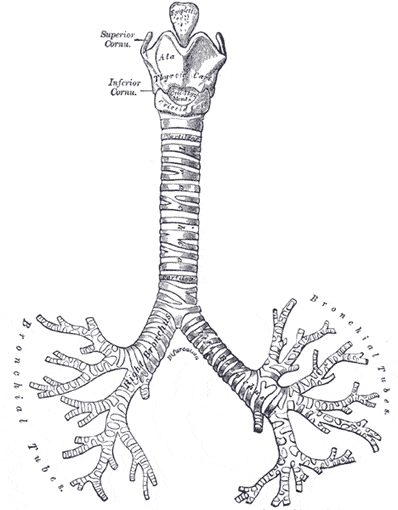
trachea
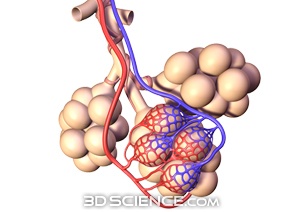
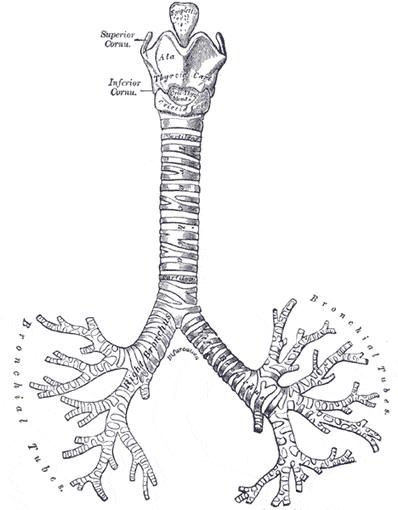
These are the two two main branches from the trachea (one to each lung)
bronchi
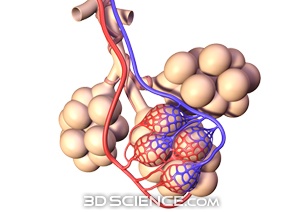
alveoli
capillaries
bronchioles


Flap of tissue that covers the opening to the windpipe during swallowing
Pharynx
Trachea
Epiglottis

What type of cells carry oxygen in the blood?
red blood cells
white blood cells

The respiratory organ in the picture is called ....
lung
trachea
bronchioles
bronchi

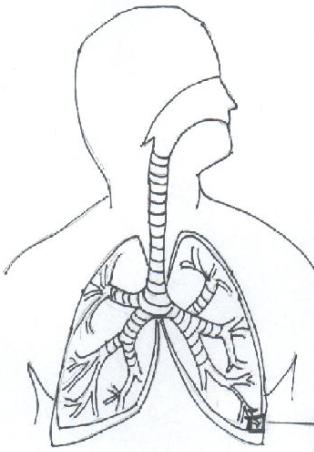
The organs in letter a and b are ....
pharynx, trachea
pharynx, larynx
trachea, bronchi
larynx, trachea

The organs in letter a, b, and c are ....
oral cavity, larynx, and pharynx
nasal cavity, larynx, and trachea
nasal cavity, pharynx, and larynx
oral cavity, pharynx, and larynx

The organs in letter d and e are ....
larynx and bronchi
pharynx and bronchioles
trachea and bronchioles
trachea and bronchi

The diaphragm is in letter ....
a
b
c
d
e

The lung is in letter ....
a
b
c
d
e

NUMBER 1:
lungs
pharynx
mouth
alveoli

NUMBER 2:
Pharynx
Bronchi
Alveoli
Lungs
When we breath in the diaphragm...
Contracts
Relaxes
When we breathe out the diaphragm...
Contracts
Relaxes
Which two muscles are responsible for BREATHING?
The Diaphragm
The Lungs
The Heart
The Intercostal Muscles

The pathway of air into the lungs is:


Why does your body need oxygen?
to produce energy
to expel carbon dioxide
to supply the food with oxygen
to fill the lungs with oxygen

What material in a lung model represents the diaphragm
Y plastic tubes
the plastic jar
the plastic sheet
2 small plastic bags
Oxygenated means the blood has a lot of....
Oxygen
Carbon Dioxide
Deoxygenated blood means that the blood is low in...
Oxygen
Carbon Dioxide

Veins are blood vessels containing blood going to the heart
True
False

Arteries are blood vessels with blood flowing from the heart
True
False

The blood obtains the oxygen from which organ?
Brain
Lungs
Heart
Stomach

After the blood leaves the right atrium, it goes to the...
Right Ventricle
Right Atrium
Left Ventricle
Left Atrium

After the right ventricle, the blood goes through the pulmonary artery to...
Lungs
Heart

In the lungs, the blood gets...
Oxygen
Carbon Dioxide

In the lungs, the blood gets rid of...
Oxygen
Carbon Dioxide

After the blood gets oxygen from the lungs, it goes through the pulmonary veins to the heart's....
Right Atrium
Left Ventricle
Right Ventricle
Left Atrium

After the left atrium, the blood goes through the mitral valve to the...
Left Atrium
Left Ventricle
Right Atrium
Right Ventrical

Lastly, the oxygenated blood goes through the ___________ to the rest of the body.
Aorta
Vena Cava
Type of circulation that refers to blood flow from the heart to the lungs and back to the heart again?
Systemic circulation
Renal circulation
Portal circulation
Pulmonary circulation
Type of circulation that refers to the blood flowing through the entire body?
Systemic circulation
Renal circulation
Portal circulation
Pulmonary circulation
The type of blood vessel where exchange of gases, nutrients, and wastes occurs?
arteries
capillaries
veins

The main vein(s) that brings blood to the right atrium?
Aorta
Pulmonary veins
Superior and Inferior vena cava
Jugular vein
The sac that surrounds and protects the heart?
endocardium
epicardium
myocardium
pericardium

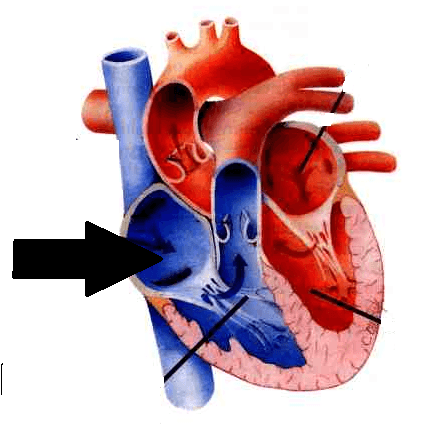
Name part N.
Right atrium
left atrium
right ventricle
left ventricle

Name part I.
pericardium
mediastinum
septum
unknownum

Name part A.
Pulmonary artery
Pulmonary vein
Superior vena cava
Aorta

Name part B.
Pulmonary arteries
Pulmonary veins
Superior Vena cava
Aorta

Name part M.
Tricuspid valve
Semilunar valve
Bicuspid valve
Mitral valve
The job of the heart is to . . .
pump blood around the body.
send food to the small intestines.
break down food.
give energy to the body.
What makes up around 55% of the blood?
Plasma
Red Blood Cells
White Blood Cells
Platelets
What carries oxygen around the body?
Plasma
Red Blood Cells
Platelets
White Blood Cells
What causes the blood to be the distinct red colour?
Haemoglobin
Glucose
Hormones
Oxygen
What is the function (job) of the platelets?
To form clots (i.e. scabs) when you have cuts and grazes.
To transport oxygen to the muscles
To carry dissolved sugars.
To produce antibodies
What is the function (job) of the white blood cells?
To transport oxygen around the body.
To carry dissolved sugars.
To clot and cover wounds like cuts and grazes.
To release antibodies to help destroy infections.
What is the function (job) of the plasma?
To release antibodies to fight infections.
To transport oxygen around the body.
To carry dissolved nutrients and sugars.
To transport oxygen around the body.
What is the function (job) of the red blood cells?
To transport oxygen around the body and to the muscles.
To release antibodies to fight infections.
To carry dissolved nutrients and sugars.
To clot and form scabs if there is a wound on the body.
Which blood vessel has valves to prevent the back-flow of blood?
Veins
Arteries
Capillaries

What is blood made of?
oxygen and plasma
red blood cells and white blood cells
plasma, red blood cells, white blood cells, and platelets.
plasma and platelets

What is plasma?
only white blood cells
only red blood cells
fluid part of blood
hemoglobin


The force of blood pushing on walls of arteries.
antigens
blood type
blood pressure
dark matter

What can happen if you receive the wrong blood type?
It changes your blood type.
You might need new white blood cells.
your cells will clump together and you could die.
You will get too much oxygen.
How many blood vessel types do humans have?
4
5
3
2
Human blood vessels are
artries, capillaries, and atria
ventricles, atria and pulmonary veins
capillaries, artries, and veins
veins, artries, and aorta
The thickest and strongest blood vessel is the
vein
artery
capillary
both veins and capillaries
The blood vessel that has valves at intervals...
capillary
artery
vein
none of the above
Valves in veins
support them
protect them
prevent the backward movement inside them
provide them elesticity
which of the blood vessels do you think have greatest blood pressure
veins
capillaries
atria
arteries
These are one cell thick
arteries
capillaries
veins
In order for oxygen to be transported in your body, it is bound (attached) to:
Ferratonin
Haemoglobin
Myoglobin
Batmanoglobin
Carbon Dioxide travels through the body, in the plasma, in the form of
a choo choo train
bicarbonate ions in the plasma
Carbon ions
Floating in the plasma

