wayground logo

Free Printable Worksheets

NEW

Font size

S
M
L
XL
Worksheets

Separating Mixtures JC

Total questions: 24

Worksheet time: 14mins

Name
Class
Date
1.

Name the separation method that causes wet clothes on a clothes line to dry

a)

Chromatography

b)

Filtration

c)

Distillation

d)

Evaporation

2.

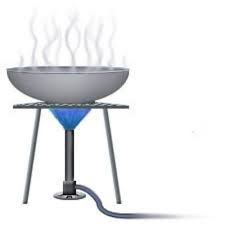
Name the separation technique shown in the diagram.

a)

evaporation

b)

distillation

c)

filtration

3.

Dyes in water soluble markers may be separated by means of..

a)

crystallization

b)

sublimation

c)

chromatography

d)

sedimentation

4.
Which one of the following would you use to separate sand from iron filings?
a)
a bar magnet
b)
filter paper
c)
chromatography paper
d)
alum
5.
To separate a mixture of soil and water what separation method is used?
a)
Filtration
b)
Distillation
c)
Chromatography
d)
Evaporation
6.
To separate a mixture of salt and water what separation method is used?
a)
Filtration
b)
Distillation
c)
Chromatography
d)
Evaporation
7.
chromatography separate the mixture of dyes on the basis of their ----------------------------
a)
density
b)
solubility
c)
gravity
d)
boiling point
8.
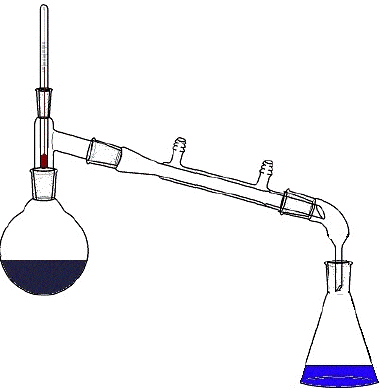
Look at the apparatus setup. It cannot be used to separate which of the following mixtures? 
a)
Marble chips from oil 
b)
Alcohol and water
c)
Chalk from sugar solution
d)
Sand and sea water
9.
Water and alcohol are easily separated by distillation because of their
a)
 different melting points
b)
different colours
c)
different densities
d)
different boiling points
10.
A liebeg condenser is used in
a)
Filtration
b)
Chromatography
c)
Evaporation
d)
Distillation
11.

When using a Liebig condenser, water goes in the (1)_________

and out the (2)_________

to cool the vapour as it passes,

condensing the vapour back to liquid form

a)

(1) top (2) bottom

b)

(1) bottom (2) top

12.
Can you separate salt from water using filtration?
a)
yes
b)
no
13.
Sodium chloride can be separated from rock salt by first adding water to the mixture to dissolve the sodium chloride. The separation then takes place in two stages:
a)
evaporation followed by filtration
b)
 distillation followed by decanting
c)
filtration followed by evaporation
d)
filtration followed by decanting
14.
The diagram shows the apparatus for separating soil and water. What are the labelled parts?
a)
A = residue, B = distillate
b)
 A = residue, B = filtrate
c)
A = filtrate, B = residue
d)
A = distillate, B = filtrate
15.
The separation technique that involves heating a solution until the liquid changes into a gaseous state, leaving behind a solid is known as
a)
decanting
b)
 evaporation
c)
loading
d)
chromatography
16.

In a coffee machine, the ground coffee is separated from the coffee solution by using..

a)

sand paper

b)

filter paper

c)

toilet paper

d)

tissue paper

17.
Solid particles which are left on filter paper while filtration is called
a)
filtrate
b)
residue
c)
solvent
d)
solute
18.
Iron fillings can be separated from iron and Sulphur mixture by
a)
sedementation
b)
heating
c)
magnetic attraction
d)
seiving
19.

The vapourising of a liquid by boiling and then condensing the vapour by cooling it is called ...

a)

evaporation

b)

distillation

c)

decanting

d)

filtration

20.
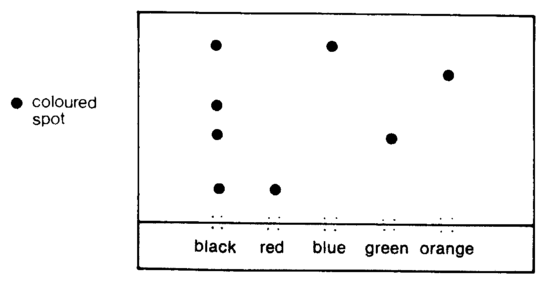
On the chromatogram given -------------- is mixture.
a)
red
b)
orange
c)
green
d)
black
21.

A pure substance shows ------------------ spot on chromatogram

a)

0

b)

1

c)

2

d)

3

22.

Two or more substances that are mixed together but not chemically combined create a...

a)

solvent

b)

compound

c)

mixture

23.
Why is Chromatography useful?
a)
It can be used as medicine.
b)
It can be used for finding clues at a crime scene
c)
It can be used to make bombs.
d)
It can reduce the lack of food and water.
24.

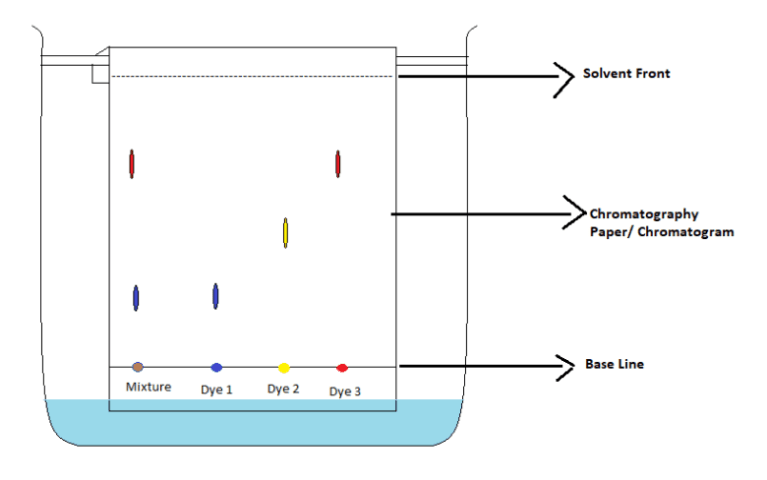
The mixture on the left contains...

a)

All three dyes

b)

None of the dyes

c)

Dye 1 and Dye 2

d)

Dye 1 and Dye 3

e)

Dye 2 and Dye 3