
 Worksheets
Do you know?
Total questions: 71
Worksheet time: 2hrs 46mins
Chemistry is a branch of science to study
(I) Interactions between matter
(II) Structure of matter
(III) Composition of matter
(IV) Properties of matter
I, II, and III
I, II, and IV
II, III, and IV
I, II, III, and IV

If you're determining the energy transfer when water boils what branch of chemistry are you working in?
Analytical chemistry
Physical chemistry
Organic chemistry
Biochemistry
________ chemistry is directed to a practical goal or application.
Pure chemistry
Analytical chemistry
Physical chemistry
Applied chemistry

The branch of chemistry which deals with the study of carbon compounds is ?
Biochemistry
Organic Chemistry
Inorganic Chemistry
Polymer Chemistry
Physical Chemistry
The study of the composition, structure, and properties of matter and the changes it undergoes.
Chemistry
Physics
Biology
Social Science

This water is changing from a liquid to a gas via _______.
vaporization
boiling
evaporation
condensation


The type of separation that would be appropriate if you needed to separate solid particles from a liquid is....
Distillation
Filtration
Separation funnel
Crystallization
Which are methods of separating dissolved particles from the liquid they are dissolved in?
Filtration, separation funnel, crystallization
Filtration, distillation, crystallization
Evaporation, filtration, crystallization
Evaporation, distillation, crystallization
What separation method is used to separate substances by their boiling point?
Filtration
Evaporation
Crystallization
Distillation
What is the physical property used to separate substances using the method of evaporation?
Boiling point
Melting point
Volatility
Particle size
In which mixture can you see all of the parts?
homogeneous
heterogeneous
In which mixture can you not see all of the parts?
homogeneous
heterogeneous

Trail mix
Solution
Mixture
The smallest particle of an element that still represents that element.
Nucleus
electron
proton
atom
What is a particle with one negative charge called?
electron
proton
quark
neutron
What is a particle with one positive charge called?
proton
electron
neutron
quark
What is the center of an atom called?
nucleus
electron cloud
proton center
photon center

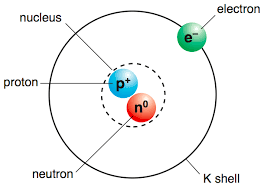


The first energy level, or valence shell can hold up to how many electrons?
8
4
2
5

How many protons does an atom of Sodium (Na) have?
12
11
23
1. Are the atoms more stable when they are bonded together or when they are apart?
Bonded Together
Apart
6. What usually forms the negative ion?
Nonmetals
Metal
None
10. What charges attract?
Opposite
Same
13. What elements generally make a covalent bond?
metal and nonmetal
2 or more nonmetals
metal
none of the above
16. What is the number of valence electrons for Calcium (Group 2)?
1
2
3
4
17. What is the number of valence electrons for Carbon (Group 14)?
1
2
3
4
20. If I was trying to determine if two atoms will bond, what would be helpful to know:
Valence electrons, found by group number
Whether the elements are metals or nonmetals
The electronegativity of the atoms
All of the above, all of which can be found on the Periodic Table
A positively or negatively charged particle.
covalent bond
ion
oxidation number
subscript
Metal atoms drift free from one side to another forming a ____________________________
sea of electrons
sea of ions
sea of molecules
sea of compounds
An ion that is negative is called a ____________________.
polar ion
nonpolar ion
anion
cation
An ion that is positively charged is called a ________________.
polar ion
cation
anion
positive ion
H2O
H2SO4
HgO --> Hg + O2
H2 + Cl2 --> HCl
Which are the reactants in the following reaction?
2Mg + O2 ---> 2MgO
Mg and O2
MgO
Mg and MgO
O2 and MgO
Which of the following is NOT an indication of a chemical reaction?
new gas formed
temperature change
new smell detected
two liquids form a mixture
Is the equation balanced (yes or no)?
Cl2+2KBr → 2KCl +Br2
(a)

What state of matter is this substance?
solid
liquid
gas
aqueous

Identify the Reactants in this equation.
A
B

Identify the number in blue.
Product
Reactant
Coefficient
Subscript

In what state is this substance?
solid precipitate
dissolved in water
released as a gas
liquid
Is the following equation balanced?
4Fe + 3O2 ---> 2Fe2O3
YES
NO
Is the following equation balanced?
2C2H2 + 5O2 ---> 4CO2 + 2H2O
YES
NO
Is the following equation balanced?
NaHCO3 ---> Na2CO3 + H2O + CO2
YES
NO
Is the following reaction balanced?
2CH3OH + 3O2 ---> 2CO2 + 4H2O
YES
NO
Which of the following equations are correctly balanced?
12CO2 + H2O ---> C6H12O6 + O2
CO2 + H2O ---> 3C6H12O6 + O2
CO2 + 9H2O ---> C6H12O6 + O2
6CO2 + 6H2O ---> C6H12O6 + 6O2
Balanced this equation:
Sb2S3 + O2 ---> Sb + SO2
It is balanced.
Sb2S3 + O2 ---> 2Sb + SO2
Sb2S3 + 3O2 ---> 2Sb + 3SO2
3Sb2S3 + 3O2 ---> 2Sb + SO2

