
 Worksheets
Mesopotamia with a Christian perspective
Total questions: 56
Worksheet time: 32mins
What are reservoirs ?
A wonder of Babylon built by Nebuchadnezzar
Storage places for water
Sumerian cylinders used as signatures or for messages
People skilled in some industry or trades
What does the word "Mesopotamia" mean?
messy region to live in
region that can be tamed
land between two rivers
land near the mountains

Identify the picture and explain its importance to Sumer.
crusty bread - helped with the stable food supply.
tool technology - used as a stepping stone when soil was wet.
cuneiform tablet - written language that helped with record keeping.
artwork - provided beauty in homes by hanging on walls.
Name the two bodies of water that provided water for Mesopotamia.
Nile River and Black Sea
Tigris River and Persian Gulf
Euphrates River and Tigris River
Euphrates River and Nile River
This structure was the most important building within a Sumer city-state.
The palace
The ziggurat
The surplus food supply room
The two-story homes of the priests
How did Sumerians solve the problem of attacks by neighboring communities?
They had wars
They built walls
They met and signed treaties
They created guns
What is a city-state? (Sumer)
The area inside the city wall
The city and the countryside around it.
The farmland
The market place
Bringing water to your crops. Including: Building dams, channels, canals, and ditches
irrigation
nomads
ziggurat
scribes

More food than needed by a person.
Trade
Domestication
Surplus
Irrigation
What is the name for the large arc of rich farmland that extends from the Persian Gulf to the Mediterranean Sea?
The Mediterranean Basin
The Green Belt
Fertile Crescent
Asia
Another word for a craftsperson is a(n)
artisan
merchant
scribe
ziggurat
Babylon was the city in
Assyria
Mesopotamia
Roman Empire
Ancient Egypt
The Hanging Gardens of Babylon were believed to have been built by...
Sennacherib
Nebuchadnezzar II
Hammurabi
Sargon the Great
What city did Hammurabi rule?
Assyria
Babylon
Akkadia
Mesopotamia
What were Hammurabi's laws called?
The code of Hammurabi
Hammer time
The Confederation
The Bill of Rights


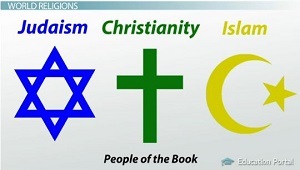
The belief in one god is called...
atheism
polytheism
monotheism
Buddhism
Early Israelites call their homeland
Israel
Canaan
Jordan
Mesopotamia

What was the Purple dye from the Phoenician made from?
sea horse
sea stars
sea snail
sea plants


How did Persian rulers treat most of the people in lands that were taken into the empire?
They forced the people to assimilate within the Persian culture.
The Persian rulers imprisoned the citizens and sentenced many to death.
They placed the citizens into slavery and worked them for the rest of their lives.
They allowed them to keep their unique cultures, languages, and religions.
The Code of Hammurabi and the Ten Commandments are different in that
The Code of Hammurabi was geared more towards religion
The Ten Commandments governed many people
The Code and Ten Commandments aren't different at all
Under the Hammurabi code, people did not receive the same punishment for the same offense. Under the law given through Moses, all received the same punishment for the same sins.

Who founded the Persian Empire?
Xerxes
Cyrus II (the Great)
Darius I
Nabonidus
Why Did People Decide to build the Tower of Babel ?
They wanted to build to the sky,
They wanted to show how powerful they were.
They wanted to do what G-d does?
All of the above.
What did God do to teach them a lesson?
God made all the people sick.
God brought darkness on the tower.
God made all the people speak different languages.
God brought mosquitoes to bother the people.

Was Saul Persian or Hebrew ?
Hebrew
Persian
What Assyrian city held a famous library of thousands of clay tablets?
Babylon
Niveneh
Ashur
Nimrud
What were the Assyrians most known for?
Their fearsome army and warriors
Their poetry
Their art and painting
Their peaceful rule of the lands they conquered
The Chaldeans had a special interest in studying the stars to predict the future (Astrology).
True
False
The Persian Empire broke down mainly because the rulers and nobles live in idle luxury while the common people suffered under heavy burdens.
True
False
Xerxes was an Assyrian king.
True
False
When the flood water receded, Noah's ark came to rest upon the mountains of:
Ararat
the Alps
the Himalayas
The plain of Shinar were located in the Southern part of Mesopotamia.
True
False
Darius was a Persian King.
True
False
What is Canaan?
Caanan is an important river in Israel.
Caanan is a region where the early Israelites lived, known as the "Promised Land".
Caanan is a weapon used in war.
They were skilled sailors and traders who shipped goods across the Mediterranean Sea to Greece, Spain, and even western Africa.
Assyrians
Phoenicians
Chaldeans
Syrians
Who did God call to leave Ur and bring is people to the Promise Land?
Moses
Abraham
Solomon
Rehoboam
What special gift came to the world through the Hebrews ?
the knowledge of one true God
a writing system
the ten commandements
Who were the descendants of Japheth who came into Asia from Europe ?
Indo-Europeans
Greeks
Assyrians
Chaldeans
Complex societies that have a government, written language, organized religion, jobs, and cities.
Cuneiform
Civilization
States
What does the word “fertile” mean?
Difficult to work with
Near the river
Good for growing

This picture shows an area known as the ...
Fertile Curve
Fertile Crescent
Green Region

