
 Worksheets
Thinking Like a Historian Unit Review
Total questions: 36
Worksheet time: 1hrs 8mins
______________ is the way a person views someone or something. This can be shaped by their age, job, religion, or political views.
Primary source
Secondary source
Perspective
Bias
A document or record of past events created by people who were present at that time is called ____________.
Secondary Source
Primary Source
Corroboration
Sourcing
A ________________ is written after the time period by an expert or historian and can include books, magazines, and short articles.
primary Source
secondary Source
bias
artifact


What is located at 40*N, 105*W?
Denver
To locate the exact places on Earth, one must look at __________.
What is a scale on a map?
a tool that allows you to measure your body weight
a way to balance the weights of the land and oceans
a tool to measure the distance on a map to the actual distance
a piece of skin found on reptiles like snakes
What does the title show on a map?
shows the person who made the map
attracts the reader's attention
shows the purpose of the map
shows important information about the size
Another name for a map Key is ________.
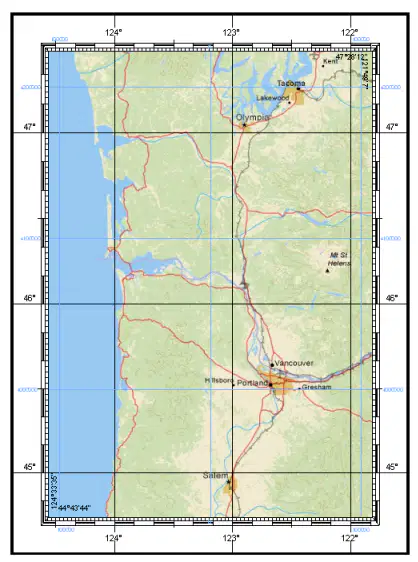
__________ helps you find the absolute location of places on a map.
Grid system
Which is a Primary Source?

Which city is located at 38*N and 120* W?
What is a Command Economy?
A command economy is where a free market makes all economic decisions.
A command economy is where the citizens of that country make all economic decisions.
A command economy is where a government makes all economic decisions.
All of the above
What type of Economic System does the U.S. mostly have?
Market economy
Command economy
Traditional Economy
Planned Economy
Which is the difference between a Market economy and a Command economy?
In a market economy, the government decides which goods and services will be created. In a command economy, the consumers decide.
In a market economy, people decide which goods and services will be created. In a command economy, the government decides.
Understanding who the author of a document is, and examining his or her reliability is an example of _______.
Sourcing
Contextualization
Corroboration
Close Reading
Why should you trust a letter from a soldier describing what a battle was like the day it happened?
It's a primary source
The soldier saw the events in person
The memories are fresh in the soldier's head
All Answers are correct
When should we most likely trust someone's opinion as a reliable source?
When many other credible people have the same opinion
When they have no reason to lie or show bias
When they are an expert on the topic
All answers are correct
The G in G.R.A.P.E.S. stands for...
Geothermal
Geography
Gender
Gesture
The R in G.R.A.P.E.S. stands for...
Religion
Rest
Rectify
Restart
The A in G.R.A.P.E.S. stands for...
Allocation
Atypical
Achievements
Aerodynamic
The P in G.R.A.P.E.S. stands for...
Postal
Ponder
Presentation
Pastor
Politics
The E in G.R.A.P.E.S. stands for...
Entertainment
Economics
Entrepreneur
Ecosystem
The S in G.R.A.P.E.S. stands for...
Social Sciences
Society
Social Structure
System

Which features of G.R.A.P.E.S. does this picture represent?
Picture Caption: Hurricane Harvey destroys many homes.
Politics
Social Structure
Geography
Cutting down trees to build a house is an example of which theme of geography?
location
place
movement
human-environment interaction
The states in the area known as the "Southwest" of the United States are often grouped together because they are very hot and dry desert-like areas. This is an example of which theme of geography?
Region
Location
Place
Movement
Which of the following is an example of a physical feature when describing a place?
roads
houses
mountains
schools


What is Bias?
Facts which prove a point
Prejudice against a person/thing
Prejudice in favor OR against a person/thing
Purposeful misinformation
The following questions represent which Historical Thinking skill?
What do other documents say? Do the documents agree? If not, why? What are other possible documents? What documents are most reliable?
Contextualization
Corroboration
Close Reading
Sourcing
Which of the following is a characteristic of a reliable source?
A source written by a well-known author
A source that is written anytime before the 2000s
A source that is based on evidence and fact.
A source that is found in the library
an artifact from ancient Egypt
primary
secondary

