
 Worksheets
1/4 Exam Review, 2021
Total questions: 95
Worksheet time: 32mins

“We hold these truths to be self-evident, that all men are created equal, that they are endowed by their Creator with certain inalienable rights, that among these are life, liberty, and the pursuit of happiness . . .”— The Declaration of Independence
Which Enlightenment thinker most directly influenced the notion expressed in this passage?
Thomas Hobbes
John Locke
Jacques Bossuet
Baron de Montesquieu

An agreement by which people give up their freedoms for an organized society.
laissez-faire
natural rights
social contract
natural law

Rules discoverable by reason
laissez-faire
natural rights
social contract
natural law
Influenced by the ideas of Voltaire
Frederick II
Catherine the Great
Joseph II
Candide

Which of the following was an early spokesperson for women's rights?
Denis Diderot
Marie Antoinette
Mary Wollstonecraft
Mrs. Reichert
What book did Adam Smith write?
Wealth of Nations
The Social Contract
Leviathan
The Spirit of the Laws
Adam Smith’s doctrine that maintains that the state should not intervene in economics is called
Laissez-faire
Socialism
Mercantilism
Imperialism
Who argued against harsh punishments and felt that punishment should be severe enough to outweigh the potential benefits of the crime?
Cesare Beccaria
John Locke
Montesquieu
Thomas Hobbes
What rules discoverable by reason did Enlightenment thinkers try to apply to the study of human behavior and society?
natural right
natural law
social contract
divine right
Enlightenment thinkers were influenced by the idea of natural law that emerged from the
Reformation
Glorious Revolution
Renaissance
Scientific Revolution.
Diderot's Encyclopedia was important because it
compiled classical Greek and Roman works.
spread Enlightenment ideas.
was the first publication printed with moveable type.
was the first publication to include articles by women.
The system of checks and balances in the United States Constitution was influenced by the ideas of which Enlightenment thinker?
Montesquieu
Voltaire
Rousseau
Diderot
An Enlightened despot was a ruler who
The old order respects Roman tradition.
allowed limited voting rights.
gained stronger absolute power.
brought about political and social change.
A Russian despot that studied the philosophies and embraced enlightenment ideas
Frederick the Great.
James I
Joseph II.
Catherine the Great.
According to Thomas Hobbes, the best form of government is
a federal republic.
a theocracy.
absolute monarchy.
a democracy.
Salons helped to spread...?
Enlightenment thinking
Coffee Cups
The King's laws
Catholic scripture

French Enlightenment philosopher who strongly believed in freedom of speech and religion
Voltaire
Denis Diderot
Mary Wollstonecraft
John Locke
Who wrote the Spirit of Laws
Locke
Hobbes
Rousseau
Montesquieu

Belief that a rulers authority comes directly from god.
Aboslutism
Divine Right
Petition of Right
Constitutional Monarchy

An agreement by which people give up their freedom for an organized society.
Social Contract
English Bill of Rights
Petition of Rights
US Constitution

Thomas Hobbes work about society during the Enlightenment.
Leviathan
King James II
Charles I of England
Louis XIV

Absolute ruler who used his or her power to bring about political and social change.
Baroque
Enlightened Despot
Aboslutism
Divine Right
An idea found in the writings of both Locke and Rousseau is
the social contract
government by popular consent
the natural goodness of people
the rights of women
A social gathering for intellectuals and artists, often hosted by wealthy Parisian woman.
Salon
Convention
Party
University
A type of social critic in France who believed that people could apply reason to all aspects of life.
Philosophe
Scientist
Priest
Monk
The document in which American colonists asserted their right to free themselves from British rule.
Declaration of Independence
Constitution
Bill of Rights
Social Contract
An intellectual movement in the 18th century that stressed the power of individuals to solve problems.
Empirism
Enlightenment
Rococo
Observation
Thomas Hobbes published his book, Leviathan, in 1651. He argued that people were cruel, greedy, and selfish, causing life to be unpleasant, poor, and short. What was the foundation of Thomas Hobbes’s social contract?
Only a laissez-faire government could produce an orderly society.
Only a government that protected natural rights could produce an orderly society.
Only a powerful government, such as an absolute monarchy, could produce an orderly society.
Only a weak government, such as one headed by an enlightened despot, could produce an orderly society.
Being all equal and independent, no one ought to harm another in his life, health, liberty, or possessions.”
― John Locke, Second Treatise of Government
What document John Locke’s view of natural rights directly influences?
the Magna Carta
the Petition of Right
the United States Sentiments
the Declaration of Independence

What was the "social contract," according to Rousseau?
The concept that an entire society agrees to be governed by the general will & all individuals should be forced to abide by it since it represents what is best for the entire community.
The right of children to leave their parents' family and move to Yukon.
The concept that the state should not impose government regulations but should leave the economy alone.
An artistic style that replaced baroque in the 1730s; it was highly secular, emphasizing grace, charm, & gentle action.

What were the salons in the Enlightenment?
The elegant drawing rooms where elites gathered to discuss the ideas of the philosophes.
The new businesses where women could have their hair styled & nails polished.
The art galleries of the 18th century, where the latest art work was displayed for all to see.


Why were American colonist upset with the British
Stamp Act
Taxation without representation
Tea Tax
All of the above
“Man is born free, and everywhere he is in chains. “ belongs to:
Thomas Hobbes
Jean Jacques Rousseau
John Locke
Baron de Montesquieu
A government in which citizens vote directly on laws and has majority rule is called ____.
Republic
Monarchy
Constitutional Monarchy
Direct Democracy
Francis Bacon, Galileo, and Isaac Newton promoted the idea that knowledge should be based on _____.
The experiences of past civilizations
Experimentation and Observation
The Teachings of the Catholic Church
Emotions and feelings
Voltaire is most commonly known as a supporter for which idea during the Enlightenment?
Natural Rights
Slavery
Free Speech
Checks and Balances
What would be John Locke's ideal form of government?
A republic with consent of the governed
Absolute monarchy and Leviathan
Constitutional monarchy and separation of powers
Direct democracy
What would be Thomas Hobbe's ideal form of government?
Democracy with consent of the governed
Absolute monarchy and Leviathan
Constitutional monarchy and freedom of speech
What would be Mary Wollstonecraft's ideal form of government?
Absolute monarchy and Leviathan
Democracy with women's rights
Constitutional monarchy and separation of powers
What would be Jean-Jacques Rousseau's ideal form of government?
Democracy with Direct Democracy
Constitutional monarchy and separation of powers
Absolute monarchy and Leviathan

Thought that people should make a contract with each other to follow the will of the majority:
Thomas Hobbes
John Locke
Baron de Montesquieu
Voltaire
Jean Jacques Rousseau

Credited with saying, "I do not agree with a word you say but I will defend to the death your right to say it."
Thomas Hobbes
John Locke
Baron de Montesquieu
Voltaire
Jean Jacques Rousseau

The ideas of the Enlightenment challenged the long-term assumptions about sovereignty and instead proposed that:
governments are bound to the will of the people.
true government stems from religious authority.
the best form of government is a direct democracy.
all government is inherently unjust. Humans are better off living in a state of nature.


Radical political club during the French Revolution that wanted to remove the king and establish a republic. Both middle class men and women joined.
Sans-Cullotes
Radicals
Emigres
Jacobins

A committee established during the French Revolution to identify "enemies of the republic."
Committee of Public Safety
National Assembly
Legislative Assembly
Estates General

“General Famine and General Winter, rather than Russian bullets, have conquered the Grand Army.”—French general Michel Ney
What was an immediate result of the event described in the above quotation?
Napoleon surrendered and was sent into exile.
The French monarchy was restored to power.
Napoleon abdicated his throne
Napoleon established the Continental System.
Bankers, doctors, lawyers, and merchants were members of the _____, or French middle class.
Robespierre
Napoleonic Code
bourgeoisie
Louis XVI
What was one long-term impact of the French Revolution?
The American colonies were inspired to declare their independence from England.
The bourgeoisie lost all of their political power.
The Third Estate had the largest tax burden.
The ideals of liberty, equality, and fraternity were spread throughout Europe.
What radical group of revolutionaries made up the majority of the National Convention?
the Nobility
the Robespierres
the Jacobins
the Whigs

This 19th Century-ism appeals to the Bourgeois (professional class). Buzzwords would include Liberty, Constitution, Natural Rights, laissez faire, Choice, Equality, reform, individualism, progress.
Conservatism
Liberalism
Romanticism
Socialism

This 19th Century-ism appeals to the Aristocracy / Landed Gentry. Buzzwords are tradition, old order, institutions, privileges. Proponents would Edmund Burke and Metternich.
Conservatism
Liberalism
Romanticism
Socialism
Nationalism was a force that
tore apart centuries-old empires
gave rise to the nation-state
was opposed by conservatives
all of the above
A person who argued for protecting the traditional monarchies of Europe (or anywhere) was a supporter of which ideology?
Conservatism
Radicalism
Liberalism
Nationalism
A supporter of this ideology wanted more power to parliamentary (or democratic) governments, wanted to expand suffrage (the right to vote), and equality for all.
Liberalism
Conservatism
Radicalism
Nationalism
Which types of people supported conservatism during the 19th century? Choose all that apply.
Wealthy property owners
Former revolutionaries
Women and slaves
Members of the nobility
Absolute monarchs
The Congress of Vienna -
reclaimed American colonies
redrew the map of Europe
redrew the map of America
reclaimed African colonies
What political philosophies emerged after the Congress of Vienna?
liberalism
communism
nationalism
conservatism
Which Austrian diplomat exerted such an influence over European politics that the era of 1815 to 1848 is named after him?
Talleyrand
Castlereagh
Metternich
Bismarck
What was a loose alliance made up of Prussia, Austria, and 37 other German states which were put under Austrian leadership?
Confederate States of America
Austro-Hungarian Confederacy
Reichert's Confederacy
Confederation of German States
Which country in 1811 viewed Napoleon’s Empire as a threat and withdrew from Napoleon’s Continental System?
Prussia
Spain
Russian Empire
United States

In this map, how are countries such as Prussia & Austria labeled?
As directly-ruled parts of the French Empire
As indirectly-ruled "dependent states"
As forced allies of Napoleon

On this map, which great power is shown in green (& split into two parts)?
Prussia
France
Austria
Russia

Which of these countries were "dependent states" ruled by Napoleon's relatives?
Spain
Britain
City of Rome
Austrian Empire
What revolution Influenced The Haitian Revolution?
Industrial Revolution
Russian Revolution
Chinese Revolution
French Revolution
Why did the Haitian Revolution start?
The revolution started because of slaves wanting social equality and freedom.
Because of Robespierre
Started in 1791
Because of the important people
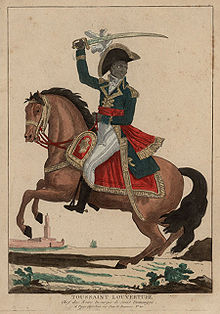
Who was the leading general of the Haitian Revolution?
Napoleon Bonaparte
Jean Jacques Dessalines
Hidalgo
Toussaint L'Ouverture

