wayground logo

Free Printable Worksheets

NEW

Font size

S
M
L
XL
Worksheets

Moon Phases, Tides, & Eclipses

Total questions: 50

Worksheet time: 17mins

Name
Class
Date
1.
Name the phase of the Moon is in:
a)
Waning crescent
b)
waxing gibbous
c)
waxing crescent
d)
waning gibbous
2.
Name the phase of the Moon is in:
a)
Waxing gibbous
b)
waxing crescent
c)
waning gibbous
d)
waning crescent
3.
Name the phase of the Moon is in:
a)
waxing crescent
b)
waning crescent
c)
waxing gibbous
d)
waning gibbous
4.
Name the phase of the Moon is in:
a)
Full 
b)
New
c)
1st
d)
3rd
5.
Name the phase of the Moon is in:
a)
waning gibbous
b)
waxing gibbous
c)
waning crescent
d)
waxing crescent
6.
Name the phase of the Moon is in:
a)
New
b)
Full
c)
1st
d)
3rd
7.
Type of Tide
a)
Neap
b)
Spring
c)
Fall 
d)
Summer
8.
Type of eclipse
a)
Solar
b)
Lunar
c)
Neap
d)
Spring
9.
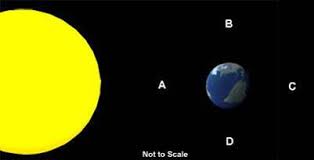
What type of type of tide is it if the Moon is in Letter A
a)
spring
b)
neap
c)
solar
d)
lunar
10.
What type of type of tide is it if the Moon is in Letter C
a)
spring
b)
neap
c)
solar
d)
lunar
11.

The moon phases occur because...

a)

the sun, the earth, and the moon do a dance and create shadows

b)

the moon grows and shrinks

c)

the moon revolves around the earth

d)

the moon produces its own light

12.

What causes tides?

a)

Gravity between the Earth, Moon, and Sun.

b)

Only the Sun's gravity causes tides.

c)

Earth's own gravity.

13.

Spring tides happen during which two Moon phases?

a)

First Quarter and Third Quarter

b)

Full Moon and new Moon

c)

Full Moon and Third Quarter

14.
If the Sun, Earth, and Moon are in perfect alignment, the Earth would have a _______ tide.
a)
Spring
b)
Neap
c)
Normal
15.
If the Sun, Earth, and Moon create a 90 degree angle, the Earth would have __________.
a)
Spring tides
b)
Neap tides
c)
Normal tides
16.
What moon phase came right BEFORE this one?
a)
First Quarter
b)
Last Quarter
c)
New Moon
d)
Full Moon
17.
Name the moon phase that would come AFTER this moon.
a)
waning crescent
b)
waxing crescent
c)
waning gibbous
d)
waxing gibbous
18.
What phase is diagram #6 showing?
a)
waning gibbous
b)
waxing gibbous
c)
waning crescent
d)
waxing crescent
19.

A solar eclipse occurs when the New Moon passes directly ____ & casts a shadow on the Earth.

a)

between the Full Moon & Earth

b)

between the Sun & Earth

c)

overhead

d)

behind the Earth

20.

____ is when the Moon is closest to Earth in its orbit, ____ is when it is farthest away.

a)

Perigee, apogee

b)

Apogee, perigee

c)

Rotational period, perigee

d)

Revolution, apogee

21.

Which statement best describes a lunar eclipse?

a)

occurs when the Moon passes through Earth's shadow

b)

a very rare event that can damage your eyes if not protected

c)

lasts about 7-13 minutes

d)

occurs when the Sun passes through Earth's shadow

22.

The shape of the Earth's orbit around the Sun & the Moon's orbit around the Earth can be

a)

described as an ellipse.

b)

described as circular.

c)

erratic at times.

d)

sometimes circular & sometimes elliptical.

23.

The Moon takes 27.3 days for one rotation. It takes 29.5 days from new moon to new moon. Why?

a)

because there is a time difference of 2.2 days

b)

Earth is also moving around the Sun; the Moon is catching up

c)

technically the Moon is also revolving around the Sun

d)

the Moon is just slower than we originally thought

24.

Lunar eclipses are not as rare as a solar eclipse because the

a)

Moon doesn't pass in Earth's shadow as frequently.

b)

Sun lines up regularly every month with the Moon.

c)

Earth is larger & casts a larger shadow on the Moon.

d)

Moon is smaller than the Earth.

25.

The Sun has 27 million times the mass of the Moon. The Moon has a greater effect on tides. Why?

a)

the Sun has no effect on Earth's tides

b)

the Sun sometimes is closer but usually farther away

c)

the Moon is much closer to the Earth

d)

solar energy changes with the solstices & equinoxes

26.

How many days are required for the Moon to go from one full-Moon phase to the next full-Moon phase when viewed from Earth?

a)

24

b)

27.3

c)

29.5

d)

365

27.
a)

Changing phases of the Sun

b)

Changing phases of the Moon

c)

Stages in an eclipse of the Sun

d)

Stages in the eclipse of the Moon

28.

According to the pattern shown on the given graph, the next high tide will occur on the following day at approximately:

a)

12:30 am

b)

4:00 am

c)

2:00 am

d)

3:13 am

29.
Between which two points will the Moon appear to change from a full moon to a quarter moon?
a)
T and Q
b)
Q and R
c)
R and S
30.
There is a full moon on December 13th.  When will the full moon occur in January?
a)
January 1st
b)
January 7th
c)
January 13th
d)
January 27th
31.
What moon phase is at position 3? 
a)
waxing crescent 
b)
1st quarter
c)
3rd quarter 
d)
waning crescent 
32.
Which type of eclipse is being modeled:  Lunar or Solar
a)
Lunar Eclipse
b)
Solar Eclipse
33.
If we are in a new moon phase right now, what phase can we expect to be in a week from now?
a)
Waxing Crescent
b)
1st Quarter
c)
Full Moon
d)
Waning Crescent 
34.

the darkest part of a shadow.

a)

Penumbra

b)

Umbra

c)

Eclipse

d)

Solstice

35.

the part of a shadow surrounding the darkest part.

a)

Penumbra

b)

Phase

c)

Eclipse

d)

Umbra

36.

The path of an object as it revolves around another object in space.

a)

Revolution

b)

Orbit

c)

Inertia

d)

Heliocentric

37.
The image depicts a 
a)
solar eclipse
b)
lunar eclipse
38.
What moon phase is necessary for a solar eclipse to occur?
a)
new
b)
full
c)
first quarter
d)
last quarter
39.
The tidal range for Wednesday June 2nd  is:
a)
6.0 feet
b)
6.7 feet
c)
4.7 feet
d)
12:26 AM
40.
If the path of totality is over your area what are you experiencing?
a)
a total solar eclipse
b)
a partial solar eclipse
c)
a total lunar eclipse
d)
a partial lunar eclipse
41.
Which statement is true?
a)
solar eclipses last a few minutes, while lunar eclipses last hours
b)
solar eclipses last hours, while lunar eclipses last a few minutes
c)
both solar and lunar eclipses only last a few minutes
d)
both solar and lunar eclipses last a few hours
42.
The image depicts a 
a)
solar eclipse
b)
lunar eclipse
43.
Which has the smaller tidal range?
a)
neap tides
b)
spring tides
44.
Which has higher high tides and lower low tides?
a)
neap tides
b)
spring tides
45.
A lunar eclipse occurs when the line up is this:
a)
Sun -Earth-Moon
b)
Moon, Sun, Earth
c)
Earth-Sun-Moon
d)
Sun-Moon-Earth
46.
When the visible portion of the moon is increasing, the moon is…?
a)
Waxing
b)
Waning
c)
Full
d)
None of the above
47.
Approximately how much time passes between the new moon and full moon?
a)
one month
b)
two weeks
c)
3 days
d)
24 hours
48.
How many low tides and high tides happen in a day?
a)
1 low tide, 1 high tide
b)
4 low tides, 4 high tides
c)
3 low tides, 3 high tides
d)
2 low tides, 2 high tides
49.

The moon orbits Earth in a __________________ direction

a)

clockwise

b)

counterclockwise

c)

upwards

d)

downwards

50.

Why do we not have lunar and solar eclipses every month?

a)

Because the Moon's orbit is tilted

b)

Because of Apogee and Perigee

c)

Because Earth makes a bigger shadow

d)

The Moon's orbit is eliptical