wayground logo

Free Printable Worksheets

Font size

S
M
L
XL
Worksheets

APES Mid-Cycle Assessment: 2nd six weeks (Soil)

Total questions: 20

Worksheet time: 33mins

Name
Class
Date
1.
The two main agents of erosion are...
a)
wind and flowing water
b)
gravity and frost wedging
c)
oxygen and water
d)
carbon dioxiede and wind
2.
Which of the following is the correct order of soil particles in order of increasing particle size?
a)
clay-sand-silt
b)
sand-clay-silt
c)
silt-clay-sand
d)
clay-silt-sand
3.
Soil sample that is 60% clay, 30% silt, and 10% sand has which texture? 
a)
clay
b)
clay loam
c)
sandy loam
d)
silt 
4.
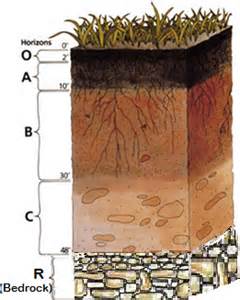
Which is the correct order of soil horizons starting at the surface?
a)
A, B, E,C, O
b)
O, A, B, C, E
c)
O, E, A, B, C
d)
O, A, E, B, C
5.
The deep, underlying non-soil materials
a)
B horizon
b)
E horizon
c)
O horizon
d)
Bedrock
6.
The layer where minerals that were leached out of layers above accumulate
a)
A horizon
b)
B horizon
c)
E horizon
d)
O horizon
7.
A mixture of soil, loam, and detritus; the topsoil
a)
A horizon
b)
B horizon
c)
E horizon
d)
O horizon
8.

The rate at which water flows through the soil is called soil percolation or ______.

a)

Groundwater

b)

Permeability

c)

Soil Pores

d)

Porosity

9.
Which soil component has the least capacity for holding water?
a)
silt
b)
clay
c)
sand
d)
humus
10.

The layer(s) of soil in which most of the humus and soil organisms are contained:

1- leaf litter, horizon O

2- topsoil, horizon A

3- subsoil, horizons B and C

a)

1 only

b)

2 only

c)

1 and 2 only

d)

2 and 3 only

e)

1, 2, and 3

11.
_______ is the type of soil used most often with plants and on farms. It is a mixture of clay, sand, and silt.
a)
loam
b)
humus
c)
soil
d)
dirt
12.
Ellen grabs a topsoil sample in her hand. She rolls it into a ball. The soil feels gritty and the ball falls apart. What part of the topsoil most likely made the topsoil feel gritty?
a)
clay
b)
sand
c)
silt
d)
humus
13.
When plants, animals, and other organisms die, they break down and become part of the soil. What is this part of the soil called?
a)
sand
b)
silt
c)
clay
d)
humus
14.
You dig a small hole in the soil and the next day it rains. The hole fills with water, but does not empty even after several days of dry weather. What is the soil mostly made of?
a)
clay
b)
sand
c)
humus
d)
silt
15.
Water gets into the cracks of rock and freezes, causing the rock to break.  What is this an example of?
a)
erosion
b)
weathering
16.
Soil is made of
a)
weathered rocks and minerals
b)
dead plants and animals
c)
air and water
d)
all of the above
17.
Soil formation begins with the weathering of_______.
a)
Humas
b)
Subsoil
c)
Litter
d)
Rock
18.
Which horizon is made up of partially weathered rocks?
a)
Horizon A
b)
Horizon B
c)
Horizon C
d)
Horizon D or R
19.

Which horizon contains clay, silt, and minerals, and is commonly referred to as subsoil?

a)

Horizon A

b)

Horizon B

c)

Horizon C

d)

Horizon D or R

20.

Porosity is a measure of void space in a soil sample. Larger soil particles have larger void spaces. Smaller soil particles have smaller pore spaces, but a greater number of them, which leads to higher surface tension and higher % porosity. With this is mind, which statement is true:

a)

Sandy soil has a higher porosity than clay soil

b)

Sandy soil has a higher porosity than silty soil

c)

Clay soil has a higher porosity than sandy soil

d)

Porosity is directly proportional to soil particle size