
NEW
Font size
 Worksheets
Moon Phases, Eclipses, and Tides
Total questions: 31
Worksheet time: 16mins
The _______, which orbits Earth, is Earth’s only natural satellite.
moon
sun
ISS
asteroid belt
A _________ is a body that orbits another body.
satellite
nebula
supernova
phase
As the moon turns, the _______ of the moon’s surface that is
illuminated by sunlight changes.
half
entirety
quarter
quadrant
An ___________
occurs when one celestial body passes through the shadow
of another.
eclipse
phase
asteroid
equinox
The complete cycle of moon phases repeats every _______ days
29.5
23.5
25.3
25.9
A ____________ occurs when Earth is positioned between
the moon and the sun and when Earth’s shadow crosses
the sunlit half of the moon.
lunar eclipse
solar eclipse
During a total ____________, the light from the sun is completely blocked by the moon.
solar eclipse
lunar eclipse
_______ are the periodic rise and fall of the water level in oceans and other bodies of water.
tides
waves
phases
currents
Tides are caused by the force of gravity exerted by the ______ and the _______.
moon, sun
moon, wind
rain, wind
sun, wind
The moon’s gravity has the strongest effect on water on the side of Earth (facing /away from) the moon.
facing
away from
A ____________ is the difference between the levels of ocean water at high tide and low tide.
tidal range
tidal current
tidal cycle
tidal rise
__________ occur twice a month when Earth, the sun, and the moon form a straight line in space.
spring tides
neap tides
leap tides
ring tides
__________ occur twice a month when Earth, the sun, and the moon form a 90° angle in space.
spring tides
neap tides
leap tides
ring tides
__________ always occur during the new moon and full moon.
spring tides
neap tides
leap tides
ring tides
____________ always occur during the first-quarter moon and third-quarter moon
spring tides
neap tides
leap tides
ring tides


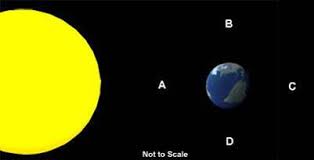
Spring tides happen during which two Moon phases?
First Quarter and Third Quarter
Full Moon and new Moon
Full Moon and Third Quarter

