wayground logo

Free Printable Worksheets

NEW

Font size

S
M
L
XL
Worksheets

Atomic Structure & Scientists

Total questions: 35

Worksheet time: 2hrs 33mins

Name
Class
Date
1.
An element with 4.35% have a mass of 49.9461 amu, 83.79% have amass of 51.9405 amu, 9.50% have a mass of 52.9407 amu, and 2.36% have a mass of 53.9389amu.
a)
51.99 amu
b)
52.19 amu
c)
53.45 amu
d)
17.33 amu
2.
24.1% of all the isotopes of a an element have a mass of 75.23 amu, 48.7% have a mass of 74.61 amu, and 27.2% have a mass of 75.20 amu.
What is the average mass of this element?
a)
74.92 amu
b)
24.97 amu
c)
75.01 amu
d)
74.51 amu
3.
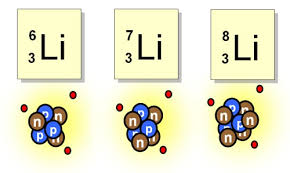
How many neutrons does the isotope of lithium have?
a)
8
b)
3
c)
4
d)
5
4.
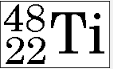
How many protons does this isotope of titanium have?
a)
48
b)
22
c)
26
d)
70
5.
In a correctly written symbol what would be located in the "A" position?
a)
number of neutrons
b)
atomic number
c)
number of electrons 
d)
mass number
6.
which atom has  4 neutrons?
a)
Li-6
b)
Li-7
c)
Li-8
d)
they have the same # of neutrons
7.
How many neutrons in C-14?
a)
6
b)
7
c)
14
d)
8
8.
Four isotopes of lead include lead-204, lead-206, lead-207, and lead-208.  The average atomic mass of lead is 207.2.  Which isotope of lead is likely to be the most abundant.
a)
204
b)
206
c)
207
d)
208
9.
An atom is electrically neutral when
a)
protons and neutrons are the same
b)
protons and electrons are the same
c)
neutrons and electrons are the same
d)
neutrons balance the protons and electrons
10.
Ions are: 
a)
atoms with a positive or negative charge
b)
atoms with no charge
c)
atoms with ONLY a positive charge
d)
atoms with ONLY a negative charge
11.
How many electrons are in an atom that has an atomic number of 34, an atomic mass of 74 and a charge of -2?
a)
34
b)
36
c)
2
d)
40
12.
Which process involves the splitting of large nuclei?
a)
Beta decay
b)
Alpha decay
c)
Nuclear fission
d)
Nuclear fusion
13.
Which process involves the joining of small nuclei?
a)
Beta decay
b)
Alpha decay
c)
Nuclear fission
d)
Nuclear fusion
14.
The nuclear process occurring at a nuclear power plant.
a)
Nuclear fusion
b)
Nuclear fission
c)
Combustion
d)
Multiplication
15.
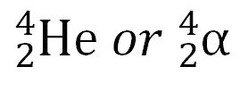
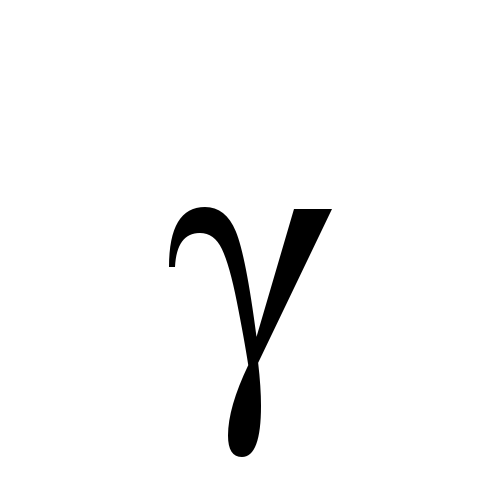
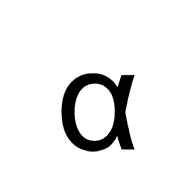
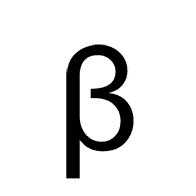
What do these symbols represent?
a)
alpha particle
b)
beta particle
c)
neutron
d)
gamma ray
16.
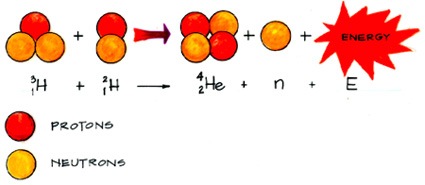
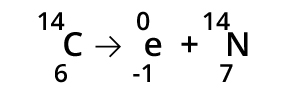
What type of nuclear equation is this?
a)
fusion
b)
fission
c)
alpha
d)
beta
17.
In a neutral atom, the number of protons always equals
a)
the number of neutrons.
b)
the number of electrons.
c)
the mass number.
d)
the average atomic mass.
18.
What happens to the atomic number during alpha decay?
a)
The atomic number decreases by 4
b)
The atomic number increases by 1
c)
The atomic number decreases by 2.
d)
The atomic number stays the same.
19.

How is the alpha particle written in a nuclear equation?

a)

42He

b)

24He

c)

0-1e

d)

00γ

20.
Solve this equation for alpha decay.
85209At = ___ + 24He
a)
83205Bi
b)
86209Rn
c)
81207Tl
d)
85208At
21.

Gamma rays have

a)

no mass

b)

a huge mass

c)

a small mass

d)

an average mass

22.
Solve this equation for beta decay.
614C = ___ + -10e
a)
410Be
b)
714N
c)
210He
d)
613C
23.
Has the symbol
a)
Alpha
b)
Beta 
c)
Gamma
24.
Has the symbol
a)
Alpha
b)
Beta
c)
Gamma
25.
Has the symbol
a)
Alpha
b)
Beta
c)
Gamma
26.
Has the lowest penetrating power.  Can only penetrate 0.05 mm into the body and can be stopped by a piece of paper or clothing.
a)
Alpha
b)
Beta
c)
Gamma
27.

In a correctly written symbol what would be located in the "Z" position?

a)

number of neutrons

b)

atomic number

c)

number of electrons

d)

mass number

28.

These particles are found in the nucleus

a)

protons and electrons

b)

nucleus and neutrons

c)

protons and neutrons

d)

electrons and neutrons

29.

Which Scientist created this model

a)

Democritus

b)

Chadwick

c)

Bohr

d)

Rutherford

30.
The scientist responsible for "discovering" the nucleus is:
a)
Bohr
b)
Rutherford
c)
Schroedinger
d)
Einstein
31.
Electrons are not factored into atomic mass because:
a)
They are so small their mass is negligible
b)
They're not in the nucleus
c)
They're too big
d)
They move so quickly their mass is zero
32.
Which scientist developed the atomic theory?
a)
JJ Thomson
b)
Ernest Rutherford
c)
John Dalton
d)
James Chadwick
33.
What did Thomson discover?
a)
electron
b)
proton
c)
neutron
d)
electron cloud
34.
What does the Bohr model suggest?
a)
Atoms are small, hard, indivisible objects. 
b)
That protons in the nucleus are attracted to electrons in the electron clouds. 
c)
That electrons travel around the nucleus of an atom in orbits or definite paths.
35.

Which idea of John Dalton is no longer considered part of the modern view of the atom?

a)

Atoms of different elements can combine in different ratios to form different compounds.

b)

Atoms combine in simple whole number ratios to form compounds.

c)

All atoms are identical.

d)

All matter is made of atoms.