wayground logo

Free Printable Worksheets

NEW

Font size

S
M
L
XL
Worksheets

FINAL EXAM - CHEMISTRY 2

Total questions: 40

Worksheet time: 13mins

Name
Class
Date
1.

What is the symbol for entropy?

a)

H

b)

G

c)

S

d)

E

2.

Entropy is a measure of

a)

accuracy

b)

precision

c)

the disorder of a system

d)

the attraction of a nucleus for an electron

3.

Which of these processes represents a decrease in entropy?

a)

sublimation of CO2

b)

boiling water

c)

condensation of steam on cold glass

d)

NaCl dissolving in water

4.

Which of these reactions shows a DECREASE in entropy?

a)

CaCO3(s) → CaO(s) + CO2(g)

b)

3O2(g) → 2O3(g)

c)

2NH3(g) → 3H2(g) + N2(g)

d)

C6H6(l) → C6H6(g)

5.

The entropy will usually increase when

a)

a molecule is broken into two or more smaller molecules

b)

a reaction occurs that results in an increase in the number of moles of gas

c)

a solid changes to a liquid

d)

all of these

6.

Which sample has the lowest entropy?

a)

1 mole of KNO3(l)

b)

1 mole of KNO3(s)

c)

1 mole of H2O(l)

d)

1 mole of H2O(g)

7.

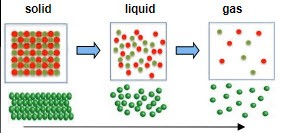
Entropy increases from solid, liquid to gas. Why?

a)

Molecular disorder increases

b)

Molecules increase in number from solid to gas

c)

Molecules are heavier in solid

d)

Molecules are more reactive

8.

Which state of matter has the greatest motion and least orderly arrangement?

a)

solid

b)

liquid

c)

gas

d)

aqueous

9.

Which phase change represents a decrease in entropy?

a)

solid to liquid

b)

gas to liquid

c)

liquid to gas

d)

solid to gas

10.
Entropy always increases when
a)
enthalpy decreases.
b)
temperature decreases.
c)
temperature increases.
d)
volume increases.
11.
A reaction has a positive ΔH and a positive ΔS. Which of the following is true?
a)
It will be spontaneous at all temperatures.
b)
It will be nonspontaneous at all temperatures.
c)
It will be spontaneous at low temperatures.
d)
It will be spontaneous at high temperatures.
12.

Which of the following situations demonstrates high entropy?

a)

water freezing

b)

water vaporizing

c)

steam condensing to water

13.
Entropy increases from solid, liquid to gas. Why?
a)
Molecular disorder increases
b)
Molecular randomness decreases
c)
Molecules are more energetic
d)
Molecules are more reactive
14.

What is a spontaneous process ?

a)

process that does not need external intervention to occur

b)

fast process

c)

process that needs an external intervention to occur

15.

Given the change of phase:

CO2(g) —> CO2(s)

As CO2(g) changes to CO2(s), the entropy of the system

a)

remains the same

b)

decreases

c)

increases

16.

Which one is correct example of spontaneous process?

a)

arranging a deck of cards

b)

dropping an egg on the floor

c)

A ball rolling downhill

d)

spraying an air freshener

17.
I can't be created nor destroyed. What am I?
a)
energy
b)
air
c)
nothi
d)
a unicorn
18.
The second  law of thermodynamics states that entropy of a system  tends to ______________. 
a)
increase
b)
decrease
c)
stay constant
d)
fluctuate wildly
19.

The first law of Thermodynamics states that

a)

States that energy can neither be created nor destroyed; energy can only be transferred or changed from one form to another.

b)

Says that the entropy of any isolated system always increases. Isolated systems spontaneously evolve towards thermal equilibrium

c)

States that the entropy of a system approaches a constant value as the temperature approaches absolute zero.
20.
The first law of thermodynamics is a restatement of the
a)
Zeroth law of thermodynamics
b)
law of heat addition
c)
principle of entropy
d)
conservation of energy
21.
If a substance has a pH of 10 it is considered
a)
Acidic
b)
Basic
c)
Neutral
22.
Acids produce _________ ions when they break down or dissocciate. 
a)
Hydroxide (OH-)
b)
Water
c)
Chlorine (Cl-)
d)
Hydrogen (H+)
23.
Bases release ____________ ions when they break down or dissociate. 
a)
Hydrogen (H+)
b)
Hydroxide (OH-)
c)
Chlorine (Cl-)
d)
no
24.
Water is neutral because the number of hydrogen and hydroxide ions is _________.
a)
the same
b)
different
25.
The pH scale ranges from ____________.
a)
0-7
b)
1-100
c)
1-20
d)
0-14
26.
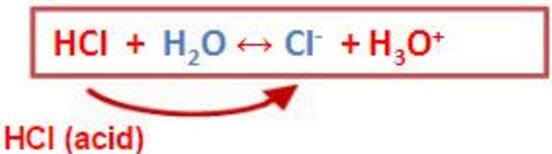
Which of the following shows the correct conjugate acid base pair?
a)
HCI (acid) / H3O+ (conjugate base)
b)
HCI (acid) / CI- (conjugate base)
c)
HCI (base) / CI- (conjugate acid)
d)
HCI (base) / H3O+ (conjugate acid)
27.
Which of the following shows the correct conjugate acid base pair?
a)
H2O (base) / H3O+ (conjugate acid)
b)
H2O (acid) / CH3COO- (conjugate base)
c)
CH3COOH (acid) / H3O+ (conjugate base)
d)
CH3COOH (base) / CH3COO- (conjugate acid)
28.
Which of the following shows the correct conjugate acid base pair?
a)
SO32-(base) / HSO3- (conjugate base)
b)
HPO42- (acid) / HSO3-(conjugate base)
c)
SO32-(acid) / HSO3- (conjugate base)
d)
HPO42- (acid) / PO43-(conjugate base)
29.

An Arrhenius base:

a)

donates H+

b)

accepts H+

c)

produces H+

d)

produces OH-

30.

An Arrhenius acid:

a)

donates H+ to another substance

b)

accepts H+ from another substance

c)

produces H+

d)

produces OH-

31.
A hydrogen ion, H+, is the same as a(n):
a)
neutron
b)
electron
c)
proton
d)
hydroxide ion
32.
Forms a OH- hydroxide ion
a)
Lewis Base
b)
Arrhenius Base
c)
Bronsted Lowry Base
d)
Bronsted Lowry Acid
33.
The following statement is true for arrhenius acid and base EXCEPT
a)
Arrhenius acid produces H+ ions
b)
Arrhenius base produces OH- ions
c)
H2O need to be present for arrhenius acid base to dissociate
d)
Hydrogen atoms that make the solution acidic
34.

A Bronsted Lowry base:

a)

donates H+ to another substance

b)

accepts H+ from another substance

c)

produces H+

d)

produces OH-

35.

NH3 + H2O → NH4+ + OH-

NH3 is a Bronsted Lowry

a)

Acid

b)

Base

c)

conjugate acid

d)

conjugate base

36.

HNO3 + H2O → H3O+ + NO31-

NO31- is the conjugate base of

a)

H2O

b)

HNO3

c)

H3O+

d)

none of the above

37.

HCO3- + H2O → H3O+ + CO32-

Water is acting as

a)

a Bronsted Lowry base

b)

a Bronsted Lowry acid

c)

a strong acid

d)

a weak acid

38.

HC2H3O2 + H2O → H3O+ + C2H3O21-

HC2H3O2 is acting as

a)

a conjugate base

b)

a Bronsted Lowry base

c)

a Bronsted Lowry acid

d)

none of the above

39.

HBr is the conjugate acid of

a)

Br1-

b)

Br2

c)

H2Br

d)

none of the above

40.

What is the conjugate base of H2SO4?

a)

SO42-

b)

H2SO3

c)

HSO31-

d)

HSO41-