wayground logo

Free Printable Worksheets

Font size

S
M
L
XL
Worksheets

Unit 1 Test Review

Total questions: 56

Worksheet time: 3570secs
Name
Class
Date
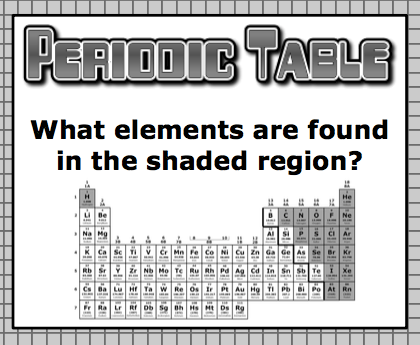
1.
a)
Metals
b)
Nonmetals
c)
Metalloids
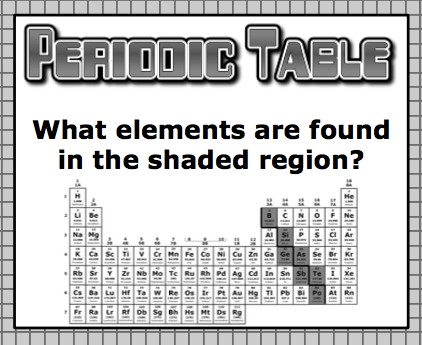
2.
a)
Metals
b)
Nonmetals
c)
Metalloids
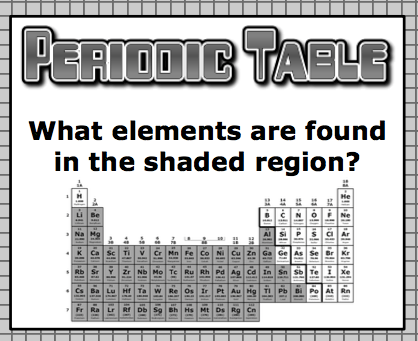
3.
a)
Metals
b)
Nonmetals
c)
Metalloids
4.
An ionic bond forms when atoms ___________ electrons.
a)
gain
b)
share
c)
increase
d)
transfer
5.
Which type of bond has an equal sharing of electrons?
a)
Polar Covalent 
b)
Non Polar Covalent
c)
Ionic
d)
Metallic
6.
Which type of bond has an unequal sharing of electrons?
a)
Polar Covalent 
b)
Non Polar Covalent
c)
Ionic
d)
Metallic
7.
If an atom loses two electrons what charge will it have?
a)
+ 2
b)
 - 2
c)
+1
d)
-1
8.
If an atom gains one electron what charge will it have?
a)
-2
b)
-1
c)
+1
9.
Covalent compounds
a)
Share electrons
b)
transfer electrons
c)
contain a sea of electrons
d)
conduct electricity
10.
What is the number of valence electrons for Oxygen?
a)
8
b)
6
c)
2
d)
1
11.

Ionic bonding is between a

a)

nonmetal and nonmetal

b)

metal and nonmetal

c)

metal and metal

d)

Depends on the situation

12.

Covalent bonding is between a

a)

nonmetal and nonmetal

b)

metal and nonmetal

c)

metal and metal

d)

It depends on the situation

13.

This could be the dot diagram of

a)

Mg

b)

Cl

c)

C

d)

O

14.
This could be the dot diagram of
a)
P
b)
Ar
c)
Na
d)
B
15.
Which of the following is a property of an ionic compound?
a)
high melting point
b)
soft
c)
malleable
d)
liquid at room temperature
16.
In what form can an ionic compound conduct electricity?
a)
when dissolved in water
b)
as a solid
c)
as a crystal
d)
when warmed slightly
17.
Which of the following is an example of a COVALENT COMPOUND?
a)
H2S
b)
KI
c)
CaCl2
d)
MgO
18.
Which substance contains bonds that involve a transfer of electrons from one atom to another?
a)
CO2
b)
NH3
c)
KBr
d)
Cl2
19.

Which of the following types of substance have a high melting point?

a)

covalent

b)

ionic

20.

Which of the following types of structure has a low melting point?

a)

ionic

b)

covalent

21.

MgO is bonded together with what type of bond?

a)

ionic

b)

covalent

22.
Predict the bond that will form between Sr and S.
a)
Ionic
b)
Covalent
23.

How many valence electrons does an atom of Silicon (Si) have?

a)

3

b)

4

c)

5

d)

6

24.

How many valence electrons does an atom of Strontium (Sr) have?

a)

2

b)

3

c)

4

d)

5

25.

How many valence electrons does an atom of Aluminum (Al) have?

a)

1

b)

2

c)

3

d)

4

26.

How many valence electrons does an atom of Chlorine (Cl) have?

a)

2

b)

4

c)

6

d)

7

27.

What is the most common ionic charge for nitrogen (N)?

a)

+4

b)

+3

c)

-4

d)

-3

28.

What is the most common ionic charge for potassium (K)?

a)

+1

b)

+2

c)

-1

d)

-2

29.
Predict the bond that will form between Be and F.
a)
Ionic
b)
Covalent
30.
Predict the bond that will form between Se and Cl.
a)
Ionic
b)
Covalent
31.
Predict the bond that will form between Sr and S.
a)
Ionic
b)
Covalent
32.
Ionic or covalent?
Na  Br
a)
Ionic
b)
Covalent
33.
Ionic or covalent?
C  O
a)
Ionic
b)
Covalent
34.
Ionic or covalent?
K  Br
a)
Ionic
b)
Covalent
35.

The row (period) number tells you the number of

a)

protons

b)

energy levels

c)

valence electrons

36.

How many energy levels does Rb have? Just give me the number.

(a)  

37.

How many energy levels does O have? Just give me the number.

(a)  

38.

How many energy levels does Mg have? Just give me the number.

(a)  

39.

How many energy levels does S have? Just give me the number.

(a)  

40.
Emission of light from an atom occurs when an electron
a)
drops from a higher to a lower energy level.
b)
   jumps from a lower to a higher energy level.   
c)
   moves within its atomic orbital.
d)
falls into the nucleus.
41.

The unknown emissions spectra belongs to the element

a)

Hydrogen

b)

Mercury

c)

Neon

d)

Helium

42.

Which element(s) is/are found in the star's spectra below?

a)

Hydrogen only

b)

Hydrogen & Helium

c)

Calcium only

d)

Hydrogen & Calcium

43.

Name the ionic compound, LiCl

a)

lithium chlorine

b)

lithium chloride

c)

lithium chlorate

d)

lithium monochloride

44.

Name the ionic compound, CaCO3

a)

calcium carbide

b)

calcium carbon trioxide

c)

calcium carbon oxide

d)

calcium carbonate

45.

What is the correct formula of phosphorus trichloride?

a)

P2Cl3

b)

P3Cl3

c)

PCl3

d)

PCl5

46.

What is the name for SiCl4?

a)

silicon tetrachloride

b)

silicon quadchloride

c)

monosilicon tetrachloride

d)

silicon chloride

47.

What is the chemical formula of sulfur hexabromide?

a)

SBr₆

b)

S₆Br

c)

S(VI)Br

d)

SBr4

48.

This is a correct dot diagram for carbon (C)

a)

true

b)

false

49.

Which of these is correct?

a)
b)
50.
Which of the following is the correct Lewis dot structure for the molecule fluorine (F2)?
a)
A
b)
B
c)
C
d)
D
51.
Which is the correct structure for ammonia?
(Top picture is A, bottom picture is D.)
a)
Option A
b)
Option B
c)
Option C
d)
Option D
52.
Which of the following is the correct Lewis structure for the compound PBr3?
a)
structure A
b)
structure B
c)
structure C
d)
structure D
53.
What is the correct structure for BF3?
a)
Option A
b)
Option B
c)
Option C
d)
Option D
54.
According to the octet rule most elements need _______ valence electrons.
a)
2
b)
8
c)
6
d)
18
55.

Which element is this?

a)

Nickel

b)

Neon

c)

Sodium

d)

Nitrogen

56.

Name this element.

a)

Argon

b)

Chlorine

c)

Aluminum

d)

Boron