Wayground logo

Free Printable Worksheets

Font size

S
M
L
XL
Worksheets

Unit 1 Science Review

Total questions: 60

Worksheet time: 5hrs 0mins

Name
Class
Date
1.
This boundary is described by two plates moving away from eachother along the edges and separating. The resulting gap allows magma to rise and create new crust, forming new lithosphere. 
a)
Convergent Boundary 
b)
Divergent Boundary  
c)
Transform Boundary
2.
This boundary is described as two plates moving past eachother ALONG THE EDGES horizontally.  These boundaries will get stuck or lock against eachother causing earthquakes when they slip and release. 
a)
Convergent Boundary
b)
Divergent Boundary
c)
Transform Boundary
3.
This boundary is described as moving toward one another  When the plates are both continental plates the will crumple up and form a mountains. When they are continental and oceanic plates, subduction occurs  and earthquakes and volcanoes form. 
a)
Convergent Boundary
b)
Divergent Boundary
c)
Transform Boundary
4.
Trenches, deep underwater canyons on the sea floor are created at this type of boundary 
a)
Divergent
b)
Convergent, Subduction Zone
c)
Transform 
5.
New crust is created at this type of  boundary.
a)
Divergent
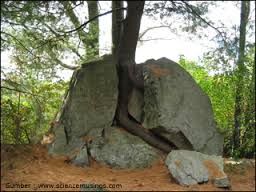
b)
Convergent, Subduction Zone
c)
Transform 
6.
Mountains are created at this type of  boundary.
a)
Divergent 
b)
Convergent
c)
Transform 
7.
Mid Ocean Ridge Formation  is created at this type of  boundary.
a)
Divergent 
b)
Convergent
c)
Transform 
8.
Mountains form from ...
a)
plates sliding past one another
b)
collision of plates
c)
plates moving away from each other
9.
Which of the following is where one plate slides under another plate?
a)
submarine zone
b)
divergence zone
c)
subduction zone
d)
lower zone
10.
Associated with transform boundaries.
a)
Volcanoes
b)
mountains
c)
trenches
d)
earthquakes
11.
This land formation occurs at a divergent continental/ continental boundary.
a)
mid ocean ridge
b)
deep ocean trench
c)
pacific hot spot
d)
rift valley
12.
What happens to temperature as you go deeper in the Earth?
a)
decreases
b)
increases
c)
fluctuates
d)
remains the same
13.
Name the boundary
a)
convergent boundary
b)
divergent boundary
c)
transform boundary
d)
sergent boundary
14.
Name the boundary
a)
convergent boundary
b)
divergent boundary
c)
transform boundary
d)
sergent boundary
15.
What is represented by the picture? 
a)
Sea-floor spreading
b)
Pangea
c)
How the continents are arranged today
d)
Volcanoes
16.
Name the boundary
a)
convergent boundary
b)
divergent boundary
c)
transform boundary
d)
sergent boundary
17.
The thinnest layer of the Earth is the ___________.
a)
mantle
b)
crust
c)
core
18.
What is the thickest layer of the Earth?
a)
the crust
b)
the mantle
c)
the outer core
d)
the inner core
19.
A dense ball of solid iron and nickel.
a)
crust
b)
inner core
c)
mantle 
d)
outer core
20.
What is the top layer of the Earth's surface called? 
a)
Mantle
b)
Innercore
c)
Outercore
d)
Crust
21.
What is the correct order (starting from the surface) of Earth's layers?
a)
crust, mantle, inner core, outer core
b)
mantle, outer core, inner core, crust
c)
inner core, outer core, mantle, crust
d)
crust, mantle, outer core, inner core
22.
What is the outermost layer of earth?
a)
inner core
b)
outer core
c)
mantle
d)
crust
23.

Which Layer creates the Earth's magnetic field?

a)

The Mantle

b)

The Outer Core

c)

The Crust

24.
What are the two types of crust
a)
continental and oceanic
b)
ocean and upper
c)
lower and upper
d)
pizza and subway
25.
A rock formed from fragments of other rocks is a(n)
a)
Metamorphic Rock
b)
Sedimentary Rock
c)
Extrusive Rock
d)
Igneous Rock
26.
This rock was another type of rock that was heated and compressed over time. What type of rock is this?
a)
Sedimentary
b)
Igneous
c)
Metamorphic
27.
This rock started as molten magma. What type of rock is this?
a)
Sedimentary
b)
Igneous
c)
Metamorphic
28.
The process when rocks break into smaller pieces due to exposure to natural elements is called
a)
erosion
b)
weathering
c)
sediments
29.
What are the 3 major types of rocks?
a)
Igneous, Metamorphic, Sedimentary
b)
Metamorphic, Igneous, Cementation
c)
magma, lava, crystals
30.
The name rock is given when it is broken down into smaller pieces.
a)
texture
b)
weathering
c)
sediment
d)
erosion
31.
True/False: Igneous rocks can only turn into metamorphic rocks.
a)
True
b)
False
32.

Any rock that forms from another rock as a result of changes in heat or pressure (or both) is a:

a)

chemical rock

b)

igneous rock

c)

sedimentary rock

d)

metamorphic rock

33.

This is the continuous process of rock changing from one type to another.

a)

Igneous rocks

b)

Sedimentary rocks

c)

Metamorphic rocks

d)

Rock Cycle

34.

What type of rock might contain evidence of past life?

a)

Sedimentary Rock

b)

Igneous Rock

c)

Metamorphic Rock

35.

Which of the following lists the steps an igneous rock undergoes in order to become a sedimentary rock, in the correct order?

a)

Deposition, erosion, melting, cooling

b)

Erosion, weathering, eruption, cooling

c)

Dissolving, deposition, cooling, fracture

d)

Weathering, erosion, deposition, cementation

36.

If a lot of heat is applied to a rock, it will turn into

a)

magma

b)

rocks

c)

sediment

d)

metamorphic rocks

37.
The three groups of rocks are classified by
a)
How they form
b)
Color
c)
Grain size
d)
Chemical Composition
38.
This rock was formed when molten rock cooled into a solid. What type of rock is it?
a)
Igneous Rock
b)
Metamorphic Rock
c)
Sedimentary Rock
39.
When sediments are pressed together tightly, this is called ____________.
a)
Compaction
b)
Cementation
c)
Weathering
d)
Erosion
40.
The process by which igneous rocks are formed...
a)
heat and pressure
b)
melting and cooling
c)
weathering and erosion
41.
The process by which metamorphic rocks are formed...
a)
heat and pressure
b)
erosion and deposition
c)
melting and cooling
42.
Mounds of wind-deposited sand in deserts and on shorelines are
a)
sea arches
b)
sea stacks
c)
dunes
d)
cliffs
43.
Lichen secretes an acid that breaks down rock.
a)
Mechanical Weathering
b)
Chemical Weathering
44.
U shaped valleys are formed by
a)
rivers
b)
glaciers
c)
wind
d)
human activity
45.

Over long periods of time, deposition may change the Earth’s surface by _____.

a)

forming new land features.

b)

breaking down large rocks into smaller ones.

c)

washing away beaches.

d)

moving topsoil.

46.

A cliff formed near the ocean. Which statement best describes how this cliff formed?

a)

Warm air melted the rock.

b)

Sun rays evaporated the rock.

c)

Ocean waves washed away rock.

d)

Plant roots pushed away the rock.

47.
What is the process that picks up and moves weathered rocks?
a)
Deposition
b)
Landslide
c)
Weathering
d)
Erosion
48.

What causes the greatest erosion effect on our beaches?

a)

Waves

b)

Gravity

c)

Glaciers

d)

Wind

49.

What is an enormous mass of ice moving over land, causing weathering of rock and soil?

a)

A glacier

b)

An iceberg

c)

An ice wedge

d)

A sand dune

50.

How do plants weather rocks?

a)

During photosynthesis

b)

When roots grow into cracks of rocks and expand the rock breaks.

c)

When the plant moves water from the roots to the leaves, the rock breaks.

d)

Plants don't weather rocks.

51.

A delta is formed by the action of -

a)

weathering

b)

erosion

c)

deposition

d)

condensation

52.

Some agents of weathering are water, wind, ice, temperature and plant roots.

a)

true

b)

false

53.
What caused the edges of these rocks to become smooth?
a)
rocks bumping and scraping against each other in a river
b)
ice scraping from a glacier
c)
sand blowing in the wind
d)
plants growing roots
54.

_____ is the process by which soil and sediment (weathered rock) are transported (moved) from one place to another by water, wind, glaciers, and gravity

a)

Erosion

b)

Deposition

c)

Weathering

d)

Running Water

55.
Weathering and erosion are the same thing.
a)
True
b)
False
56.

Wind blasting sand at rock and carving out arches

a)

weathering

b)

erosion

c)

deposition

57.

The MECHANICAL breaking down of rocks into smaller pieces is...

a)

Physical weathering

b)

Chemical weathering

58.

Water gradually wearing down and smoothing rocks over a long period of time is an example of...

a)

physical weathering

b)

chemical weathering

c)

deposition

d)

erosion

59.

When iron in rocks reacts with oxygen, it forms iron oxide (rust), which weakens rocks and causes them to break apart. This is an example of...

a)

physical weathering

b)

chemical weathering

c)

erosion

d)

deposition

60.

Waves dropping sand onto land until a beach is formed is an example of...

a)

physical weathering

b)

erosion

c)

deposition

d)

chemical weathering