
 Worksheets
PROVE IT UNITS 1-CURRENT
Total questions: 59
Worksheet time: 3hrs 31mins
Name
Class
Date
1.
Every hypothesis begins with what word?
a)
Does
b)
If
c)
Which
d)
Then
2.
Does the type of ball affect the bouncing height?
Which hypothesis is correct?
a)
If the subject bounces a ping pong ball, then the ping pong ball will bounce the highest.
b)
If we use a big ball, the ball will bounce really high.
c)
She can use a basketball, then the ball will bounce the lowest.
d)
If the subject uses a bowling ball, the bowling ball will bounce the lowest.
3.
If the plant receives 2 days of sunlight, the plant will grow the tallest.
The hypothesis is correct?
True or false
a)
True
b)
False
4.
all matter is made of what
a)
energy
b)
atoms
c)
electrons
d)
compounds
5.
Particles in an atom that are neutral and have no charge are
a)
negatrons
b)
electrons
c)
neutrons
d)
protons
6.
The particles that are found in the nucleus of an atom are
a)
neutrons and electrons
b)
electrons only
c)
protons and neutrons
d)
protons and electrons
7.
Neutrons are _______________ particles.
a)
negative
b)
positive
c)
neutral
d)
cows
8.
The central region of an atom where its neutrons and protons are is called the
a)
nucleus
b)
electron cloud
c)
core
d)
center
9.
electrons have this type of charge?
a)
negative
b)
positive
c)
neutral
10.

These particles orbit around the nucleus of an atom. What are they called?
a)
electrons
b)
protons
c)
neutrons
d)
photons
11.

Can a mixture be separated?
a)
No
b)
Yes
c)
Only sometimes
12.

What does this tool measure?
a)
Wind speed
b)
Wind direction
c)
Air pressure
d)
Temperature
13.

What is the name of this tool?
a)
Barometer
b)
Hygrometer
c)
Rain Gauge
d)
Thermometer
14.

This weather instrument is a...
a)
anemometer
b)
barometer
c)
wind vane
d)
thermometer
15.
A rain gauge measures what?
a)
Air pressure
b)
Wind speed
wind speed
wind speed
c)
Amount of rain fall
d)
Wind direction
16.
Which tool measures air pressure?
a)
Thermometer
b)
Barometer
c)
Wind Vane
d)
Hygrometer
17.
Which tool measures wind speed?
a)
Anemometer
b)
Hygrometer
c)
Barometer
d)
Wind Vane
18.
A rapidly moving cold air mass runs into a warm air mass. The cold air slides under the warm air. This is called a(n) .....
a)
cold front
b)
warm front
c)
stationary front
d)
occluded front
19.
When a warm air mass gently slides on top of a cold air mass, and you have drizzly rain and then warmer weather, what type of front is it?
a)
warm front
b)
cold front
c)
occluded front
d)
stationary front
20.
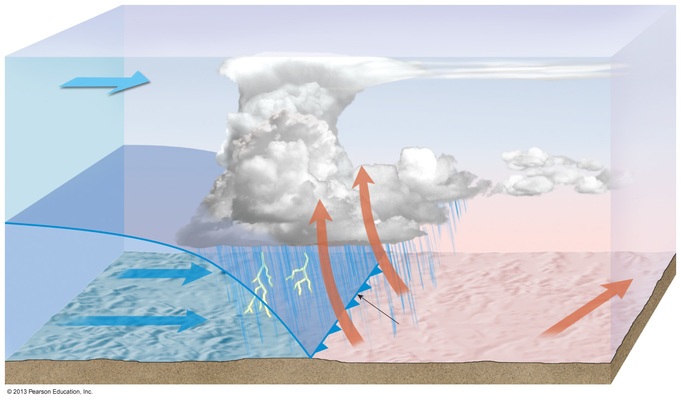
What type of storm front is this?
a)
warm front
b)
cold front
c)
stationary front
d)
occluded front
21.
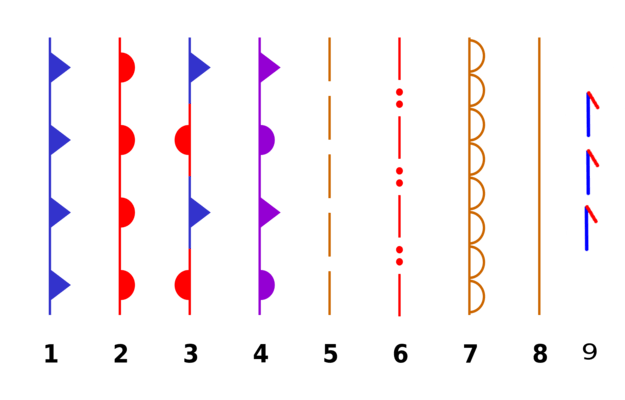
What does symbol # 3 mean?
a)
stationary front
b)
occluded front
c)
warm front
d)
cold front
22.
A front is
a)
where warm air is cooling at earth's surface
b)
a line where hot and cold air are separating
c)
a line where two different air masses meet
d)
where cold air is rising and forming rain clouds
23.
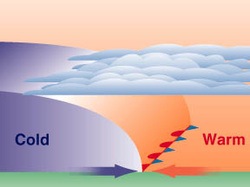
Which type of front is pictured?
a)
Cold front
b)
Warm front
c)
Occluded front
d)
Stationary front
24.
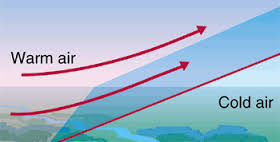
Which type of front is pictured?
a)
Cold front
b)
Warm front
c)
Occluded front
d)
Stationary front
25.
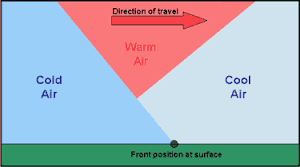
Which type of front is pictured?
a)
Cold front
b)
Warm front
c)
Occluded front
d)
Stationary front
26.
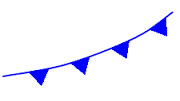
What symbol is this?
a)
warm front
b)
cold front
c)
stationary front
d)
occluded front
27.
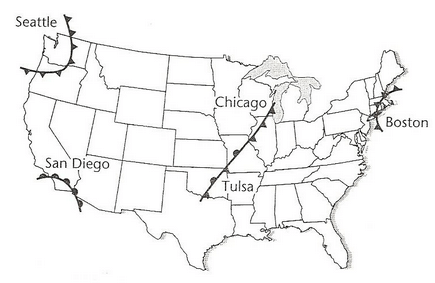
Which type of front is located near Boston?
a)
warm front
b)
cold front
c)
stationary front
d)
occluded front
28.
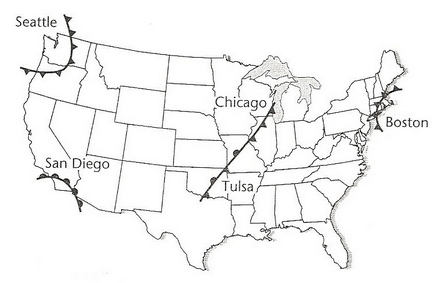
Which type of front is located near Chicago?
a)
warm front
b)
cold front
c)
occluded front
d)
stationary front
29.
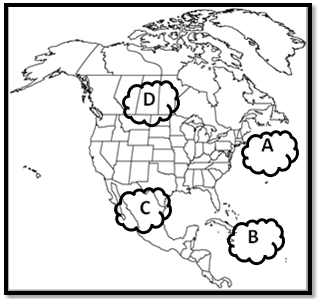
Which type of air would you find at air mass A?
a)
cold, dry
b)
warm, humid
c)
warm, dry
d)
cold, humid
30.
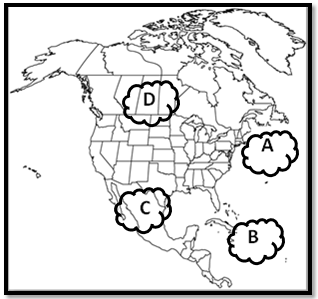
Which type of air would you find at air mass C?
a)
cold, dry
b)
warm, humid
c)
warm, dry
d)
cold, humid
31.
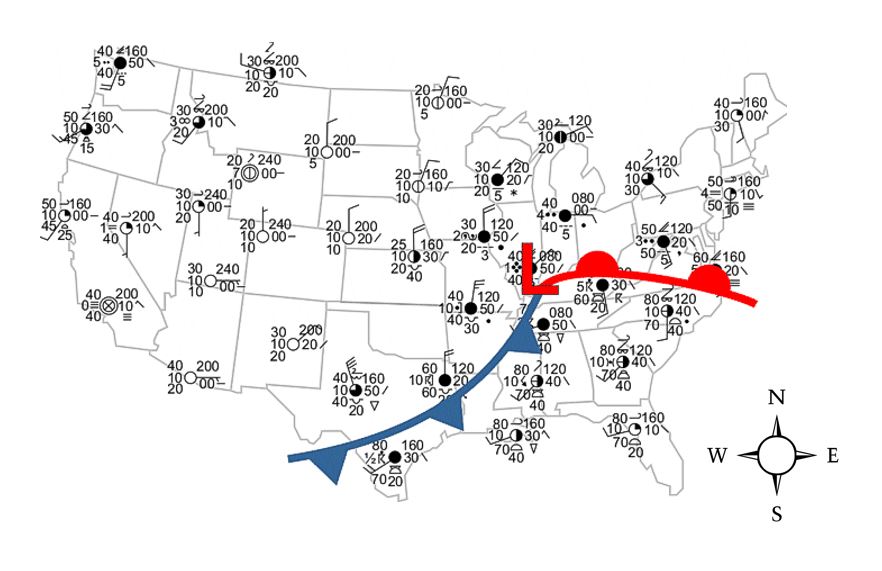
What direction is the warm front moving on the map?
a)
North
b)
South
c)
East
d)
West
32.
What direction is the cold front moving on the map?
a)
Southwest
b)
Northwest
c)
Southeast
d)
Northeast
33.
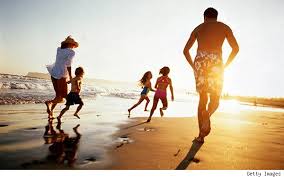
The sun shines down on this family as the play on the beach.
a)
conduction
b)
convection
c)
radiation
34.

A group of friends gather around a fire to stay warm.
a)
conduction
b)
convection
c)
radiation
35.
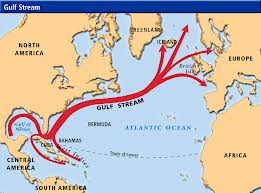
The Gulf Stream is a current that brings warm ocean water from the south to the north.
a)
conduction
b)
convection
c)
radiation
36.

Walking on the warm sand sand with your bare feet.
a)
conduction
b)
convection
c)
radiation
37.

Blow drying your wet hair.
a)
conduction
b)
convection
c)
radiation
38.

Which direction will the heat flow while this person holds a hot cup of tea?
a)
from the cup to her hand
b)
from her hand to the cup
c)
no heat is transferred
39.

Which direction will the heat flow while this ice cap melts?
a)
there is no heat transfer
b)
from the icecap to the water
c)
from the water to the icecap
40.
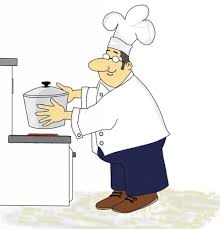
The man goes to take the hot pot off the stove with his bare hands.
a)
conduction
b)
convection
c)
radiation
41.
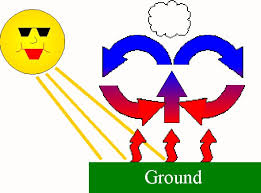
Warm air rises and the cool air sinks.
a)
conduction
b)
convection
c)
radiation
42.
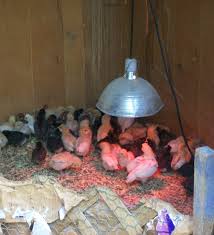
The baby chickens are kept warm from the heat lamps.
a)
conduction
b)
convection
c)
radiation
43.

In this experiment, the WARM red dye and the COLD blue dye was placed in the water at the same time. The warm red dye rose to the top while the cold blue dye sank to the bottom.
a)
conduction
b)
convection
c)
radiation
44.
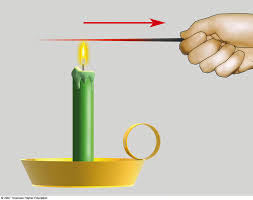
The candle will slowly heat the metal and transfer the heat directly to the mans hand.
a)
conduction
b)
convection
c)
radiation
45.

The warm air from this heater creates a current when the warm air rises and the cold air sinks.
a)
conduction
b)
convection
c)
radiation
46.

Heat transfers from an area of ____temperature to an area of ___ temperature.
a)
high to low
b)
low to high
c)
high to high
47.

The chocolate bunny and the blow dryer.
a)
conduction
b)
convection
c)
radiation
48.

The chocolate bunny and the lamp.
a)
conduction
b)
convection
c)
radiation
49.
___________is the result of the weight of a column of air pushing on an area.
a)
air pressure
b)
density
c)
volume
d)
none of the above
50.
What does the air consist of?
a)
molecules
b)
helium
c)
density
d)
weather
51.
What direction do the molecules go in the air?
a)
everywhere
b)
no where
c)
there are no molecules
d)
downward
52.
________is the instrument used to measure air pressure.
a)
barometer
b)
thermometer
c)
mercury
d)
watch
53.
Heat transfer between two substances that are in contact with each other is called
a)
conduction
b)
convention
c)
convection
d)
radiation
54.
Convection takes place because
a)
warm air is more dense than humid air
b)
warm and cold air have the same density
c)
cold air is less dense than warm air
d)
cold air is more dense than warm air
55.
Warm air rising at the equator and cold air sinking at the poles is one reason for which event?
a)
hurricanes
b)
Coriolis Effect
c)
Earth's rotation
d)
convection currents
56.
The __, or elevation of a mountaintop is its distance above sea level.
a)
greenhouse effect
b)
altitude
c)
convection
d)
weather
57.
What causes winds?
a)
differences in precipitation
b)
differences in humidity
c)
differences in air pressure
58.
Low pressure will usually bring what kind of weather?
a)
Sunny
b)
Calm
c)
Stormy
59.
Pressure is the effect of
a)
the weight of all the air above pressing down
b)
water vapor in the atmosphere
c)
greenhouse gases
d)
solar radiation
100 %

