
 Worksheets
Skin Anatomy
Total questions: 44
Worksheet time: 38mins
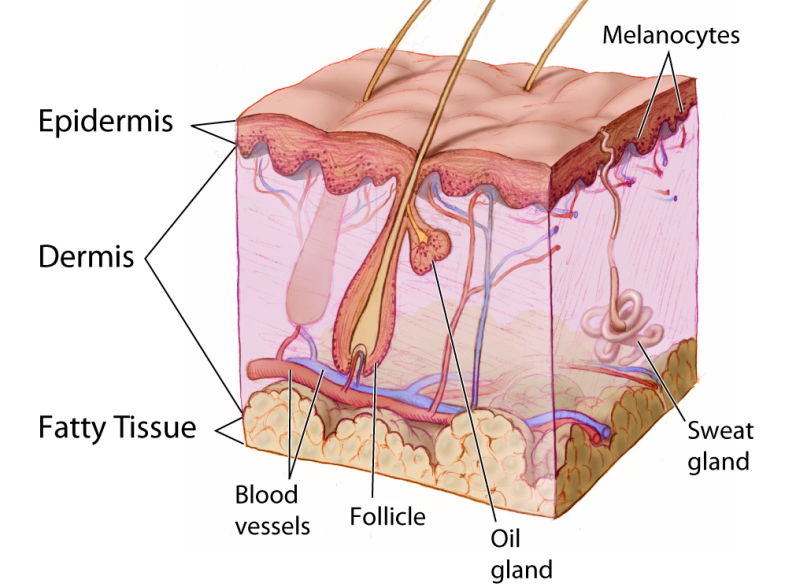
What is the oily substance that protects the skin against water called?
seaweed
callus
sebum
skin
Which is the top layer of the epidermis?
Stratum basale
Stratum lucidum
Stratum spinosum
Stratum corneum
Stratum granulosum
Which epidermis layer is clear and thin?
Stratum basale
Stratum lucidum
Stratum spinosum
Stratum corneum
Stratum granulosum
What does the arrector pili muscle do?
Push sweat out
Thermoregulation
Make hair stick up
Waterproofing
Which type of sweat gland is found in the armpit?
Sebaceous
Apocrine
Eccrine
Where are sebaceous glands NOT found?
palms and soles of feet
face
they're found everywhere
What are the immune cells of our skin?
Keratinocytes
Melanocytes
Langerhans Cells
Ruffini Endings
Exposure to UV light can cause you skin to produce
Vitamin A
Vitamin D
melanin
keratin
Why do some people have darker skin?
more melanocytes
more keratinocytes
their melanocytes produce more melanin
their keratinocytes produce more keratin
Structure in the dermis of the skin from which a strand of hair grows.
Follicle
dermis
vitamin D
melanin
tiny opening on the surface of the skin
Dermis
Pore
Epidermis
Melanin
Where can you find dead skin cells?
Your innermost layer of skin
Your outermost layer of skin
The border between the epidermis and the dermis
The border between the dermis and the hypodermis

What layer of skin is this
Melanin
epidermis
dermis
hypodermis

What layer of skin is this
hypodermis
epidermis
dermis
pore
Skin release sweat to regulate body __________.
speed
energy
weight
temperature
Skin protects the body by keeping harmful substances outside the body and keeping important substances inside the body.
True
False

What layer is represented by letter B?
Stratum Corneum
Dermis
Stratum Lucidum
Epidermis
What causes goose bumps?
hair follicles
sebaceous glands
arrector pili muscle
hot weather
What skin disease is caused by too much exposure in the sun's radiation?
acne
dermatitis
skin cancer
rash
Too much exposure to the sun is good for our skin.
True
False
Skin is a sense organ.
True
False
Epidermis protects your body, it keeps _____ and ____ out of your body.
germs
water
detox
dirt
fat
Why water is important to your body?
keeps the body from drying out.
keeps your body at a right temperature.
helps transport nutrients to body
keeps dirts away from your body
Skin protects the body by keeping harmful substances outside the body and keeping important substances inside the body.
True
False
Which skin layer is where mitosis can be observed?
stratum corneum
stratum lucidum
stratum spinosum
stratum granulosum
stratum basale (aka: germinativum)
Which skin layer is also referred to as stratum germinativum?
stratum corneum
stratum lucidum
stratum spinosum
stratum granulosum
stratum basale
The tough protein that gives hair, nails, and the outer layers of skin its strength is
keratin
melanin
chromatin
dermatin
Which cells create the pigment that gives skin its color?
melanocytes
keratinocytes
erythrocytes
adipocytes
CELLS WHICH MAKE THE FIBRES OF THE SKIN COLLAGEN AND ELASTIN
FIBROBLAST
MELANOCYTES
LANGERHAN CELLS

