wayground logo

Free Printable Worksheets

Font size

S
M
L
XL
Worksheets

Unit 2 Review Atomic Models/Structure and the Periodic Table

Total questions: 51

Worksheet time: 41mins

Name
Class
Date
1.

How was your weekend?

a)
b)
c)
2.

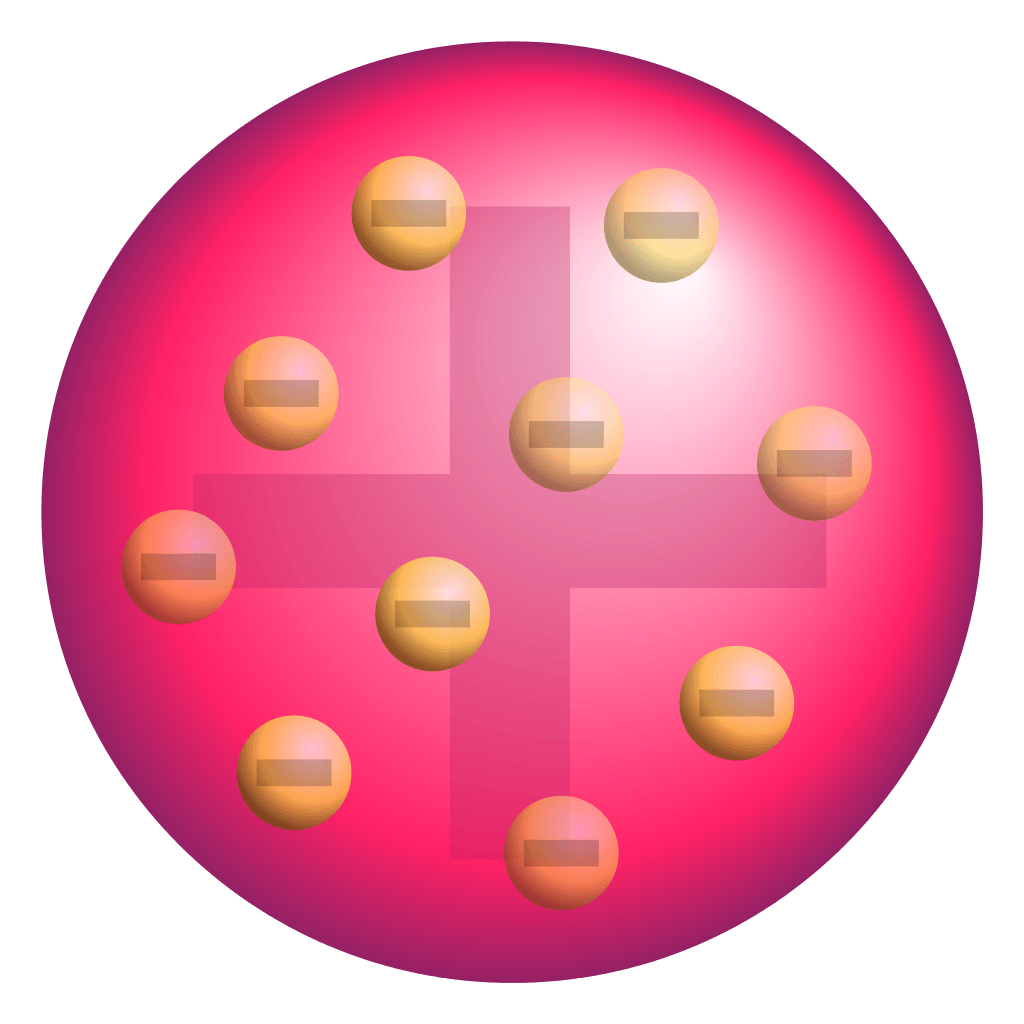
This model was developed after J.J. Thompson discovered electrons, a particle smaller than an atom. It shows electrons floating freely in a positive region.

a)

The "Plum Pudding Model" of the atom

b)

The "Rutherford Model" of the atom

c)

Democritus's model of the atom

d)

The "Quantum Mechanical Model" of the atom
3.

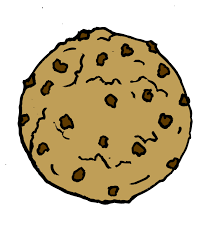
In the atomic model nicknamed the "plum pudding" model, what do the plums represent?

a)

the nucleus

b)

the atom

c)

the electrons

d)

the positive material

4.

What are electrons?

a)

an atom’s central regions, which is made up of protons and neutrons

b)

subatomic particles that have negative charges

c)

subatomic particles that have neutral charges

d)

subatomic particles that have positive charges

5.
The section labeled D is known as the?
a)
Electron cloud
b)
Neutron
c)
Nucleus
d)
Electron
6.
How many electron shells does this atom have?
a)
1
b)
2
c)
3
d)
4
7.

An atom is electrically neutral because

a)

the numbers of protons and neutrons are equal.

b)

the numbers of protons and electrons are equal.

c)

neutrons balance the protons and electrons.

8.

Which of the following does the nucleus contain?

a)

protons and electrons

b)

neutrons and electrons

c)

protons and neutrons

9.
What is atomic number?
a)
Number of protons in an atoms 
b)
Number of neutrons in an atom
c)
Mass of an atom
d)
Charge on an atom
10.
What electrical charge does a proton have?
a)
+1
b)
0
c)
-1
d)
+2
11.

What mass does a neutron have?

a)

1 amu

b)

0 amu

c)

-1 amu

d)

+2 amu

12.

How many protons does an aluminum atom have?

a)

27

b)

14

c)

40

d)

13

13.

What element has 9 protons, 9 electrons, and 10 neutrons?

a)

nitrogen

b)

oxygen

c)

fluorine

d)

neon

14.

What is the correct number of subatomic particles of a phosphorous atom with a mass of 31?

a)

p# - 15, n# = 15, e# = 15

b)

p# - 15, n# = 16, e# = 15

c)

p# - 15, n# = 15, e# = 16

d)

p# - 16, n# = 15, e# = 15

15.

What is the mass number of a nickel atom with 28 protons, 31 neutrons, and 28 electrons?

a)

31

b)

28

c)

59

d)

87

16.
Subatomic particle with a charge of 0
a)
neutron
b)
proton
c)
electron
d)
quark
17.

The smallest subatomic particle in the atom.

a)

Neutron

b)

Proton

c)

Electron

d)

The Nucleus

18.

How many protons does sulfur have?

a)

32

b)

16

c)

48

d)

12

19.
What are subatomic particles? 
a)
the nucleus 
b)
electron cloud
c)
positive charge
d)
electrons, protons, and neutrons
20.
How is the number of neutrons in the nucleus of an atom calculated?
a)
Add the number of e- and p+ together
b)
Subtract the number of e- from p+
c)
Subtract the number of p+ from the mass number
d)
Add the mass number to the number of e-
21.
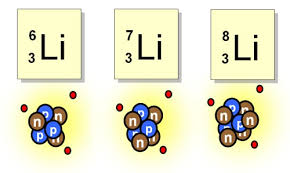
How many neutrons does the isotope of lithium have?
a)
8
b)
3
c)
4
d)
5
22.
which atom has  4 neutrons?
a)
Li-6
b)
Li-7
c)
Li-8
d)
they have the same # of neutrons
23.
Isotopes are atoms of the same element with different #’s of __________ & therefore different __________.
a)
n0 ;  atomic #’s
b)
p+ ; atomic #’s
c)
e- ; atomic masses
d)
n0 ; atomic masses
24.
How many neutrons does an atom of the isotope Neon-22 have?
a)
12
b)
10
c)
22
d)
20
25.
Which of these is a property of metals?
a)
It's malleable
b)
It can't conduct electricity
c)
They are used in food
d)
It's very brittle
26.
Where are the non-metallic elements found in the periodic table?
a)
In the middle
b)
In the top rows
c)
On the left-hand side
d)
On the right-hand side
27.
I have an object that is dull, brittle, and an insulator, what is it?
a)
metalloid
b)
non-metal
c)
metal
d)
matter
28.
Non-metals are good conductors of heat and electricity. 
a)
TRUE
b)
FALSE
29.

Physical Property: brittle (shatters when hit)

a)

metal

b)

nonmetal

30.

Physical Property: bad conductors

a)

metal

b)

nonmetal

31.

All of the following would go as a metal except?

a)

Dull

b)

Luster

c)

Malleable

d)

Hard

32.

Which color on the image of the periodic table corresponds with the halogens.

a)

red

b)

black

c)

blue

d)

orange

33.

Which element has similar properties to Arsenic (As)?

a)

Selenium

b)

Fluorine

c)

Bismuth

d)

Germanium

34.

Which element is NOT a metal?

a)

Chromium

b)

Radon

c)

Lithium

d)

Californium

35.

Which color on the image of the periodic table corresponds with the metalloids.

a)

bright yellow

b)

gold

c)

teal

d)

light blue

36.

Which element below is the most reactive metal?

a)

F

b)

Na

c)

Ca

d)

He

37.

Which color on the image of the periodic table corresponds with the transition metals.

a)

red

b)

black

c)

blue

d)

orange

38.
What atom matches this electron configuration?
1s2s2p3s2
a)
Neon
b)
Magnesium
c)
Aluminum
d)
Potassium
39.
What is this element? 
1s22s22p63s23p6
4s23d104p6
a)
Argon
b)
Krypton
c)
Selenium
d)
Bromide
40.
Which element is pictured?
a)
neon
b)
fluorine
c)
magnesium
d)
argon
41.

The vertical (up and down) columns in the Periodic Table are called

a)

groups

b)

towers

c)

periods

d)

atomic numbers

42.
Which group of the periodic table is composed of inert (not reactive)  gases?
a)
alkali metals
b)
alkaline earth metals
c)
halogens
d)
noble gases
43.
Which is an alkali metal?
a)
Magnesium
b)
Iron
c)
Sodium
d)
Europium
44.

Which of the following are physical properties of metal?

a)

Luster

b)

Conductivity

c)

Malleability

d)

Ductility

45.
As you move down a group, atomic radius increases because - 
a)
you add more and more neutrons
b)
you add more and more protons
c)
you add more and more shells (energy levels)
d)
you add more atomic mass
46.
The atom with the largest atomic radius in Group 18 is - 
a)
Ar
b)
He
c)
Kr
d)
Rn
47.
The atom with the largest atomic radius in Period 4 (row 4) is - 
a)
K
b)
Kr
c)
Fe
d)
Fe
48.
The element with the smallest ionization energy in Period 6 is - 
a)
Rn
b)
Cs
c)
Os
d)
Tm
49.
Which of the following will have a larger radius than Zinc?
a)
Gallium
b)
Aluminum
c)
Magnesium
d)
Strontium
50.
Which of the following will have a lower ionization energy than Scandium (Sc)?
a)
Helium (He)
b)
Titanium (Ti)
c)
Calcium (Ca)
d)
Magnesium (Mg)
51.

After completing this review How are you feeling about tomorrow's test?

a)
b)
c)