
 Worksheets
Remedial exam. 1st Trimester Chemistry. Nov 20 2024
Total questions: 56
Worksheet time: 48mins
It can be defined as "The application of knowledge to solve a problem"
Technology
Scientific paper
Machinery
Science
It is the main goal of science
Generate new knowledge
Make human life easier
Understand the human mind
Identify historical discoveries
The information you collect while conducting your experiment is called
conclusions
data
hypotheses
procedures
The _________________________ answers the problem you are trying to solve in an experiment and explains the results to others.
procedure
hypothesis
conclusion
data
A(n) ___________________________ is what you can learn about an object by using your five senses.
Observation
Quantitative Observation
Inference
Hypothesis

What would the INDEPENDENT variable be in an experiment testing which paper airplane design goes furthest?
the paper used
the paper airplane design
the distance of each plane's flight
how hard the plane is thrown
The independent variable is
The variable that you change in an investigation
The variable that you measure in an investigation
A variable that you keep the same in an investigation

What is the Dependent Variable in this graph?
A student wants to test the effects of different types of exercise on heart rate. What would be the dependent variable of the experiment?
the measurement of heart rate
type of exercise
amount of exercise
time of day exercise occurs

Susan said, “If I fertilize my geranium plants, then they will have more flowers.”
recognize a problem
test the hypothesis with an experiment
form a hypothesis
draw conclusions
A _____ observation uses numbers to explain. For example, it is 67 degrees outside.
quantitative
qualitative
blind
experimental
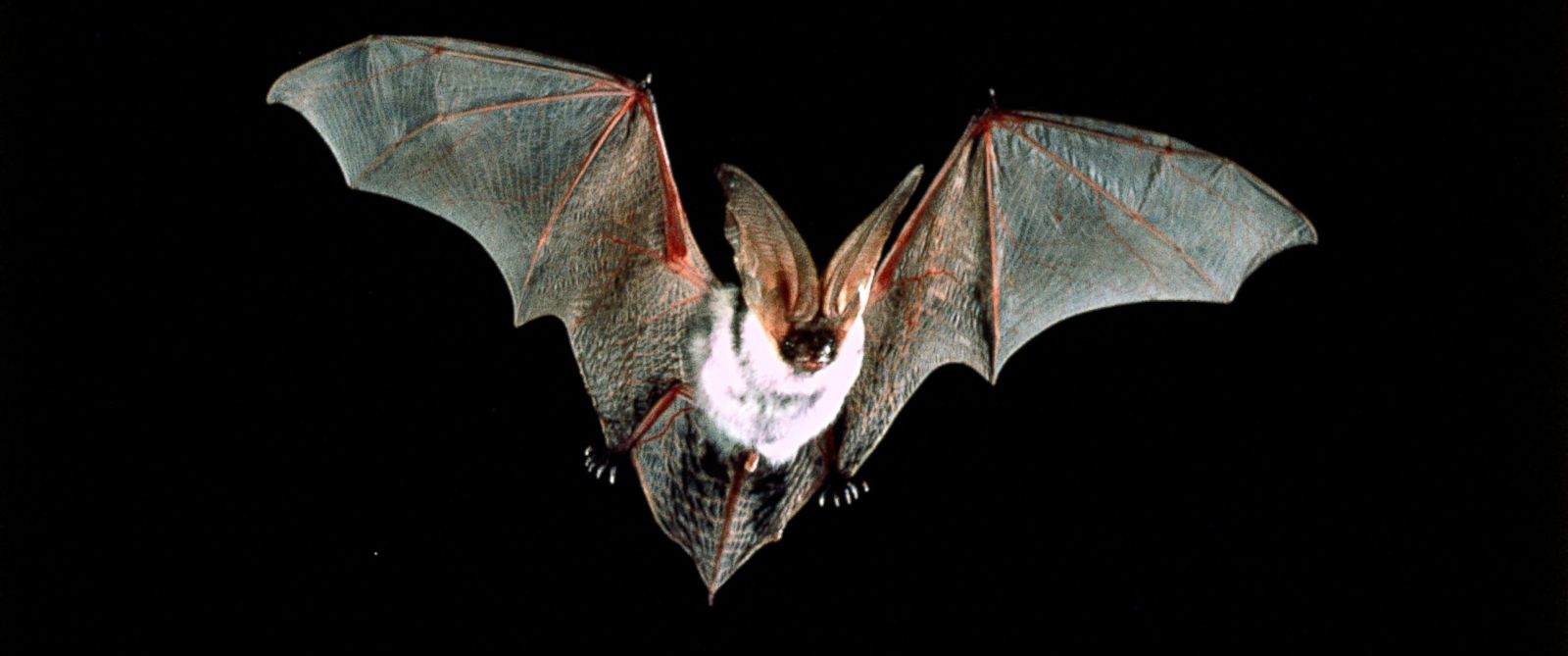
Jose saw bats catching insects after dark. He asked, “How do bats find insects in the dark?”
recognize a problem
test the hypothesis with an experiment
form a hypothesis
draw conclusions

What is the independent variable in this graph?
Tadpoles
Year
Frogs
Number of tadpoles in the pond
Why are graphs and charts important for analyzing data?
Graphs and charts are important for analyzing data because we would never be able to know what is going on with the data.
Graphs and charts are important for analyzing data because teachers say they are important.
Charts and graphs are good to use because they are nice to look at.
Charts and graphs allow a person to visualize data and find patterns and trends in the data.
Define a Chemical Property
A property that depends on the object's size or matter.
A property of matter that does not involve a chemical change in its manifestation.
A property or behavior of a substance that undergoes a chemical change or reaction.
A property that makes the object smell or taste different.
A solid is crushed into a powder?
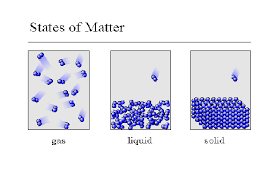
Property that describes the way that matter acts in the presence of other materials or the way that it changes composition under certain conditions
Extensive
Intensive
Physical
Chemical

Identify:
Physical
Chemical
Identify:
Physical
Chemical
Properties that depend on the amount of material present
physical
chemical
intensive
extensive
Chemical or Physical:
A characteristic of matter that can only be observed when matter is changed into a new kind of matter.
Chemical
Physical
Chemical or Physical:
Color, shape, texture, and luster are all examples of _______________ properties of matter.
Chemical
Physical
Anything that has mass or takes up space is known as...
matter
objects
physical properties
science
What is the difference between natural and synthetic resources?
Natural resources are man-made, while synthetic resources are found in nature.
Natural resources occur in nature, while synthetic resources are man-made.
There is no difference.
We don't use natural resources, but we use synthetic resources.
A synthetic material begins with ______________ chemically changed to produce a material with different characteristics.
renewable resources
natural resources
coal
plastic
Avery, Emma, and Aria are having a snack time debate. Avery thinks plants are synthetic resources, Emma thinks it's potatoes, and Aria believes it's potato chips. Who is correct?
Avery (plants)
Emma (potatoes)
Aria (potato chips)
It is a process that occurs when gases in Earth's atmosphere trap the Sun's heat.
Climate Change
Global Warming
Greenhouse Effect
enhanced-less heat escapes to space
enhanced-more heat escapes to space
The gradual increase in the temperature of the atmosphere is known as?
Please get this right.
Greenhouse Effect
Global Warming
Carbon Dioxide
Methane
Quantitative data...
is a measurement involving numbers.
involves a description like color or texture.
A property determined without changing the identity of the substance is a...
chemical property
physical property
Complete this sentece: "Matter is anything that ...
the amount of matter in an object".
you can smell".
takes up space and has mass".
changes into liquid".
Which of the following is true?
A physical property can only be seen.
A physical property describes how matter can change when exposed to air.
A physical property is something that can be observed about the substance by itself.
A physical property can only be observed when two types of matter interact.

Jack leaves solid butter near a warm surface. When Jack returns, the butter has turned into a liquid. Jack's friend Elijah insists this is a chemical change. Is Elijah right?
no, because no new matter was formed
yes, because the matter changed states
no, because the butter didn’t have enough time to go through a chemical change
yes, because melted butter is a new type of matter

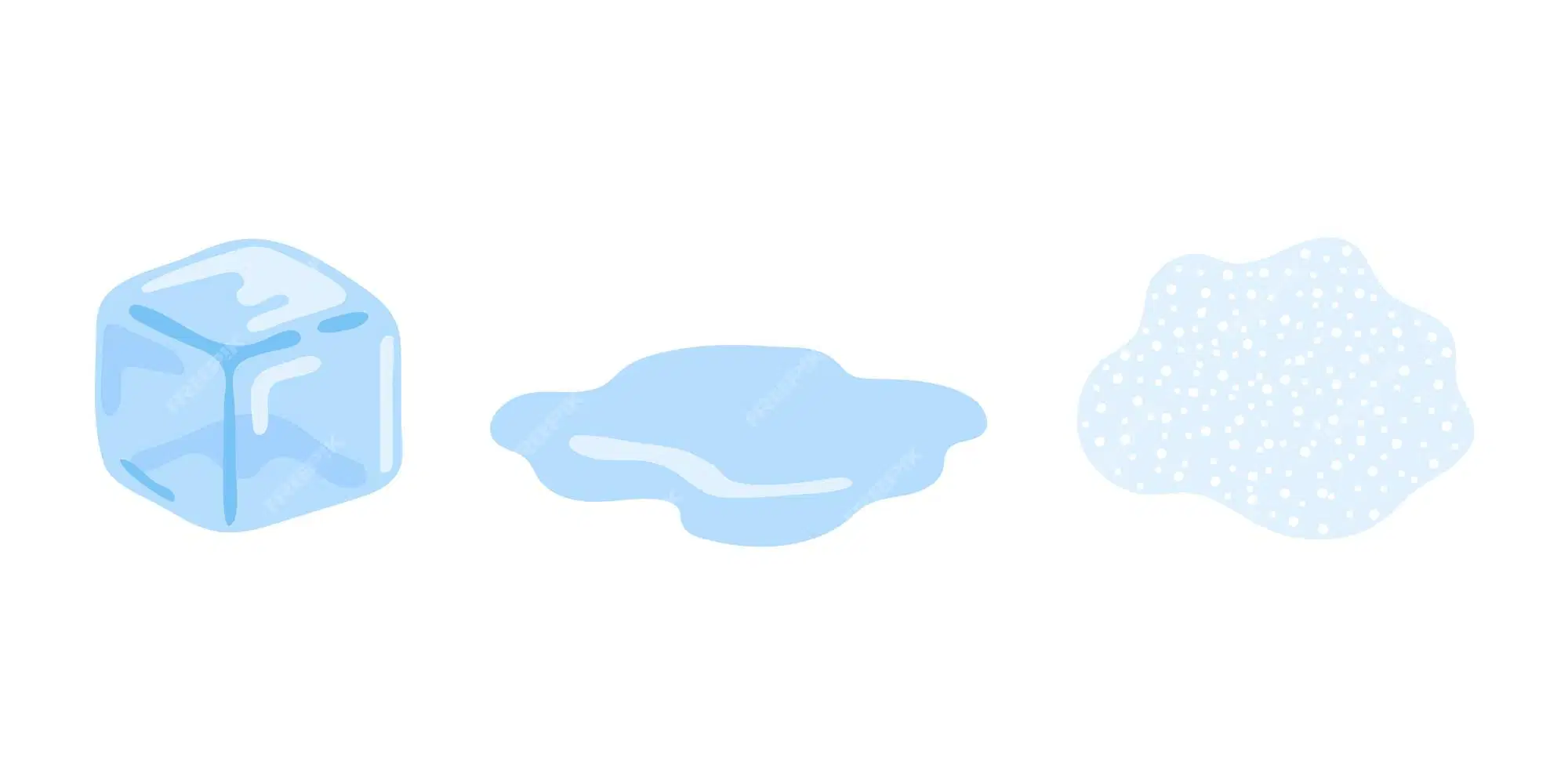
Use the basic properties of solids, liquids, and gases to identify the correct state of matter in the image.
(A) gas, (B) liquid, (C) solid
(A) solid, (B) liquid, (C) gas
(A) liquid, (B) solid, (C) gas
(A) solid, (B) gas, (C) liquid
If you have two identical pieces of iron, and you heat one of them until it melts, what happens to the intensive and extensive properties of the melted iron compared to the solid iron?
Intensive properties change, extensive properties remain the same.
Both intensive and extensive properties remain the same.
Intensive properties remain the same, extensive properties change.
Both intensive and extensive properties change.
Which of the following properties is typically used to identify substances and distinguish between different materials?
Physical properties
Extensive properties
Chemical properties
Intensive properties
Extensive properties:
Do not change during chemical reactions.
Are independent of the substance's physical state.
Include properties like density and boiling point.
Depend on the amount of substance.
Intensive properties:
Depend on the amount of substance.
Are additive when substances are combined.
Remain constant regardless of the quantity of the substance.
Change when the substance changes phase.
Which of the following is an extensive property of matter?
Temperature
Color
Weight
Melting point
Which of the following is an intensive property of matter?
Mass
Volume
Density
Length
As molecules gain energy, they move _____ and spread apart, and vice versa.
A phase change from liquid to gas is called ...
condensation
evaporation
sublimation
deposition


When heat energy is increased in a liquid, what change in state is happening?
Melting
Evaporation
Condensation
Freezing
Draw, identify and explain all the components of the Triangle (or square) of Fire

In "Project: Bread", write down your hypothesis and explain your experiment in detail, identifying the dependent and independent variables.

