
 Worksheets
Electrochemisty - theory revision
Total questions: 60
Worksheet time: 45mins

Given their standard reduction potentials, which of the species is going to be oxidized?
Cu2+/Cu = 0.34V
Zn2+/Zn = -0.76V
Cu
Zn
CuSO4
ZnSO4
What occurs to the mass of copper electrode in the following reaction?
Zn/Zn2+ // Cu2+/Cu
increases
decreases
remains the same
Which metal is the negative electrode?
Zn/Zn2+ // Cu2+/Cu
zinc
copper
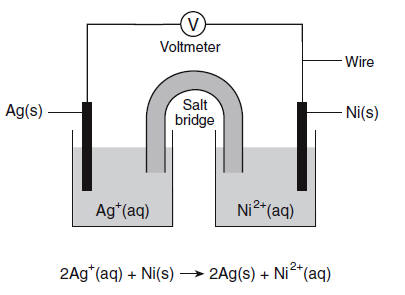
What reaction occurs at the anode?
Ag+/Ag = 0.80V
Ni2+/Ni = -0.25V
Ag+ + e- →Ag
Ag → Ag+ + e-
Ni2+ + 2e- → Ni
Ni → Ni2+ + 2e-
Conductivity always ____________ with a decrease in concentration
decreases
increases
remain same
irregular for weak and strong

Which of the following statements applies to the change in mass of the electrodes involved in this electrochemical cell?
Electrode A is the anode and it gains mass
since metal ions are being converted to metal
atoms which often adhere to the electrode.
Electrode B is the anode and it gains mass
since metal ions are being converted to metal
atoms which often adhere to the electrode.
Electrode A is the cathode and it gains mass since metal ions are being converted to metal atoms which often adhere to the electrode.
Electrode B is the cathode and it gains mass since metal ions are
being converted to metal atoms which often adhere to the electrode.

Diagram shows an electrolysis cell.
Which of the substances cause the bulb to light up when electricity passes through it?
Ethanol
Dilute ethanoic acid
Solid lead(II) bromide
Tetrachloromethane
What are the products formed at the anode and the cathode during the electrolysis of molten magnesium oxide using carbon electrodes?
Anode: Oxygen
Cathode: Magnesium
Anode: Magnesium
Cathode: Oxygen
Anode: Hydrogen
Cathode: Oxygen
Anode: Oxygen
Cathode: Hydrogen

Diagram
shows the apparatus set-up for the electrolysis of 1.0 mol dm -3 sodium chloride solution using carbon electrodes.Which of the following are the observation for the electrolysis process shown in Diagram?
Grey solid deposited on electrode B
Colourless gas is released at electrode B
Carbon electrode A becomes thinner
Greenish yellow gas is released at electrode A


The standard redox potentials for these half-cells are:
Ag+(aq) + e- → Ag(s); E0 = 0.89 V
Ni2+(aq) + 2e- → Ni(s); E0 = -0.23 V
In this cell:

A disproportionation reaction occurs when a species M+ spontaneously undergoes simultaneous oxidation and reduction.
2M+(aq) → M2+(aq) + M(s)
The table contains E⦵ data for copper and mercury species.
Using these data, which one of the following can be predicted?
Both Cu(I) and Hg(I) undergo disproportionation.
Only Cu(I) undergoes disproportionation.
Only Hg(I) undergoes disproportionation.
Neither Cu(I) nor Hg(I) undergoes disproportionation.
Why is Standard hydrogen electrode called as the primary reference electrode?
a) It has a known output potential
b) It has a constant output potential
c) Its output potential is independent of the composition of the solution
d) Its output potential is zero volts

Given below is a diagram of a standard hydrogen electrode. Identify the unmarked component.
a)Hydrogen at 1 atm
b) Hydrogen at 10 atm
c) Helium at 1 atm
d) Helium at 10 atm

In the list of standard electrode potentials, the strongest reducing agent is...
Li
Li+
F2
F-
In a redox reaction, the oxidising agent... (choose two options)
is oxidised
is reduced
increases its oxidation number
decreases its oxidation number
If an electrochemical reaction is spontaneous, what will Ecell be?
positive
negative
What is the standard electrode which all other standard electrode potentials are measured against?
helium
hydrogen
magnesium
potassium

What is Gas X and what is the polarity of electrode N?

Which of the following deductions about this cell is correct?
The potential developed due to gain of electrons
Oxidation Potential
Electrode potential
Reduction Potential
None
The conductance of ions, present in one cubic centimeter of the solution.
Ionic Conductance
Specific Conductance
Molar Conductance
Equivalent conductance
The electrodes used in chemical cell without transference in which the electrolyte is HCl are----------
Hydrogen gas electrode and Cadmium electrode
Hydrogen gas electrode and Copper electrode
Hydrogen gas electrode and Silver - Silver Chloride electrode
Hydrogen gas electrode and lead - lead Sulphate electrode
The elimination of liquid junction potential in cell representation is indicated by ---------
-ve sign
+ve sign
Vertical double line between two half cells
Vertical single line between two half cells
What does a half-cell consist of?
two elements in two oxidation states
two elements in the same oxidation state
one element in two oxidation states
one element in one oxidation state
With dilution which of the following decreases
Specific Conductance
Molar Conductance
Equivalent Conductance
Resistance
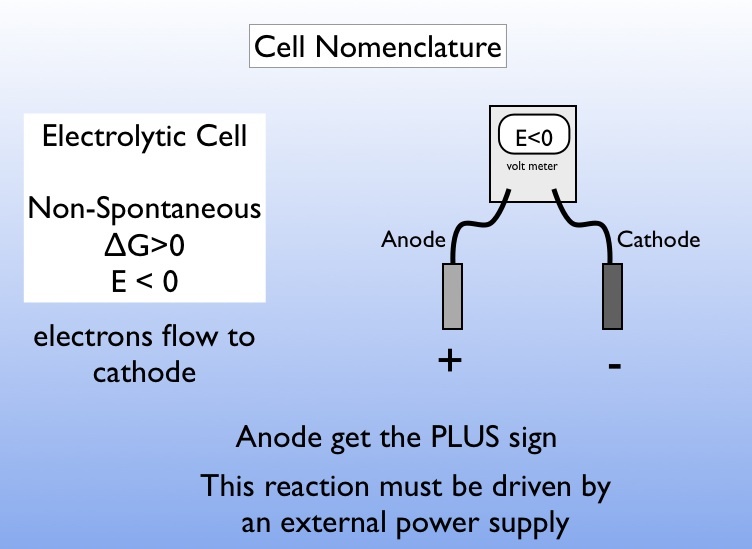
If the conductivity and conductance of a solution is same then its cell constant is equal to
1
0
10
1000
Which of the following factors is responsible for increase in equivalent conductivity in the case of weak electrolytes upon dilution?
decrease in degree of dissociation with dilution
increase in degree of dissociation with dilution
decrease in inter-ionic effects upon dilution
increase in inter-ionic effects upon dilution
What is the standard solution used for determining cell constant?
Potassium chloride
Sodium chloride
Potassium hydroxide
Sodium hydroxide
The principle of --------------- titration is based on the fact that during the titration, one of the ions is replaced by the other and invariably these two ions differ in the ionic conductivity with the result that conductivity of the solution varies during the course of titration.
potentiometric
conductometric
polarographic
gravimetric

In redox titration, large quantities of acids and beases are used to complete reaction which masks the changes in conductance, hence in conductometric titration, redox titration
Performed at high temperature
Performed at cryogenic conditions
Cannot be performed
Performed using indicator solution
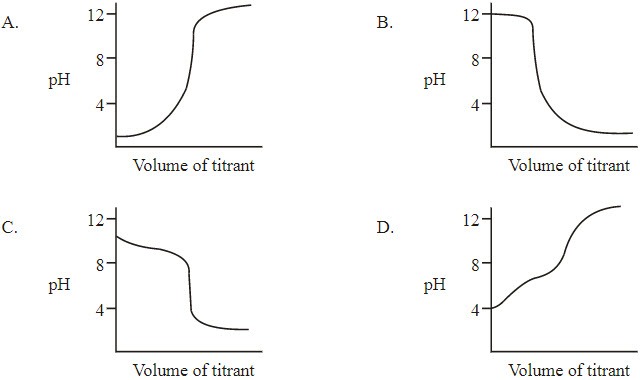


During operation of the PAFC, electrode I is
The storage battery generally used in electric power station is
Nickel-cadmium battery
Zinc carbon battery
Lead-acid battery
None of the above
Electroplating is an industrial process where objects are coated by a thin layer of a nonreactive metal by electrolysis. What should be used as the cathode in this process?
Graphite electrode
The electroplating metal
The object to be electroplated
Magnesium ribbon

If the fork is to be electroplated with silver metal, what electrolyte should be used?
Molten silver chloride
Aqueous silver nitrate
Sodium chloride solution
Copper(II) sulphate solution
PbO2 means
Lead dioxide
Lead peroxide
Lead sulfate
Sponge lead
When there is a higher acid concentration on the bottom of a battery then on the top, this is called...
sulfation
stratification
concentration reduction
acid redux
When sulfuric acid crystals are deposited on battery plates, they reduce battery capacity. This is called...
sulfation
sulfur depletion
capacity reduction
sulfuric crystallization
A battery with no load connected will still
discharge. This is called…
depth of charge
charge depletion
self-discharge
electrolyte deficieny
lead -acid storage battery it contains of ____cells.
1
2
4
6
A primary cell is a cell that...
can only be used once
can be recharged and used again
is reusable
is used again and again
What is the equation at the anode for the discharge of a nickel cadmium cell?
2NiO(OH) (s) + 2H2O (l) + 2e- → 2NiOH2 (s) + 2OH-
Cd(s) + 2OH-(aq) → Cd(OH)2 + 2e-
Cd(s) + 2H2O (l) → Cd(OH)(aq) + H2 (g)
NiO(OH) (s) + 2OH-(aq) → Ni(OH)2 + 2e- + H2O (l)
Which of the following is an advantage of lithium ion cells?
High energy density and high discharge rates
Charge quickly and have a high number of cycles
High energy density and low discharge rate
Cheap to make

In an electrolytic cell between magnesium and zinc, which of the following will increase the Ecell?
Increasing concentration of solid magnesium (whilst keeping all other concentrations the same).
Increasing concentration of zinc ions getting oxidised (whilst keeping all other concentrations the same).
Increasing concentration of magnesium ions (whilst keeping all other concentrations the same).
Decreasing the temperature.

What is a disadvantage of using a nickel cadmium battery?
Expensive to produce.
Known to cause electrical fires.
Harmful to the environment after it is disposed.
Overcharging leads to production of hydrogen gas, which can explode.

