
 Worksheets
Practice ~ Matter / Density
Total questions: 58
Worksheet time: 41mins
Matter can be classified in:
Mixtures and Compounds
Substances and Elements
Mixtures and Substances
Elements and compounds
Substances are classified in Elements and (a)
NH3 is a:
Mixture
Element
Compound
Particle
Water and sugar dissolved is an example of:
Compound
Homogeneous mixture
Substance
Heterogeneous mixture
A chocolate chip cookie is an example of:
Substance
Compound
Homogeneous mixture
Heterogeneous mixture
What mixture is an heterogeneous mixture?
Soluble coffee in water
Sand and water
Perfume
Apple juice
The mixtures where components CAN NOT be distinguished at simple sight:
Homogeneous
Heterogeneous
Homogeneous and heterogeneous
None
Tap water is:
Homogeneous mixture
Heterogeneous mixture
Substance
Compound

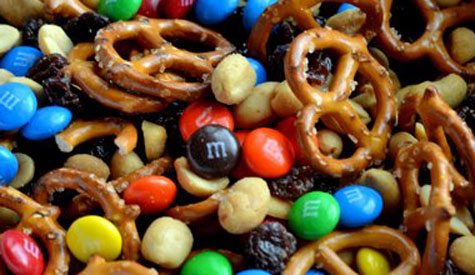

An example of...
mixture
element
compound

The particle diagram shown is a:
pure substance
mixture
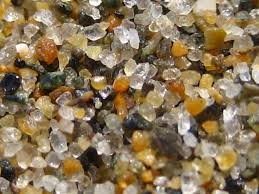
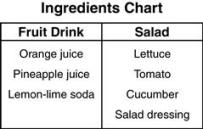
Using the information in the chart, which statement is the BEST description of the drink and salad?
What is the density of water?
34 g/mL
1 g/mL
29 g/mL
6 g/mL
What is the unit for density ?
g/ mL
g
cm3g
cm4
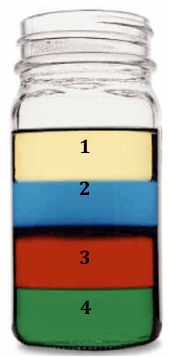
Calculate the density in the following question: A flower pot has a mass of 95 g and a volume of 92 mL.
1.03 g/mL
0.97 g/mL
1.01 g/mL
0.99 g/mL

The amount of water displaced is the same as the volume of the object. What is the VOLUME of the object?

The density of a material is 2 g/cm3. The volume is 24 cm3 . What is the mass?
There are 4 objects listed with their densities. Which of the following will float on water? (SELECT 2)
Object A:
0.7 g/cm3
Object B:
1.2 g/cm3
Object C:
0.25 g/cm3
Object D:
11.4 g/cm3
If an object has a density of 6 g/mL and you put it into water, will it sink or float?
How could two objects have different volumes, but still have the same mass?
If they both have the same density
If the larger object has a lower density
If the smaller object has a lower density
If the larger object has a higher density.

Which diagram represents an element?
Diagram (a)
Diagram (b)
Diagram (c)
None of the diagrams represent the parts of an element.

Which of the following represents a compound?
Diagram (a)
Diagram (b)
Diagram (c)
All of the diagrams represent the parts of a compound.
Which diagram represents a homogeneous mixture?
Diagram (a)
Diagram (b)
Diagram (c)
None of the diagrams represent the parts of a mixture.

What type of material is pictured?
Element
Compound
Homogeneous mixture
Heterogeneous mixture

What type of material is pictured?
Element
Compound
Heterogeneous mixture
Homogeneous mixture

What type of matter is shown in this particle diagram?
Element
Compound
Mixture of Elements
Mixture of Compounds
Mixture of Elements and Compounds

What type of matter is shown in this particle diagram?
Element
Compound
Mixture of Elements
Mixture of Compounds
Mixture of Elements and Compounds

This picture of oil and water is a(n)
Element
Compound
Heterogeneous mixture
Homogeneous mixture
The formula C8H10N4O2 represents
Element
Compound
Heterogeneous mixture
Homogeneous mixture
Filtration is a common method of separating an insoluble solid from a liquid.
True or False?
Substances in a mixture can be separated by physical methods.
TRUE
FALSE
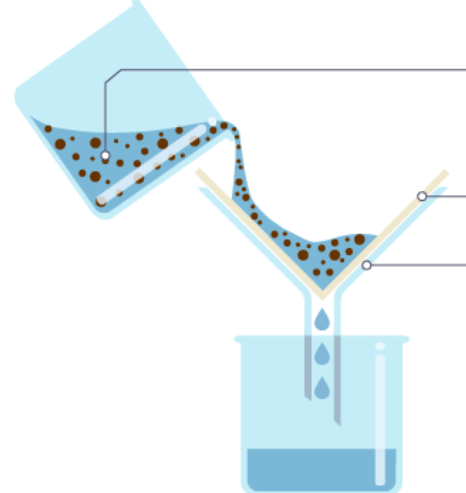
Which method is this a picture of?
Filtration
Evaporation
Distillation
Chromatography
What method of separation would work best to separate water and rubber pellets?
filtration
sifting
evaporation
magnetic attraction

You can boil them.
You can use centrifugation.
Which method separates substances based on them having different boiling points?
Filtration
Centrifugation
Distillation
Chromatography

The process of separating the substances from a liquid mixture by using selective boiling and condensation is called _____.
Decomposition
Filtration
Distillation
Magnetism
This method separates dissolved substances based on differences in how well they dissolve in a solvent.
Filtration
Evaporation
Distillation
Chromatography
If a substance is insoluble in water, it ___________.
dissolves in water
cannot dissolve in water
forms a solution when mixed with water
cannot be separated from water
Drying of wet floor
it undergoes evaporation process
Do not undergo evaporation process
it undergoes melting process
it undergoes freezing process
Salt Making
it undergoes evaporation process
do not undergo evaporation process
it undergoes melting process
it undergoes freezing process
What does fractional distillation specialize at? (not can do but what is it designed to do)
Separating liquids
Separating solutions
Separating solids and liquids
Non of the above
A bottle of rubbing alcohol contains both 2-propanol and water. These liquids can be separated by the process of distillation because the 2-propanol and water
have combined chemically and retain their
different boiling points
have combined chemically and have the
same boiling point
have combined physically and retain their
different boiling points
have combined physically and have the same
boiling point
Equal amounts of ethanol and water are mixed at room temperature and at 101.3 kPa. Which process is used to separate ethanol from the mixture?
distillation
reduction
filtration
ionization
Differences in which property allow the separation of a sample of sand and seawater by filtration?
concentration of ions
volume of sample
mass of sample
particle size
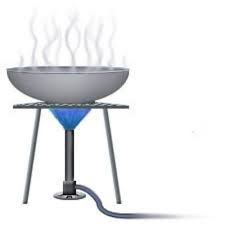
Name the separation technique shown in the diagram.
evaporation
distillation
filtration

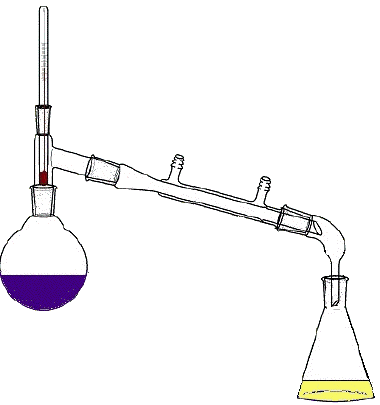
Look at the apparatus setup. It CANNOT be used to separate which of the following mixtures?
Marble chips from oil
Alcohol and water
Chalk from sugar solution
Sand and sea water

The separation technique that involves heating a solution until the liquid changes into a gaseous state, leaving behind a solid is known as
decanting
evaporation
loading
chromatography
The characteristics of a substance depends on its size.
True
False

