
 Worksheets
Ionic Quiz
Total questions: 56
Worksheet time: 1hrs 10mins

Positive ions usually __________ electrons.
lose
gain
Negative ions usually __________ electrons.
lose
gain
Why do atoms form bonds?
so the number of protons equals the number of electrons
so an atom can become unstable
to fill their outermost energy level
Ionic bonds form between which types of elements?
Metal and Non-metal
Non-metal and Non-metal
Metal and Metal

Which type of elements make positive ions?
metals
nonmetals
metalloids
How does calcium turn into a calcium ion?
It loses 2 electrons
It gains 2 electrons
How many Aluminum atoms are present in the chemical formula Al2O3?
3
5
2
1
An atom has 1 electron in its outer shell. Is it more likely to lose that electron or gain 7 electrons to fill its shell?
nothing
gain 7
lose 1
How many valence electrons are in a Boron atom?
1
2
3
4
What do group numbers on the periodic table tell us?
How many valence electrons an element has
Whether the element is a solid, liquid, or gas
Where are valence electrons located in an atom?
In the innermost energy level
In the middle energy levels
In the outermost energy level

Does a chlorine atom take in or give away electrons to form an ionic bond?
take in
give away
What is the correct formula for the ionic compound formed by calcium and sulfur?
Ca2S2
CaS
S2Ca2
SCa
Ionic bonds are created when two ions have...
ionic compounds
negative charges
positive charges
opposite charges
Which compound is formed when Fe2+ ions combine with SO42− ions?
FeSO4
Fe4(SO4)2
FeSO2
correct answer is not given
What kind of bond is formed when a metal joins with a non-metal?
covalent
ionic
cooperative
lewis
What do we call a substance when it is mixed and dissolved in water?
Aqua solution
Aquerie Solution
Aqueous solution
Aquaman Solution
What is the charge of an electron?
no charge
positive
negative
it depends
What is the charge of a proton?
positive
negative
no charge
it depends
What do we call an atom that has extra or missing electrons?
a winner
an isotope
an ion
a loser
Which compound is made when potassium (K) reacts with fluorine (F)?
KF
K2F
KF2
K2F2
What is the name of the compound Cs2S?
cesium sulfide
cesium sulfate
cesium II sulfate
cesium II sulfide
What is the chemical formula formed when Mg2+ ions combine with Cl- ions?
Mg2Cl
MgCl2
Mg2Cl2
MgCl
Ca2+ ions and N3- ions combine to form which ionic compound?
Ca2N3
Ca3N2
CaN3
Ca2N
What is the charge of a calcium ion (Ca)?
+1
+2
+3
+4
How many electrons does a phosphorus atom need to gain to have 8 electrons in its outer shell?
3
4
6
5
What is the chemical formula when calcium ions (Ca2+) combine with bromide ions (Br-)?
Ca2Br2
CaBr
Ca(br)2
CaBr2
What happens to an anion?
It gains electrons and becomes positively charged
It loses electrons and becomes positively charged
It loses electrons and becomes negatively charged
It gains electrons and becomes negatively charged
Which type of bond is formed when one atom gives an electron to another atom?
Ionic bond
Covalent bond
Metallic bond
Hydrogen bond

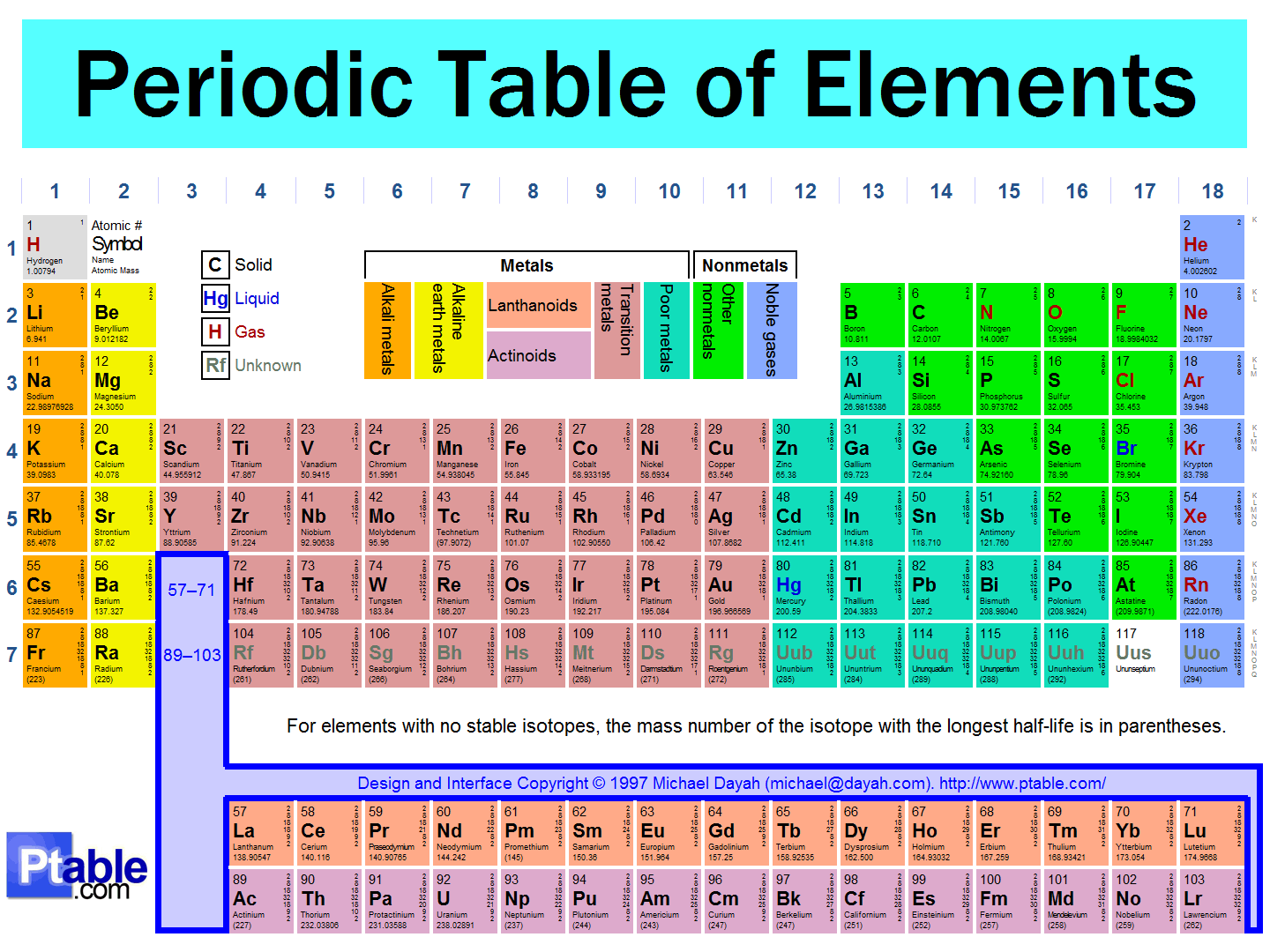
Which element is found in the third row and 14th column of the periodic table?
Silicon
Helium
Mercury
Neon

Which element is found in period 4 and group 11 of the periodic table?
Mercury
Copper
Silver
Gold

Which element is found in period 5 and group 17 of the periodic table?
Iodine
Beryllium
Neon
Lead
Match the following element to their number of valence electrons:
lithium
1
magnesium
2
phosphorus
5
fluorine
7
neon
8
Which group of elements all have two electrons in their outer shell?
alkali metals
noble gases
alkaline earth metals
halogens
How many valence electrons are there in an iodine atom?
6
16
7
17
How many valence electrons are in the boron group?
(a)

How many electrons are present in a silicon atom?
14
28
2
4
How many Aluminum atoms are in Al2O3?
3
5
2
1
Why do most elements create chemical bonds?
To gain electrons, so that each element has more electrons.
To equal the number of protons and electrons.
To stop radioactive decay.
To reach eight valence electrons, which makes them stable.
Which of the following would be the correct formula for a compound of Aluminum and Fluorine?
AlF3
Al2F3
AlF2
AlFI
Why are ions attracted to each other?
Cations and Anions have opposite charges.
Cations think Anions are cool.
The fact that both are metals allows them to mix.
The ions change their electrons again.
What is the correct formula for potassium oxide?
KO2
KO
K2O
OK2
What is the correct name for SrF2?
fluoride strontium
strontium fluorine
strontium diflluoride
strontium fluoride
What is the correct name for VBr3?
vanadium(III) bromide
vanadium bromide
vanadium(III) bromate
vanadium tribromide
What is the correct name for CrO?
chromium monoxide
chromium(I) oxide
chromium(II) oxide
chromium oxide
What is the correct name for Al2(SO4)3?
aluminum(II) sulfate
dialuminum trisulfate
aluminum sulfide
aluminum sulfate
Ca2Br2
What is the correct formula for the ionic compound formed by sodium and oxygen?
NaO
Na2O
NaO2
Na2O2
Which of the following is the correct name for K2SO4?
potassium sulfate
potassium sulfide
dipotassium sulfate
potassium(II) sulfate
What type of ion does a chlorine atom become after gaining one electron?
positive ion
negative ion
neutral atom
metal ion
Which of the following ions is formed when sodium loses one electron?
Na2+
Na2-
Na+
Na-
What is the correct name for FeCl2?
ferrous chloride
iron(II) chloride
iron(I) chloride
iron(III) chloride
Which element is most likely to gain electrons and form a negative ion?
Calcium (Ca)
Potassium (K)
Oxygen (O)
Magnesium (Mg)

