wayground logo

Free Printable Worksheets

NEW

Font size

S
M
L
XL
Worksheets

Chemical Bond Types and Compound Naming Test

Total questions: 60

Worksheet time: 3hrs 2mins

Name
Class
Date
1.

name of SF6 ?

a)

sulfur heptafluoride

b)

sulfur trioxide

c)

sulfur octaoxide

d)

sulfur hexafluoride

2.

name of IF7 ?

a)

iodine heptafluoride

b)

iodine hexafluoride

c)

iodine fluoride

d)

iodine pentafluoride

3.

name of CaF2?

a)

Calcium difluoride

b)

Calcium fluoride

c)

Calcium fluorine

d)

Carbon fluoride

4.

Name of CaCO3?

a)

calcium carbonate

b)

calcium carbontrioxide

c)

calcium carbide

d)

calcium monocarbon trioxide

5.

Name of N2O5 ?

a)

nitrogen pentoxide

b)

nitrogen oxide

c)

dinitrogen pentoxide

d)

dinitrogen tetraoxide

6.

formula of silicon tetrachloride ?

a)

SiCl3

b)

SiCl4

c)

SiCl5

d)

SiCl7

7.

formula of aluminum sulfate ?

a)

AlSO2

b)

AlSO4

c)

Al2(SO4)3

d)

Al2(SO3)4

8.

formula of sodium bromide ?

a)

NBr

b)

NaBr2

c)

NaBr

d)

Na7Br

9.

formula of zinc carbonate ?

a)

ZnCO2

b)

ZnCO3

c)

ZnCO4

d)

ZngCO4

10.

formula of phosphorus trihydride?

a)

PH3

b)

PoH3

c)

KH3

d)

PH4

11.
phosphorus trichloride
a)
KCl3
b)
PCl3
c)
K3Cl
d)
P3Cl
12.
silicon dioxide
a)
SO2
b)
NaO2
c)
SiO2
d)
SiO
13.

dinitrogen pentoxide

a)

N2O5

b)

NO5

c)

N5O2

d)

N2O6

14.
SiCl4
a)
silicon tetrachloride
b)
silicon quadchloride
c)
monosilicon tetrachloride
d)
silicon chloride
15.

P₄S₁₀

a)

tetrapotassium decasulfide

b)

phosphorus decasulfide

c)

tetraphosphorus decasulfide

d)

phosphorus (X) sulfide

16.

SO₃

a)

sulfate

b)

sulfur oxide

c)

sulfur trioxide

d)

monosulfur trioxide

17.

tetraphosphorus heptoxide

a)

K₄O₁₀

b)

P₄O7

c)

KO

d)

P₁₀O₄

18.

chlorine dioxide

a)

ClO2

b)

ClO

c)

ClO3

d)

HClO2

19.

hexaboron monosilicide

a)

B6Si

b)

BSi

c)

BSi6

d)

B6Si6

20.

What is the OFFICIAL name for H2O? Hint.. This is a trick question so choose carefully!

a)

Hydrogen Oxide

b)

Oxygen Dinitride

c)

Water

d)

Dihydrogen Monoxide

21.

What is the correct formula for potassium oxide?

a)

KO2

b)

KO

c)

K2O

d)

OK2

22.

What is the correct name for SrF2?

a)

fluoride strontium

b)

strontium fluorine

c)

strontium diflluoride

d)

strontium fluoride

23.

What is the correct name for VBr3?

a)

vanadium(III) bromide

b)

vanadium bromide

c)

vanadium(III) bromate

d)

vanadium tribromide

24.

What is the correct name for CrO?

a)

chromium monoxide

b)

chromium(I) oxide

c)

chromium(II) oxide

d)

chromium oxide

25.

What is the formula for copper(II) phosphide?

a)

Cu2P3

b)

Cu3P2

c)

Cu3(PO4)2

d)

Cu2P

26.

What is the correct name for Zn(CN)2?

a)

zinc cyanide

b)

zinc dicyanide

c)

zinc carbide

d)

zinc(I) cyanide

27.

What is the correct name for (NH4)2CO3?

a)

diammonium carbonate

b)

nitrogen hydrogen carbon oxide

c)

ammonium carbonate

d)

ammonium carbide

28.

What is the correct name for Al2(SO4)3?

a)

aluminum(II) sulfate

b)

dialuminum trisulfate

c)

aluminum sulfide

d)

aluminum sulfate

29.

What is the correct name for NiSO3?

a)

nickel(I) sulfite

b)

nickel(II) sulfite

c)

nickel(II) sulfate

d)

nickel(I) sulfate

30.

What is the correct formula for iron(III) permanganate?

a)

FeMnO4

b)

Fe(MnO4)3

c)

Fe3MnO4

d)

FeMn3O12

31.
What elements generally make an ionic bond?
a)
metal and nonmetal
b)
2 or more nonmetals
c)
metal
d)
none of the above
32.
What elements generally make a covalent bond?
a)
metal and nonmetal
b)
2 or more nonmetals
c)
metal
d)
none of the above
33.
In chemical compounds, covalent bonds form when
a)
the electronegativity difference between two atoms is very large.
b)
electrons are completely transferred between two metals.
c)
pairs of electrons are shared between two nonmetal atoms.
d)
two nonmetal atoms are attracted to each other by opposite charges.
34.
An ionic bond forms when 
a)
Valence electrons are shared
b)
a sea of mobile electrons surround the cations
c)
valence electrons are transferred between atoms
d)
none of the above
35.
Predict the bond that will form between Be and F.
a)
Ionic
b)
Covalent
36.
Predict the bond that will form between Se and Cl.
a)
Ionic
b)
Covalent
37.
Predict the bond that will form between Sr and S.
a)
Ionic
b)
Covalent
38.
What is a valence electron?
a)
an electron that is found in the outermost shell of an atom. 
b)
an electron found in the innermost shell of an atom.
c)
an electron found in the middle shell.
39.
What is the number of valence electrons for Oxygen?
a)
8
b)
6
c)
2
d)
1
40.
What is the number of valence electrons for Beryillum?
a)
1
b)
4
c)
2
d)
7
41.
What is the number of valence electrons for Silicon?
a)
1
b)
2
c)
6
d)
4
42.
What is the number of valence electrons for Neon?
a)
6
b)
7
c)
8
d)
9
43.
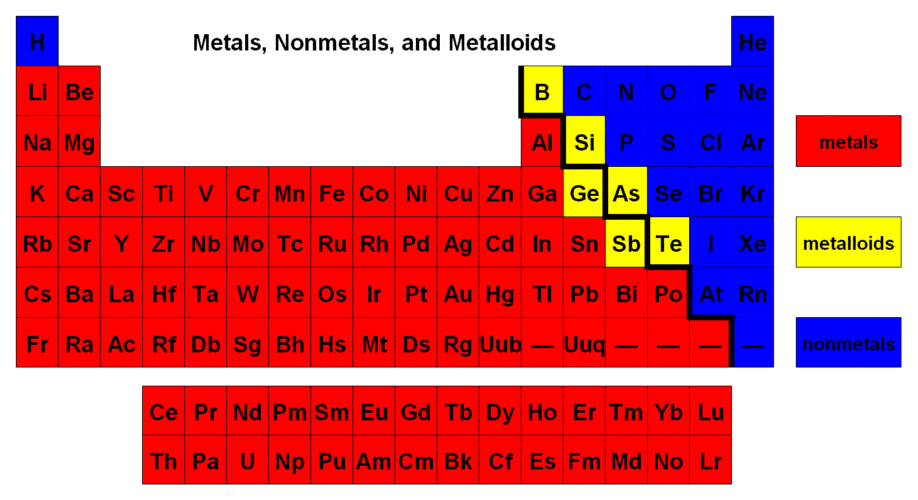
Is hydrogen considered a metal or a non-metal?
a)
A metal
b)
Nonmetal
c)
Metalloid
44.
Covalent bonds are between...
a)
Metal and Non-metal
b)
Non-metal and Non-metal
c)
Metal and Metal
45.
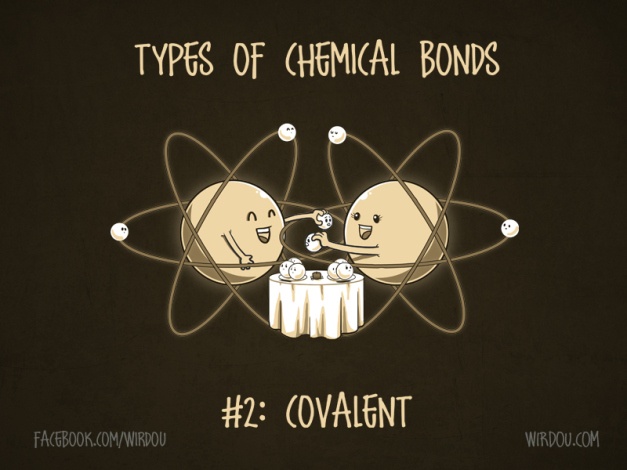
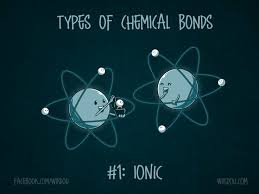
Is this ionic bond drawn correctly?
a)
Yes
b)
No
46.
Ionic bonds are between...
a)
Metal and Non-metal
b)
Non-metal and Non-metal
c)
Metal and Metal
47.
Atoms are most stable when their outer shell is complete.
a)
true
b)
false
48.
How are ionic bonds formed?
a)
Transfer of electrons
b)
Sharing of electrons
49.
How are covalent bonds formed?
a)
Sharing of electrons
b)
Transfer of electrons
50.
Why do elements bond?
a)
To be friends
b)
To create a new element
c)
To become stable
51.
Where are the metalloids located on the periodic table?
a)
Blue
b)
Red
c)
Green
52.
Where are metals located on the periodic table?
a)
Blue
b)
Green
c)
Red
53.
Where are the nonmetals located on the periodic table? 
a)
Blue
b)
Red
c)
Green
54.
Which of these is not a real bond in chemistry?
a)
James
b)
Ionic
c)
Covalent
55.
An electron has what kind of charge?
a)
no charge
b)
positive 
c)
negative
d)
it depends
56.
a proton has what charge?
a)
positive
b)
negative
c)
no charge
d)
it depends
57.
Atoms that gain electrons become...
a)
negatively charged
b)
positively charged
c)
remain neutrally charged
d)
21
58.
What happens when an atom loses an electron?
a)
It becomes Negatively Charged
b)
It remains neutral because the proton also leaves.
c)
It becomes Positively Charged
d)
It stays the same.
59.

Use your knowledge and electronegativity sheet to predict what the following compound is classified as.

a)

nonpolar covalent

b)

polar covalent

c)

ionic

d)

metallic

60.

Use your knowledge and electronegativity sheet to predict what the following compound is classified as.

a)

non-polar covalent

b)

polar covalent

c)

ionic

d)

metallic