wayground logo

Free Printable Worksheets

Font size

S
M
L
XL
Worksheets

Unit 2 Section 2 MATTER

Total questions: 55

Worksheet time: 28mins

Name
Class
Date
1.
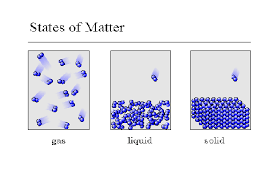
Which state of matter has molecules that move fastest and spread to fill the space they are in?  They do not form any pattern.
a)
solid 
b)
liquid 
c)
gas
2.
What is matter?
a)
a pure substance
b)
anything that occupies space and possesses mass
c)
an element
d)
a compound
3.
A measure of the amount of matter in an object. 
a)
Weight
b)
Mass
4.
What is the measure of how much space an object takes up?
a)
matter
b)
volume
c)
substance
d)
properties
5.
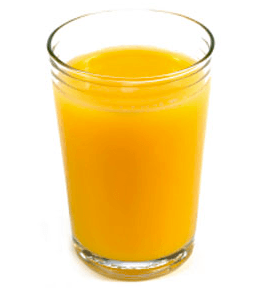
Which form of matter take the shape of a container like this juice?
a)
liquid
b)
solid
c)
glass
d)
gas
6.
What happens when my glass of water is sitting in the sun and disappears into a gas?
a)
evaporation
b)
burning
c)
melting
d)
freezing
7.
In a solid, the particles
a)
vibrate in place
b)
slide past one another
c)
overcome the strong attraction
d)
move freely in any direction
8.
Freezing (or solidification) is . . . .
a)
liquid to solid
b)
solid to liquid
c)
solid to gas
d)
solid to plasma
9.
5. What is it called when a solid turns directly into a gas?
a)
Sublimation
b)
Condensation
c)
Liquid
10.
The phase change from water vapor to liquid water is known as...
a)
evaporation
b)
precipitation
c)
condensation
d)
sublimation
11.
________________________ is the temperature at which a solid begins to liquefy.
a)
boiling point
b)
condensation point
c)
melting point
d)
evaporation point
12.
Deposition is the opposite of sublimation.
a)
True
b)
False
13.
What is the change from a Solid to a Gas due to the gaining of energy?
a)
Condensation
b)
Vaporization
c)
Sublimation
d)
Deposition
14.
4. What type of state of matter is a gas that has electrons flowing through it?
a)
Gas
b)
Liquid
c)
Plasma
d)
Solid
15.
At higher temperatures
a)
particles in an object have less energy
b)
particles in an object move faster
c)
a gas contracts
16.
Vaporization includes _____________ and  _____________.
a)
melting and boiling
b)
condensation and boiling
c)
sublimation and freezing
d)
evaporation and boiling
17.

Which is not Matter?

a)

Ice

b)

Water

c)

Heat

d)

Air

18.

Is sand a solid?

a)

Yes

b)

No

19.

Snow ______ to form water.

a)

Melts

b)

Condenses

c)

Freeze

d)

Evaporate

20.
In which state does matter completely fill its closed container?
a)
Gas
b)
Liquid
c)
Solid
d)
Ice
21.
Which state of matter has a fixed shape and volume and it's molecules move very slowly?
a)
Liquid
b)
Gas
c)
Solid
d)
Plasma
22.
The state of matter in which a substance has a definite volume but no definite shape.
a)
gas
b)
liquid
c)
solid
d)
matter
23.
The state of matter in which a substance has a definite shape and definite volume.
a)
solid
b)
gas
c)
atom
d)
liquid
24.
The state of matter in which a substance does not have a definite shape or volume.
a)
element
b)
compound
c)
gas
d)
liquid
25.

What mixture is an heterogeneous mixture?

a)

Soluble coffee in water

b)

Sand and water

c)

Perfume

d)

Apple juice

26.

The mixtures where components CAN NOT be distinguished at simple sight:

a)

Homogeneous

b)

Heterogeneous

c)

Homogeneous and heterogeneous

d)

None

27.

Choose ALL the examples of CHEMICAL PROPERTIES

a)

Flammability

b)

Oxidation

c)

Radioactivity

d)

Color

28.

The smallest unit into which an element can be divided and still retain all the properties of that element.

a)

molecule

b)

element

c)

atom

d)

compound

29.

Apple juice is what kind of mixture?

a)

Homogeneous

b)

Heterogeneous

30.

Boba tea is what kind of mixture?

a)

Homogeneous

b)

Heterogeneous

31.

True or False: An element can be split by chemical means

a)

True

b)

False

32.

Pure water is an example of what?

a)

Element

b)

Solution

c)

Compound

d)

Mixture

33.

Matter can be classified as either a __________ or a _____________.

a)

Element or a Compound

b)

Compound or a Solid

c)

Pure Substance or a Mixture

d)

Mixture or a Solid

34.

Matter made up of one kind of atom is called a ___________.

a)

Element

b)

Mixture

c)

Compound

35.

__________ are when elements or compounds mix together in a substance but DO NOT chemically combine.

a)

Pure Substances

b)

Compounds

c)

Mixtures

36.

NH3 is a:

a)

Mixture

b)

Element

c)

Compound

d)

Particle

37.

The positive particles of an atom are ___________.

a)

electrons

b)

protons

c)

neutrons

38.

The center of an atom where its neutrons and protons are is called the _____________.

a)

nucleus

b)

electron cloud

c)

center

39.
Which is an electron?
a)
A
b)
B
c)
C
40.
How many electrons does Si contain? (click to see image)
a)
14
b)
28
c)
2
d)
4
41.
What is the mass number and name of an element with 8 protons and 8 neutrons?
a)
16 - Carbon
b)
16 - Oxygen
c)
24 - Oxygen
d)
8 - Neon
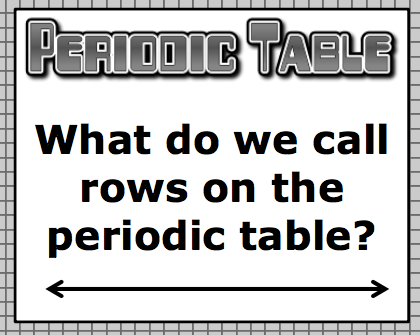
42.
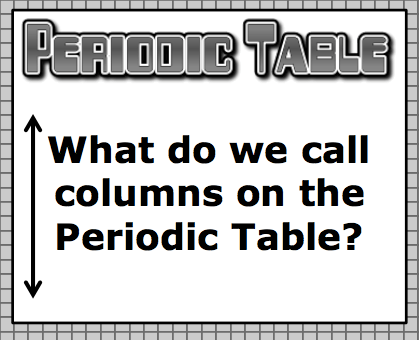
a)
Periods
b)
Groups
43.
a)
Periods
b)
Groups
44.

The total number of protons and neutrons in the nucleus of an atom

a)

Atomic Number

b)

Mass Number

c)

Atomic Theory

d)

Electron Cloud

45.

Atoms are made up of ________________

a)

energy

b)

electrons

c)

subatomic particles

d)

gasses

46.

The following subatomic particles are in the nucleus.

a)

Protons and nucleus.

b)

Protons and neutrons.

c)

Protons and electrons

d)

Neutrons and electrons

47.

The separate atoms that make up a wooden table cannot be seen because the atoms are

a)

too small

b)

moving too fast

c)

packed lightly together

d)

hidden beneath the surface

48.

Atoms bond together in different ways to make ________________.

a)

Substances

b)

Matter

c)

Molecules

49.

How many electrons can the first energy level hold?

a)

1

b)

2

c)

8

d)

Unlimited

50.

How many electrons can the second and third (for our intents and purposes) energy levels hold?

a)

1

b)

2

c)

8

d)

Unlimited

51.
What are the 3 sub-atomic particles called?
a)
potions, neutrons and electrons
b)
protons, neurons and electrons
c)
protons, neutrons and elections
d)
protons, neutrons and electrons
52.
How do covalent bonds form?
a)
Donating & receiving valence e- between atoms.
b)
Opposite slight charges attract each other between compounds.
c)
Scientists are still not sure how they form.
d)
Sharing valence e- between atoms.
53.

Ionic bonds are formed when electrons get

a)

Shared between two atoms

b)

Removed from both atoms

c)

Transferred from one atom to another

d)

Added to both atoms

54.

According to the Octet Rule, atoms of elements react with each other in order to attain ____ electrons in their outermost energy level or shell.

a)

2

b)

4

c)

6

d)

8

e)

10

55.

What is the basis of hydrogen bond?

a)

Attraction forces between hydrogen atom bonded with another hydrogen atom

b)

Attraction forces between hydrogen atom bonded with a high electronegativity atom (F, O, N)

c)

Attraction forces between hydrogen atom bonded with a high electronegativity atom (F, O, N) with atom (F, O, N) of another molecule

d)

Attraction forces between hydrogen atom with another hydrogen atom of another molecule