wayground logo

Free Printable Worksheets

NEW

Font size

S
M
L
XL
Worksheets

Atomic Theory

Total questions: 60

Worksheet time: 1hrs 6mins

Name
Class
Date
1.

Who is credited with discovering electrons?

a)

Dalton

b)

Rutherford

c)

Schroedinger

d)

Thomson

2.

Schrodinger is associated with which model of atomic structure?

a)

the nuclear model

b)

the plum pudding model

c)

the solid sphere model

d)

the wave mechanical model

3.

Who provided the first theory of atoms?

a)

Bohr

b)

Dalton

c)

Democritus

d)

Rutherford

4.

Rutherford experimented with gold foil and discovered the ___.

a)

nucleus

b)

neutron

c)

electron

d)

alpha particle

5.

Bohr is associated with which model of atoms?

a)

the solid sphere model

b)

the plum pudding model

c)

the planetary model

d)

the nuclear model

6.

The term "atomos" comes from which ancient Greek philospher?

a)

Aristotle

b)

Democritus

c)

Pythagoras

d)

Thales of Miletus

7.
How many neutrons in C-14?
a)
6
b)
7
c)
14
d)
8
8.
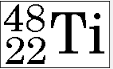
How many protons does this isotope of titanium have?
a)
48
b)
22
c)
26
d)
70
9.
How many neutrons does the isotope of lithium have?
a)
8
b)
3
c)
4
d)
5
10.
In a correctly written symbol what would be located in the "A" position?
a)
number of neutrons
b)
atomic number
c)
number of electrons 
d)
mass number
11.
which explanation of this notation is correct?
a)
 12 is proton #
b)
6 tells you there are 6 neutrons
c)
6 tells you there are 6 protons
d)
12 is not a mass # here
12.
Nitrogen has three occurring isotopes: Nitrogen-13, Nitrogen-14, Nitrogen-15. Which isotope is the most abundant?
a)
Nitrogen-13
b)
Nitrogen-14
c)
Nitrogen-15
d)
Based on the information given, it cannot be determined
13.

An atom of the most common isotope of potassium has the following: ______________.

a)

19 protons, 39 electrons, 20 neutrons

b)

39 protons, 39 electrons, 0 neutrons

c)

39 protons, 39 electrons, 20 neutrons

d)

19 protons, 19 electrons, 20 neutrons

14.

If an ion of magnesium has a charge of +2, how many electrons does the ion have?

a)

12

b)

10

c)

14

d)

24

15.
How many protons does the following particle have? 52Cr6+
a)
52
b)
24
c)
28
d)
18
16.
How many neutrons does the following particle have? 52Cr6+
a)
52
b)
24
c)
28
d)
18
17.
How many electrons does the following particle have? 52Cr6+
a)
52
b)
24
c)
28
d)
18
18.
24.1% of all the isotopes of a an element have a mass of 75.23 amu, 48.7% have a mass of 74.61 amu, and 27.2% have a mass of 75.20 amu.
What is the average mass of this element?
a)
74.92 amu
b)
24.97 amu
c)
75.01 amu
d)
74.51 amu
19.
4.35% of all X atoms have a mass of 39.946 amu. 83.79% have a mass of 41.941 amu, 9.50% have a mass of 42.941 amu, and 2.36% have a mass of 43.939 amu. What is the average atomic mass of atom X?
a)
41.97 amu
b)
42.19 amu
c)
10.43 amu
d)
40.04 amu
20.
What atom matches this electron configuration?
1s22s22p63s23p64s23d10
a)
Zinc
b)
Copper
c)
Nickel
d)
Germanium
21.

What electron configuration matches an oxygen atom?

a)

1s22s22p63s2, 3p64s23d104p5

b)

1s22s22p4

c)

1s22s22p6

d)

1s22s22p63s23p64s23d1

22.

What is incorrect about this orbital diagram?

a)

Both arrows in the 2p box should be pointing up

b)

There is nothing incorrect with this diagram

c)

There should only be 1 arrow in the first 2p box and one in the 2nd 2p box

d)

All the arrows should be pointing up.

23.
What is the noble gas shorthand electron configuration for Sulfur atom?
a)
[Ar] 3p4
b)
[He] 3s23p4
c)
[Ne] 3s23p4
d)
[Na] 3s23p4
24.
Which element is depicted from this atomic orbital diagram?
a)
Carbon
b)
Nitrogen
c)
Oxygen
d)
Phosphorus
25.
What atom matches this electron configuration?
1s22s22p63s2
a)
calcium
b)
Magnesium
c)
strontium
d)
sodium
26.
How many electrons can an f sublevel hold?
a)
10
b)
2
c)
6
d)
14
27.
How many electrons can an d sublevel hold?
a)
10
b)
2
c)
6
d)
14
28.
How many electrons can an p sublevel hold?
a)
10
b)
2
c)
6
d)
14
29.
What is the number of valence electrons for Carbon?
a)
12
b)
6
c)
5
d)
4
30.

An electron moves from n=4 to n=2. What is emitted?

a)

ultaviolet light

b)

infrared light

c)

Visible light

d)

x rays

31.
Which electron configuration belongs to Chlorine (Cl)?
a)
1s2s2p3s3p5
b)
1s2s2p3s3p6
c)
1s2s2p3s3p7
32.
Identify the Electron Configuration for Aluminum (Al)
a)
1s2s2p3s3p1
b)
1s2s2p3s3p3
c)
1s2s2p3s4p1
33.
When an atom loses a valence electron, it becomes a(n) _____________ ion.
a)
positive
b)
negative
c)
neutral
d)
polyatomic
34.
When an atom gains a valence electron, it becomes a(n) _____________ ion.
a)
positive
b)
negative
c)
neutral
d)
polyatomic
35.

Elements within a family usually have similar ____.

a)

Names

b)

atomic numbers

c)

atomic masses

d)

properties

36.

The energy required to remove an electron is the:

a)

Electronegativity

b)

Atomic Number

c)

Atomic Radius

d)

Ionization energy

37.
As you move across the periodic table atoms tend to get smaller because, ______________.
a)
the atoms have more mass.
b)
the atoms have less mass
c)
the atoms have more protons.
d)
the atoms have less electrons.
38.
As you move down a group, atomic radius increases because - 
a)
you add more and more neutrons
b)
you add more and more protons
c)
you add more and more shells (energy levels)
d)
you add more atomic mass
39.
Electronegativity is...
a)
the ability of an atom to attract/ accept electrons
b)
the ability of an atom to lose electrons
c)
the energy required to remove an electron from a specific atom
d)
how easy it is to make friends. 
40.

"Electrons occupy the lowest energy level available before occupying higher energy levels" is a statement of ___________

a)

the aufbau principle

b)

the Heisenberg Uncertainty Principle

c)

Hund's rule

d)

the Pauli exclusion principle

41.

"If two electrons occupy the same orbital, they must have opposite spins" is a statement of _____.

a)

the aufbau rule

b)

the Heisenberg Uncertainty Principle

c)

Hund's rule

d)

the Pauli exclusion principle

42.

"It is impossible to know both the speed and location of an electron." This statement is called _________.

a)

the aufbau rule

b)

the Heisenberg uncertainty principle

c)

Hund's rule

d)

the Pauli exclusion principle

43.

_____ says that when electrons occupy equal energy orbitals, one electron will be in each orbital before pairing begins.

a)

the aufbau rule

b)

the Heisenberg uncertainty principle

c)

Hund's rule

d)

the Pauli exclusion principle

44.
What are some of the outcomes of nuclear fusion?
a)
Produce larger materials from the collision of smaller materials.
b)
Release energy.
c)
Produce smaller materials from the collision of larger materials.
d)
Produce larger materials from the collision of smaller materials & Release energy
45.
_________ happens naturally due to an unstable nucleus.
a)
fission
b)
fusion
c)
radioactive decay
d)
K-capture
46.
The splitting of a nucleus into smaller nuclei is
a)
fusion
b)
fission
c)
decay
d)
gamma radiation
47.
What is emitted during  Alpha Radiation?
a)
A helium nuclei
b)
 An electron
c)
Gamma Rays
d)
A neutron
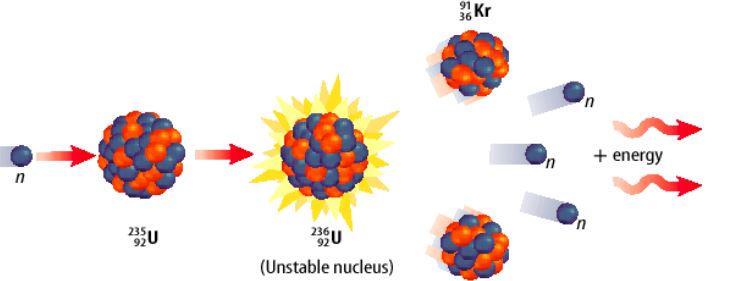
48.
This is an example of...
a)
Fission  reaction
b)
Fusion reaction
c)
Decomposition reaction
d)
Decay
49.
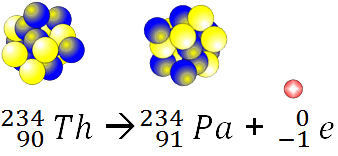
Which type of nuclear radiation is being emitted here?
a)
Alpha
b)
beta
c)
gamma 
d)
none
50.
Balance the following equation:
146C --> 0-1e + ________
a)
145B
b)
146C
c)
147N
d)
42He
51.

Solve this equation for alpha decay.

88226Ra --> ___ + 24He

a)

86222Rn

b)

89226Ac

c)

84224Po

d)

88225Ra

52.

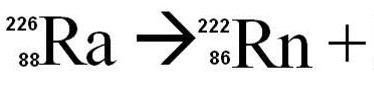
Complete the nuclear equation and determine the type of decay.

a)

4 He alpha

2

b)

0 e beta

-1

c)

0 y gamma

0

d)

none

53.
Which of the following is the missing product for this reaction?
a)
He-4
b)
Be-4
c)
He-2
d)
Be-2
54.
Which of the following dimensional analysis setups will correctly convert 27.76g of Li to atoms of Li?
a)
A
b)
B
c)
C
d)
D
55.
Calculate the number of atoms in 0.0340 g Zn.
a)
5.200 x 10⁻⁴ atoms Zn
b)
3.130 x 10²³ atoms Zn
c)
3.130 x 10²⁰ atoms Zn
d)
1 atom Zn
56.
Which of the following dimensional analysis setups will correctly convert 4.00x10²³atoms of cobalt to moles of cobalt? How many moles of colbalt are there?
a)
setup B : 0.6644mol Co
b)
setup A: 2.41x1047mol Co
c)
setup A : 0.664mol Co
d)
setup B: 2.41x1047mol Co
57.
What is the mass of 1.2 x 1024 atoms of C?
a)
23.9 grams
b)
24 grams
c)
6.02 grams
d)
1.2 grams
58.
How many moles are in 19.82 g Mg? 
a)
1.226mol Mg
b)
481.7mol Mg
c)
1.000mol Mg
d)
 0.8156 mol Mg
59.
How many moles are in 3.01 x 10²² atoms of magnesium?
a)
0.050 moles
b)
1.81 x 1046 moles
c)
5.00 x 10²¹ moles
d)
5.00 moles
60.
Which of the following dimensional analysis setups will correctly convert 2.50 moles of sodium to grams of sodium?
a)
A
b)
B
c)
C
d)
D