wayground logo

Free Printable Worksheets

NEW

Font size

S
M
L
XL
Worksheets

Human Body Systems

Total questions: 55

Worksheet time: 1hrs 3mins

Name
Class
Date
1.

Your heart is about the size of your __________.

a)

mouth

b)

fist

c)

show

2.

What does your heart do?

a)

pumps blood through your body

b)

protects your body

c)

helps your exercize

3.

Blood carries ____________ to the heart.

a)

vitamins

b)

germs

c)

oxygen

4.

What is the main organ of the circulatory system?

a)

small intestine

b)

bone

c)

lungs

d)

heart

5.
How many types of blood vessels are in our body?
a)
1
b)
2
c)
3
d)
4
6.

Veins carry oxygen poor blood back to the heart.

a)

False

b)

True

7.

Arteries carry oxygen rich blood away from the heart.

a)

True

b)

False

8.
The heart has ___ chambers.
a)
1
b)
2
c)
3
d)
4
9.
What does Deoxygenated mean?
a)
Oxygen-rich
b)
Blood flow
c)
Oxygen-poor
d)
Water Flow
10.
Which is the correct definition of the Circulatory system?
a)
The system fights disease so the body stays healthy.
b)
The system that circulates blood and oxygen through the body, consisting of the heart,blood vessels,and blood.
c)
Breaks down food into smaller pieces and absorbs those nutrients into the body.
d)
Provides shape and structure for the body.
11.
What is the heart ? 
a)
meaty organ 
b)
a small metal spike with a broadened flat head,
c)
organ of soft nervous tissue 
d)
muscular organ
12.

Veins

a)

only place diffusion can occur

b)

carry oxygen rich blood

c)

carry deoxygenated blood

13.

Arteries

a)

Carry blood low in oxygen

b)

Carry blood rich in oxygen

c)

only place diffusion can occur

14.

Capillaries

a)

only blood vessel where diffusion can occur

b)

carry oxygenated blood

c)

carry blood low in oxygen

15.

The main vein(s) that brings blood to the right atrium?

a)

Aorta

b)

Pulmonary veins

c)

Superior and Inferior vena cava

d)

Jugular vein

16.

Name part N.

a)

Right atrium

b)

left atrium

c)

right ventricle

d)

left ventricle

17.

Name part I.

a)

pericardium

b)

mediastinum

c)

septum

d)

unknownum

18.

Name part A.

a)

Pulmonary artery

b)

Pulmonary vein

c)

Superior vena cava

d)

Aorta

19.

Name part B.

a)

Pulmonary arteries

b)

Pulmonary veins

c)

Superior Vena cava

d)

Aorta

20.

Name part M.

a)

Tricuspid valve

b)

Semilunar valve

c)

Bicuspid valve

d)

Mitral valve

21.
What is the largest part of the brain?
a)
Thalamus
b)
Cerebellum
c)
Spinal Cord
d)
Cerebrum
22.
The lobe responsible for making plans and evaluating consequences
a)
Frontal Lobe
b)
Temporal Lobe
c)
Parietal Lobe
d)
Occipital Lobe
23.
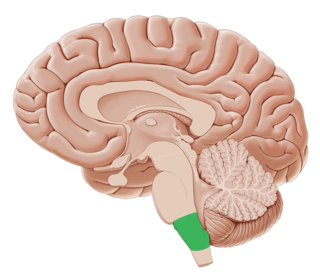
What is this?
a)
Cerebrum
b)
Cerebellum
c)
Brain Stem
d)
Diencephalon
24.
Controls hearing and smell
a)
Frontal Lobe
b)
Temporal Lobe
c)
Occipital Lobe
d)
Parietal Lobe
25.
Which structure is G?
a)
midbrain
b)
thalamus
c)
hypothalamus
d)
pons
26.
The lobe responsible for vision
a)
Frontal Lobe
b)
Temporal Lobe
c)
Parietal Lobe
d)
Occipital Lobe
27.

What is this?

a)

Corpus callosum

b)

Medulla Oblongata

c)

Cerebellum

d)

Hypothalamus

28.
Which structure is E?
a)
midbrain
b)
thalamus
c)
pons
d)
hypothalamus
29.
Controls behaviors (hunger, thirst, sleep, body temperature) through the release of hormones.
a)
hypothalamus
b)
thalamus
c)
adrenal glands
d)
pineal gland
30.

Which lobe is this?

a)

Occipital Lobe

b)

Parietal Lobe

c)

Temporal Lobe

d)

Frontal Lobe

31.
The purpose of the immune system is to:
a)
Help germs invade your body
b)
Fight off sickness
c)
Make your nose run
d)
Give you diarrhea
32.
 Another name for white blood cells is:
a)
Blood 
b)
Photosyntesis
c)
Leukocytes
d)
Body
33.
Produced by B cells and designed to mark antigens to be destroyed.
a)
Antigens
b)
Active Immunity
c)
Antibodies
d)
Antibiotics
34.
Produces antibodies to fight the antigen and marks the antigen
a)
Macraphage
b)
T Cells
c)
B Cells
35.
These cells are responsible for identifying the "enemy" in an immune response.
a)
Killer-T Cells
b)
Antibodies
c)
Helper-T Cells
d)
B Cells
36.
The part of foreign materials that cause a response from the immune system are called _____________________.
a)
Antigens
b)
Active Immunity
c)
Antibodies
d)
Antibiotics
37.
Antigens are part of...
a)
Your own immune system.
b)
The pathogen.
38.

Sperm are produced in the

a)

Bladder

b)

Testes

c)

Scrotum

d)

Ovaries

39.

Human eggs are usually fertilized in the

a)

Uterus

b)

Ovary

c)

Oviduct

d)

Cervix

40.

A fertilized egg develops in the

a)

the cervix

b)

the uterus

c)

an ovary

d)

the vagina

41.

What is number 5 pointing to?

a)

Fallopian tube

b)

Cervix

c)

Uterus

d)

Vagina

e)

Ovary

42.

What is 2 pointing to?

a)

Fallopian tube

b)

Cervix

c)

Uterus

d)

Vagina

e)

Ovary

43.

What is #1 pointing to?

a)

Fallopian tube

b)

Cervix

c)

Uterus

d)

Vagina

e)

Ovary

44.

What is #4 pointing to?

a)

Fallopian tube

b)

Cervix

c)

Uterus

d)

Vagina

e)

Ovary

45.

What is #7 pointing to?

a)

Fallopian tube

b)

Cervix

c)

Uterus

d)

Vagina

e)

Ovary

46.

What is #11 pointing to?

a)

Penis

b)

Scrotum

c)

Testis

d)

Sperm tube

e)

Urethra

47.

What is #4 pointing to?

a)

Penis

b)

Scrotum

c)

Testis

d)

Sperm tube

e)

Urethra

48.

What is #1 pointing to?

a)

Penis

b)

Scrotum

c)

Testis

d)

Sperm tube

e)

Urethra

49.

What is #10 pointing to?

a)

Penis

b)

Scrotum

c)

Testis

d)

Sperm tube

e)

Urethra

50.

What is #2 pointing to?

a)

Penis

b)

Scrotum

c)

Testis

d)

Sperm tube

e)

Urethra

51.

The release of a mature egg into an oviduct is called

a)

menstruation

b)

menstrual cycle

c)

ovulation

d)

fertilization

52.

A ___________ is formed when fertilization occurs.

a)

embryo

b)

zygote

c)

fetus

d)

sperm

53.

Sex cells have __________ the number of chromosomes of other body cells.

a)

twice

b)

half

c)

same

d)

none of the above

54.

Which is the correct order of human development?

a)

fetus, embryo, zygote

b)

zygote, embryo, fetus

c)

embryo, fetus, zygote

d)

zygote, fetus, embryo

55.

An egg develops, goes into the oviduct, then travels to the uterus; this is known as

a)

Ovulation

b)

Menstruation

c)

Fertilization

d)

the menstrual cycle