wayground logo

Free Printable Worksheets

Font size

S
M
L
XL
Worksheets

M4 Bonus Quiz: Newtons laws, Motion, and Cells

Total questions: 60

Worksheet time: 1hrs 1mins

Name
Class
Date
1.

Total distance traveled divided by total time taken to travel that distance

a)

velocity

b)

motion

c)

acceleration

d)

average speed

2.

The rate at which speed or velocity changes

a)

acceleration

b)

average speed

c)

motion

d)

reference point

3.

When you have speed and direction?

a)

Velocity

b)

Speed

c)

Acceleration

d)

Destination

4.

Which of these is NOT Acceleration?

a)

Turning a corner

b)

Slowing down

c)

Running faster

d)

Jogging at constant speed

5.
You walk 10 meters to math class in 20 seconds. Your average speed is
a)
2 m/s
b)
0.5 m/s
c)
200 m/s
d)
5 m/s
6.
A runner races in the 100 meter dash.  It takes her 10 seconds to finish.  What is her average speed?
a)
10 m/s
b)
1000 m/s
c)
100 seconds
d)
10 seconds
7.

What does this graph represent?

a)

Constant Speed

b)

Acceleration

c)

Not moving

8.

F = MxA

a)

Newton's 1st law

b)

Newton's 2nd law

c)

Newton's 3rd law

9.

A magician pulls a tablecloth out from under dishes and glasses on a table without disturbing them.

a)

Newton's 1st Law

b)

Newton's 2nd Law

c)

Newton's 3rd Law

10.

A person not paying attention while skateboarding hits a rock. The skateboard stops...they don't.

a)

Newton's 1st law of motion

b)

Newton's 2nd law of motion

c)

Newton's 3rd law of motion

11.

I crack an egg on the edge of a bowl. The force applied to the egg is the same as the force applied to the bowl.

a)

Newton's 1st law of motion

b)

Newton's 2nd law of motion

c)

Newton's 3rd law of motion

12.

When an unbalanced force acts on an object, the force ...

a)

changes the motion of the object

b)

is cancelled by another force

c)

does not change the motion of an object

d)

is equal to the weight of the object

13.

The resistance of an object to any change in its motion is called ______________________.

a)

inertia

b)

friction

c)

gravity

d)

weight

14.

According to Newton’s second law of motion, force is equal to mass times...

a)

inertia

b)

weight

c)

acceleration

d)

direction

e)

speed

15.

The picture is an example of Newton's...

a)

1st Law

b)

2nd Law

c)

3rd Law

16.
"For every action, there is an equal and opposite reaction."
a)
Newton's 1st Law
b)
Newton's 2nd Law
c)
Newton's 3rd Law
d)
Newton's 4th Law
17.
Force = Mass x Acceleration
a)
Newton's 1st Law
b)
Newton's 2nd Law
c)
Newton's 3rd Law
d)
Newton's 4th Law
18.
"An object in motion (or at rest) will to stay in motion (or at rest) until an outside force acts upon it."
a)
Newton's 1st Law
b)
Newton's 2nd Law
c)
Newton's 3rd Law
d)
Newton's 4th Law
19.
Any push or pull on an object.
a)
force
b)
velocity 
c)
inertia
d)
momentum
20.
A Newton is a unit of...
a)
force
b)
inertia
c)
acceleration
d)
velocity
21.
A cannonball with a mass of 0.5 kg is flying at an acceleration of 10 m/sec/sec. What is it's force?
a)
50 Newtons
b)
5 Newtons
c)
20 Newtons
d)
9.5 Newtons
22.
Which has more mass, a kilogram of feathers or a kilogram of iron?
a)
the feathers           
b)
the iron
c)
neither they both have same mass
23.
An archer shoots an arrow.  Consider the action force to be the bow string against the arrow.  The reaction to this force is the
a)
weight of the arrow   
b)
air resistance against the bow
c)
grip of the archer’s hand on the bow
d)
arrow’s push against the bowstring
24.
An unfortunate bug splatters against the windshield of a moving car.  Compared to the force of the car on the bug, the force of the bug on the car is
a)
larger
b)
smaller
c)
the same
d)
need more information
25.
A girl pulls on a 10 kg wagon with a constant force of 30 N.  What is the wagon’s acceleration?
a)
0.3 m/s2       
b)
3.0 m/s2       
c)
10 m/s2       
d)
30 m/s2         
26.

An astronaut weighs the same on earth as in space.

a)

True

b)

False

27.

Randall stubs his toe on the coffee table with a force of 100 N. What is the acceleration of Claude’s 1.8 kg foot?

a)

55.6 m/s2

b)

180 m/s2

c)

0.018 m/s2

d)

5.56 m/s2

28.
A 70 kg dog does not want to move. If the coefficient of friction between dog and floor is 0.50, how hard must you push to move the dog?
a)
2.8 N
b)
1372 N
c)
343 N
d)
32.5 N
29.
When a cannon fires a cannonball we observe Newton's third law. Which force is the reaction force?
a)
The cannon moving forward
b)
The cannonball moving forward
c)
The cannon moving backward
d)
The cannonball moving backward
30.

Which of the following was developed based on the understanding of Newton's 1st law?

a)

seatbelts in a car

b)

can openers

c)

ice cream cones

d)

mustard

e)

boxing gloves

31.

Which of the following would increase the inertia of an object?

a)

increase mass

b)

decrease mass

c)

increase volume

d)

decrease volume

e)

Fill it with helium

32.

Lucy rolled a ball down a long, flat street. The ball did not bump into any objects, but it eventually came to a stop. What is the best explanation for why the ball stopped rolling?

a)

The mass of the ball decreased.

b)

Lucy did not roll the ball hard enough.

c)

Every moving object must come to a stop because it loses energy.

d)

Friction acted as the unbalanced force causing the ball to stop.

33.

You are riding on a bus. The bus suddenly stops. What will happen to the motion of your body?

a)

Your body will move backwards.

b)

Your body will remain perfectly still.

c)

Your body will continue to move forward.

d)

Your body will move in a circle.

34.

According to Newton's 3rd Law, which of the following statements is true for a pair of action and reaction forces?

a)

equal in size, opposite in direction

b)

unequal in size, opposite in direction

c)

equal in size, in the same direction

d)

unequal in size, in the same direction

35.

Newton's 3rd Law: if a person's mass is equal to 666 N, how much force will the chair produce upward when she sits in it?

a)

222 N

b)

444 N

c)

666 N

d)

777 N

36.

A sprinter with a mass of 70 kg accelerates at a rate of 5m/s2 . What force is the sprinter exerting?

Hint: F=m×a

a)

F= 1,000 N

b)

F=11 N

c)

F=350 N

d)

F=110 N

37.

A swimmer pushes water back with her arms but her body moves forward.

a)

Newton's 1st Law of Motion

b)

Newton's 2nd Law of Motion

c)

Newton's 3rd Law of Motion

38.
Which of the following is a characteristic of both Eukaryotic and Prokaryotic cells?
a)
ribosomes
b)
nucleus
c)
membrane bound organelles
d)
simple
39.
Has membrane bound organelles
a)
Prokaryote
b)
Eukaryote
c)
both
40.
Which of the following is found inside a prokaryote?
a)
cytoplasm
b)
DNA
c)
ribosomes
d)
all of these
41.
All living things are made of...
a)
atoms 
b)
cells 
c)
bacteria 
d)
plants 
42.
Animal, fungi, plant, and protista cells are all examples of which type of cell?
a)
Eukaryotic
b)
Prokaryotic
c)
Both prokaryotic and eukaryotic
43.
Which type of cell is bigger?
a)
Prokaryotic
b)
Eukaryotic 
44.

What number is the cell membrane?

a)

1

b)

2

c)

3

d)

4

45.

The DNA of a bacteria is located in an area of the cell called the

a)

flagellum

b)

capsule

c)

pilus

d)

nucleoid

46.
Bacteria and Archaea are classified as?
a)
eukaryotes
b)
nucleoid
c)
prokaryotes
d)
proteins
47.

plasma membrane

a)

consisting of a jelly-like cytosol within the cell which other cellular components are found

b)

the genetic material of the cell

c)

an outer covering that seperates the cell's interior from its surrounding environment

d)

synthesize proteins

48.
DNA
a)
synthesize proteins
b)
the genetic material of the cell
c)
an outer covering that separates the cell's interior from its surrounding environment
d)
consisting of a jelly-like cytosol within the cell in which other cellular components are found
49.
ribosomes
a)
an outer covering that separates the cell's interior from its surrounding environment
b)
the genetic material of the cell
c)
consisting of a jelly-like cytosol within the cell in which other cellular components are found
d)
synthesize proteins
50.
What is found in both plant and animal cells but is much larger in plant cells?
a)
Nucleus
b)
Mitochondria
c)
Chloroplast
d)
Vacuole
51.
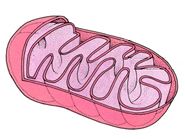
What is the name of the structure shown in the diagram where cellular respiration takes place?
a)
Chloroplast
b)
Mitochondrion
c)
Nucleus
d)
Vacuole
52.
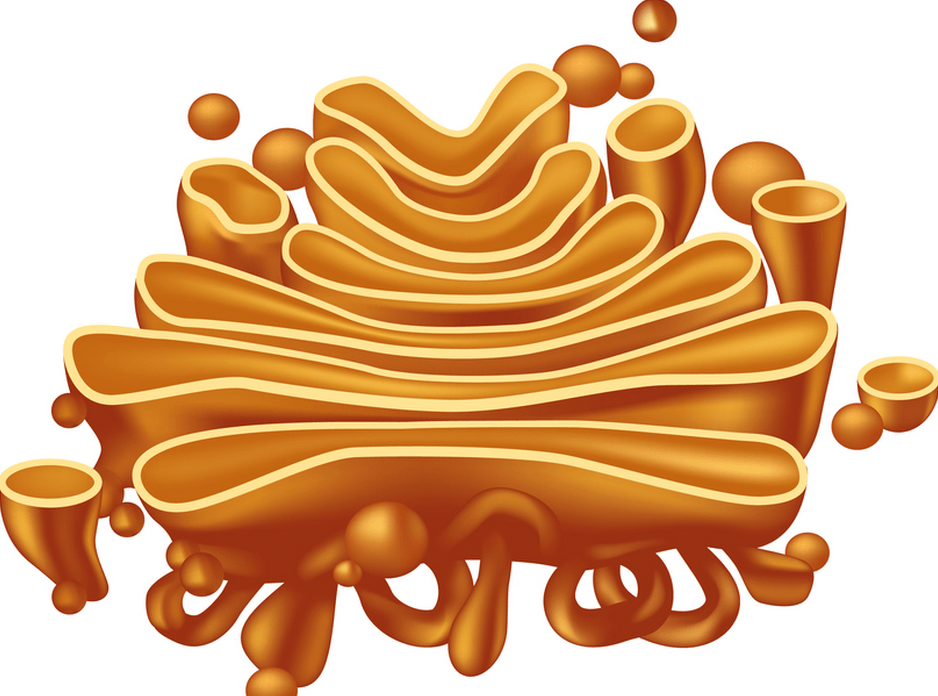
I am a protein packaging and shipping machine! Who am I?
a)
vacuole
b)
ribosome
c)
mitochondrion
d)
golgi apparatus
53.
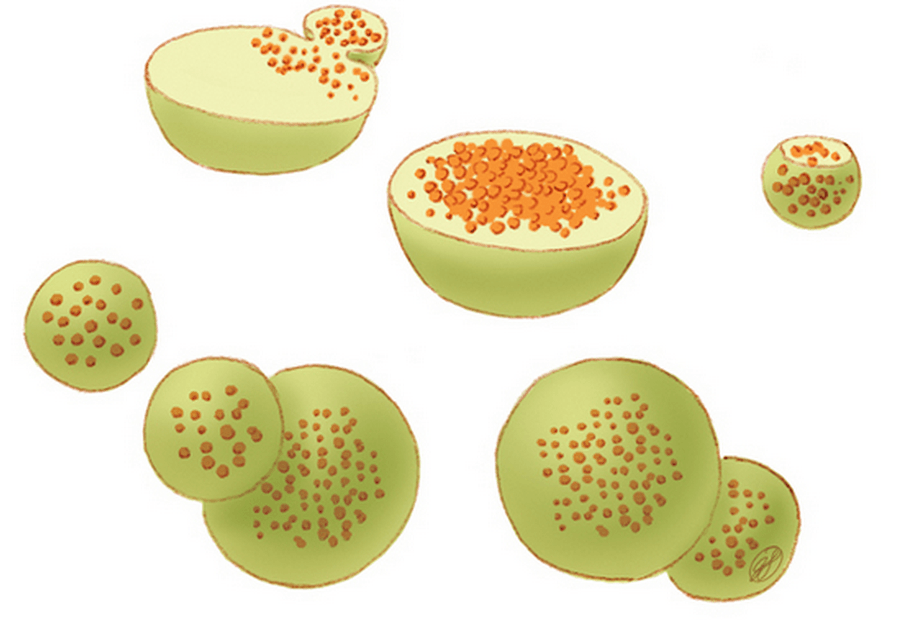
You might think of me as the trash collector, but recycler is maybe more accurate. What am I?
a)
mitochondria
b)
lysosome
c)
vacuole
d)
ribosome
54.
Where are proteins made?
a)
Golgi body
b)
Mitoichondria
c)
Chromosomes
d)
Ribosomes
55.
What is the difference between rough and smooth ER?
a)
There is no difference.
b)
Plants have rough ER, animals have smooth ER.
c)
What type of injuries the Doctors treat.
d)
Rough has ribosomes, smooth does not.
56.
The chloroplast _____.
a)
uses sugar to make energy
b)
eliminates waste products from the cell
c)
uses light energy to make sugar
d)
manufactures proteins for cell export
57.

Which features are present in prokaryotic cells?

a)

DNA, plasma membrane and mitochondria

b)

DNA, cell wall and pili

c)

ribosomes, chloroplasts and cell wall

d)

cytoplasm, ribosomes and rough endoplasmic reticulum

58.

What is the structure seen in the electron micrograph?

a)

Ribosome

b)

Lysosome

c)

Mitochondrion

d)

Nucleus

59.

The major locomotor structures in bacteria are......

a)

flagella

b)

pili

c)

fimbriae

d)

cilia

60.

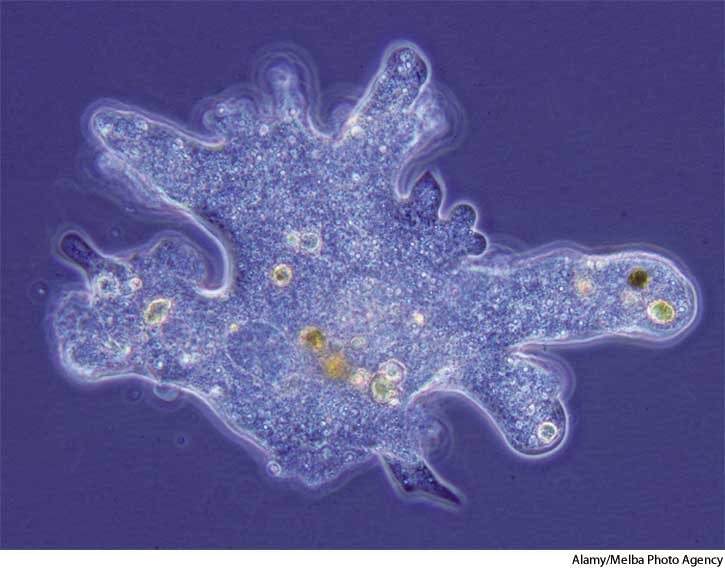
An Amoeba is a unicellular, animal-like protist that lives in ponds and streams. According to cell theory, where did this cell come from?

a)

another pre-existing amoeba cell.

b)

energy from sun that allowed the protist to reproduce.

c)

a multicellular organism.

d)

the nonliving environment.