
 Worksheets
C05 Atomic Theory Homework
Total questions: 59
Worksheet time: 34mins
Thought all matter was made up of the elements: earth, air, water, and fire.
Democritus
Ernest Rutherford
John Dalton
Aristotle
J.J. Thomson
Gold Foil Experiment
Neils Bohr
Democritus
John Dalton
Ernest Rutherford
JJ Thomson
Cathode Ray Tube Experiment
Neils Bohr
Democritus
John Dalton
Ernest Rutherford
JJ Thomson
First person to suggest the idea of the atom.
Democritus
Ernest Rutherford
John Dalton
Aristotle
J.J. Thomson
His work discovered atoms have a nucleus, positive protons, and electrons that travel around nucleus
Neils Bohr
Democritus
John Dalton
Ernest Rutherford
JJ Thomson
Rutherford's gold foil experiment discovered the
electron
neutron
atom
nucleus
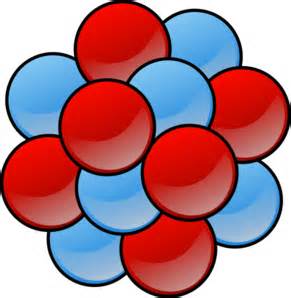
–Each element consists of tiny invisible particles called atoms
–All atoms of the same element are identical in size, mass, and properties (not quite) but atoms of different elements are different in size, mass, and properties.
–Atoms cannot be subdivided, created, nor destroyed (not quite).
–Atoms of different elements combine in simple, whole-number ratios to form compounds.
–In chemical reactions, atoms are combine, separated, or rearranged.
Dalton's Atomic Theory
Democritus Atomic Theory
Quantum Mechanical Atomic Theory
Modern Atomic Theory
Electrons have what kind of charge?
neutral or no charge
negative
positive
Neutrons have what kind of charge?
neutral or no charge
negative
positive
Protons have what kind of charge?
neutral or no charge
negative
positive
Atoms contain the same number of protons & electrons, therefore,
atoms are positive
atoms are neutral
atoms are negative
Produced the first atomic theory.
Neils Bohr
Democritus
John Dalton
Ernest Rutherford
JJ Thomson
Produced a model of an atom to explain that line spectra are produced from photons produced when electrons change to lower energy levels.
Neils Bohr
De Broglie
John Dalton
Ernest Rutherford
JJ Thomson
Produced first model of the atom that had electrons behaving as standing waves.
Neils Bohr
De Broglie
John Dalton
Ernest Rutherford
JJ Thomson
Quantum model of the atom. (Mark all that apply.)
Neils Bohr
De Broglie
Schrödinger
Albert Einstein
Heisenberg
Discovered that atoms contain negatively charged particles.
Neils Bohr
Democritus
John Dalton
Ernest Rutherford
JJ Thomson
1.All matter is composed of atoms.
2.Atoms of one element differ in properties from atoms of another element.
3.Atoms are divisible into smaller particles called subatomic particles.
4.A given element is made up of atoms with different masses. (Isotopes)
5.Chemical reaction involves only the combination, separation, or rearrangement of atoms.
6.Compounds are formed by the combination of atoms in small whole number ratios.
Dalton's Atomic Theory
Democritus Atomic Theory
Quantum Mechanical Atomic Theory
Modern Atomic Theory
His paper on the explanation of Brownian motion led to the wide spread acceptance of the atom.
Neils Bohr
De Broglie
Schrödinger
Albert Einstein
Heisenberg
Match the following

oil drop experiment

cathode ray tube

Gold Foil Experiment

Emission Line Spectrum

oil drop experiment
cathode ray tube experiment
gold foil experiment
gas discharge tube amalgamation
emission line spectrum

oil drop experiment
cathode ray tube experiment
gold foil experiment
gas discharge tube amalgamation
emission line spectrum

oil drop experiment
cathode ray tube experiment
gold foil experiment
gas discharge tube amalgamation
emission line spectrum
"Atomic Fingerprints" Used to identify elements in samples, stars, and atmospheres of planets.
oil drop experiment
cathode ray tube experiment
gold foil experiment
gas discharge tube amalgamation
emission line spectrum

Quantum model
planetary/nuclear model
plum pudding model
Bohr model
De Broglie model
Match the Model of the Atom with its name.

Quantum model

planetary/ nuclear model

plum pudding model

Bohr model

De Broglie model
Match the Model of the Atom with the scientist credited with its discover.
De Broglie, Heisenberg, Schrödinger,
Rutherford
Thompson
Neils Bohr

Dalton
Match the Model of the Atom with its name.
planetary/ nuclear model
plum pudding model
Bohr model
De Broglie model

Billiard Ball Model

What model of the atom?
Quantum model
planetary/ nuclear model
plum pudding model
Bohr model
De Broglie model

Quantum model
planetary/nuclear model
plum pudding model
Bohr model
De Broglie model

billiard ball model
planetary/nuclear model
plum pudding model
Bohr model
quantum model

billiard ball model
planetary/nuclear model
De Broglie model
Bohr model
plum pudding model

billiard ball model
planetary/nuclear model
quantum model
Bohr model
plum pudding model
Dalton
Rutherford
Thomson
De Broglie, Heisenberg, and Schrödinger
Bohr

Dalton
Rutherford
Thomson
De Broglie, Heisenberg, and Schrödinger
Bohr

Dalton
Rutherford
Thomson
De Broglie, Heisenberg, and Schrödinger
Bohr
Which laws did John Dalton base his atomic theory on? (Multi-Select)
Law of Conservation of Energy
Dalton's Law of Quantum Mechanics
Law of multiple proportions
Law of conservation of mass
Law of definite proportions (constant composition)
Pure substance containing only one type of atom.
atom
compound
element
molecule
isotope
Atoms of the same element with a different mass.
atom
compound
element
molecule
isotope
Smallest particle of an element that still maintains the properties of that element.
atom
compound
element
molecule
isotope
The beam of electrons was deflected away from the negative charge plate proved that
electrons are a fundamental particle (found in all matter)
electrons have mass
electrons are positively charged
electrons behave like a wave
electrons are negatively charged
The beam of electrons caused the paddle wheel to spin
electrons are a fundamental particle (found in all matter)
electrons have mass
electrons are positively charged
electrons behave like a wave
electrons are negatively charged
The beam of electrons (cathode rays) where produced no matter what metal the cathode was made out of.
electrons are a fundamental particle (found in all matter)
electrons have mass
electrons are positively charged
electrons behave like a wave
electrons are negatively charged
What did they expect to happen to the alpha particles in the gold foil experiment?
half to be deflected and half to pass straight through the gold foil
all of the alpha particles to pass straight through the gold foil
all of the alpha particles to bounce back from the gold foil
most to pass straight through, some deflected at a small angle, and a few to bounce almost straight back
What actually happened to the alpha particles in the gold foil experiment?
half to be deflected and half to pass straight through the gold foil
all of the alpha particles to pass straight through the gold foil
all of the alpha particles to bounce back from the gold foil
most to pass straight through, some deflected at a small angle, and a few to bounce almost straight back
In the gold foil experiment, some of the alpha particles were deflected at a small angle proving
the existence of a small volume with a large mass inside the atom
that the atom is mostly empty space
that the nucleus is positively charged
the existence of a large volume with a small mass in the center of the atom
that the nucleus is negatively charged
In the gold foil experiment, most of the alpha particles passed straight through proving
the existence of a small volume with a large mass inside the atom
that the atom is mostly empty space
that the nucleus is positively charged
the existence of a large volume with a small mass in the center of the atom
that the nucleus is negatively charged
In the gold foil experiment, a few of the alpha particles bounced almost straight back proving
the existence of a small volume with a large mass inside the atom
that the atom is mostly empty space
that the nucleus is positively charged
the existence of a large volume with a small mass in the center of the atom
that the nucleus is negatively charged
Thomson's Cathode Ray Tube experiment discovered the
electron
neutron
atom
nucleus
The random movement of particles suspended in a fluid is known as
Einsteinian motion
Ciliar movement
Bohrian motion
Brownian motion
What causes Brownian motion of pollen grains in water?
the collision of water molecules with the grains of pollen
cilia on the pollen grains
flagellum on the pollen grains
diffusion of the water molecules
How big is the nucleus compared to the diameter of the the atom? The nucleus is________ the diameter of the atom.
1/2
1/10
1/100
1/1000
1/100000

