wayground logo

Free Printable Worksheets

Font size

S
M
L
XL
Worksheets

Final Review 2: Periodic T., Bonding and Mole

Total questions: 55

Worksheet time: 2hrs 35mins

Name
Class
Date
1.

What is the name of group number 1?

a)

halogens

b)

noble gases

c)

alkali metals

d)

alkaline earth metals

2.

where are the metaloids found

a)

far left, vertical

b)

stair step/diagonal

c)

far right horizontal

d)

at the bottom

3.

What group number are the halogens found?

a)

18 (8A)

b)

1

c)

2

d)

17 (7A)

4.

Periodic law states that the elements are arranged according to their atomic ________ so that elements with similar chemical properties are in the same ________ and properties repeat periodically.

a)

numbers, rows

b)

masses, rows

c)

masses, column

d)

numbers, column

5.
__________ would have some characteristics of metals and some characteristics of nonmetals.
a)
Gold
b)
Sodium
c)
Arsenic
d)
Bismuth
6.

Nonmetals (select all that apply)

a)

are found on the right side of the periodic table.

b)

are found on the left side of the periodic table.

c)

are good conductors of heat and electricity.

d)

are brittle.

e)

can be solid, liquids, or gases at room temperature.

7.

Metals (select all that apply)

a)

are found on the right side of the periodic table.

b)

are found on the left side of the periodic table.

c)

are good conductors of heat and electricity.

d)

are brittle.

e)

are malleable and ductile.

8.

Which element has similar chemical properties as sodium but has 7 energy levels?

a)

Francium (Fr)

b)

Cesium (Cs)

c)

Rubidium (Rb)

d)

Potassium (K)

9.

Elements that have the same number of energy levels are said to be in the same ______.

a)

group

b)

period

c)

family

d)

classification

10.
Ionization energy is the...
a)
energy needed to remove the outermost electron.
b)
ability of an atom to attract electrons from another atom.
11.
Electronegativity is the...
a)
energy needed to remove the outermost electron.
b)
ability of an atom to attract electrons from another atom.
12.
As you move down a group, atomic radius increases because - 
a)
you add more and more neutrons
b)
you add more and more protons
c)
you add more and more shells (energy levels)
d)
you add more atomic mass
13.
As you move across the periodic table from left to right, the atomic radius decreases.  This is because - 
a)
the number of protons increases, so attraction to electrons increases
b)
the number of energy levels increases
c)
the number of electrons increases
d)
the atomic mass increases
14.
Francium (Fr) has the lowest ionization energy in Group 1 because - 
a)
it has the smallest number of valence electrons
b)
it has the greatest atomic mass
c)
it has the greatest number of protons, so it attracts its electrons the strongest
d)
its 1 valence electron is very far from the nucleus, so little energy is needed to remove it
15.
As you move across the periodic table atoms tend to get smaller because, ______________.
a)
the atoms have more mass.
b)
the atoms have less mass
c)
the atoms have more protons.
d)
the atoms have less electrons.
16.
Families all have similar 
a)
Names
b)
atomic numbers
c)
atomic masses
d)
properties
17.
Which has the greater Electronegativity: 
N or C?
a)
C
b)
N
18.

Which element in Period 2 has the greatest atomic radius?

a)

Be

b)

C

c)

Na

d)

Li

19.

Of the halogens, which has the smallest radius?

a)

F

b)

Br

c)

He

d)

At

20.

Of the halogens, which has the smallest electronegativity?

a)

F

b)

Cl

c)

At

d)

Ne

21.

Which alkali metal is the least reactive?

a)

Li

b)

Na

c)

H

d)

Fr

22.
What elements generally make an ionic bond?
a)
metal and nonmetal
b)
2 nonmetals
c)
metal
d)
none of the above
23.
In chemical compounds, covalent bonds form when
a)
the electronegativity difference between two atoms is very large.
b)
electrons are completely transferred between two metals.
c)
pairs of electrons are shared between two nonmetal atoms.
d)
two nonmetal atoms are attracted to each other by opposite charges.
24.
Predict the bond that will form between Se and Cl
a)
Ionic
b)
Covalent
25.
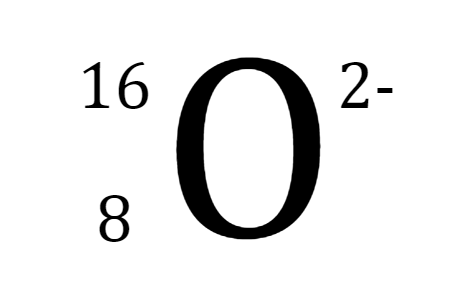
If an oxygen atom has 8 protons (+) and 10 electrons (-), what is it's charge?
a)
O10-
b)
O8+
c)
O2-
d)
O10+
26.

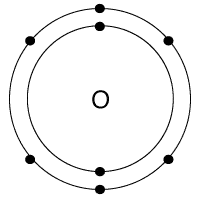
Which is the correct Lewis Structure for oxygen?

a)
b)
c)
d)
27.

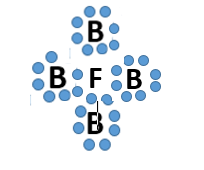
What is the correct Lewis structure for BF3?
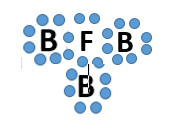
a)
b)
c)
d)

BF3 (The formula is the Lewis Structure)

28.

What is the chemical formula for Lithium Nitride?

a)

Li3N

b)

LiN3

c)

NLi3

d)

N3Li

29.

What is the ionic formula for a bond between Calcium and Phosphorus?

a)

Ca2P3

b)

Ca3P2

c)

Ca2P5

d)

P5Ca2

30.
Why do bonds form?
a)
To fill the valence shell of electrons for the elements involved
b)
to release energy stored in the bonds
c)
because whenever you mix two chemicals, there will be a reaction
d)
because of attraction
31.
What type of bond is illustrated above?
a)
Metallic
b)
Ionic
c)
Covalent
d)
Wiggly
32.
A solid substance is an excellent conductor of electricity. The chemical bonds in this substance are most likely?
a)
ionic, because the valence electrons are shared between atoms
b)
covalent, because the valence electrons are mobile
c)
metallic, because the valence electrons are stationary
d)
metallic, because the valence electrons are mobile
33.

Bonds formed by sharing electrons between atoms are

a)

ionic

b)

metallic

c)

covalent

d)

dipole-dipole

34.

A compound that is a poor conductor and has low melting and boiling points is most likely

a)

ionic

b)

metallic

c)

covalent

35.

Which solid would be a good conductor?

a)

sodium chloride

b)

copper (II) sulfate

c)

glucose

d)

aluminum

36.

What is the name for SiCl4?

a)

silicon tetrachloride

b)

silicon quadchloride

c)

monosilicon tetrachloride

d)

silicon chloride

37.

What is the name of P₄S₁₀?

a)

phosphorous sulfide

b)

phosphorus sulfite

c)

tetraphosphorus decasulfide

d)

tetraphosphide decasulfide

38.

What is the name of the compound with the formula Ba3P2?

a)

barium phosphide

b)

barium diphosphide

c)

tribarium diphosphide

d)

barium phosphorous

39.
What is the formula for magnesium chloride?
a)
MgCl
b)
Mg2Cl
c)
MgCl2
d)
Mg(ClO3)2
40.

What is the formula for copper(I) sulfate?

a)

CuSO3

b)

CuSO4

c)

Cu2SO3

d)

Cu2SO4

41.

What is the name for the compound CaCO3?

a)

Calcium carbon oxide

b)

Calcium (II) carbonate

c)

Calcium carbonate

d)

Carbon carbonate

42.

What is the formula for sodium nitrate?

a)

Na3NO

b)

NaNO2

c)

Na3NO3

d)

NaNO3

43.

What is the name of Cu₃N₂?

a)

copper (III) nitride

b)

copper (II) nitride

c)

copper nitride

d)

tricopper dinitride

44.

What is the name for As4O10?

a)

arsenic oxide

b)

arsenide decoxide

c)

tetraarsenic decoxide

d)

arsenic decoxide

45.

The molecular formula for a carbon and hydrogen compound is C8H18. What is the empirical formula?

a)

C8H18

b)

C9H4

c)

C18H8

d)

C4H9

46.

Mylanta, a common antacid, contains magnesium hydroxide, Mg(OH)2. How many moles of magnesium hydroxide are in 75.0 g of magnesium hydroxide?

a)

0.551 moles

b)

0.778 moles

c)

1.29 moles

d)

1.82 moles

47.

Acetone, C3H6O, is the main component of fingernail polish remover. What is the molar mass of acetone to the nearest hundredths place?

a)

29.018 g/mol

b)

34.058 g/mol

c)

58.1 g/mol

d)

58.08 g/mol

48.

What is the percent composition of hydrogen in water?

a)

89.8%

b)

11.2%

c)

66.7%

d)

33.3%

49.

Methyl acetate, is a solvent commonly used in paints, ink, and adhesives, and is often identified by the formula CH₃COOCH₃. What is the empirical formula for methyl acetate?

a)

CH2O

b)

C6H12O6

c)

C3H6O2

d)

C1.5H3O

50.
How many moles are in 3.01 x 10²² atoms of magnesium?
a)
0.0500 moles
b)
1.81 x 1046 moles
c)
5.00 x 10²¹ moles
d)
5.00 moles
51.
How many molecules are in 2.00 moles of H2O?
a)
124x1024 molecules of H2O
b)
1.20x10²³ molecules of H2O
c)
1.20x1024 molecules H2O
d)
124
52.
What is the molar mass of carbon?
a)
6.0 g/mol
b)
12.0 g/mol
c)
22.4 g/mol
d)
6.02 x 10²³ g/mol
53.

88.0 grams of CO2 is about _____________. [Select 2 answers.]

a)

1 mole of CO2

b)

2 moles of CO2

c)

6.02 x 10²³ molecules of CO2

d)

two times 6.02 x 10²³ molecules of CO2

54.
Which has more molecules?
a)
1 mole CO2
b)
1 mole of N2O4
c)
1 mole of H2O
d)
They are all the same
55.
If I have 6.02 x10²³ molecules of CO2, what is the mass?
a)
44.0 g
b)
2.65 x10²³ g
c)
1.37 x10²² g
d)
96.0 g