
 Worksheets
Chapter 7 Marine Animals without a Backbone Review
Total questions: 30
Worksheet time: 16mins
___________ are tiny hard particles that give a sponge support and can provide protection if they are made out of calcium carbonate or silica glass.
spongin
bones
buds
spicules

These sponge cells have sticky, funnel-shaped collar to collect food particles and a flagellum that creates a water current
How do sponges obtain food?
filter it from the water
grasp it with tentacles
pry it apart with tube feet
put it in their mouth with jointed legs
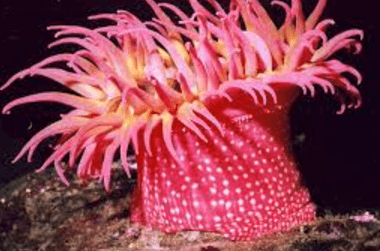
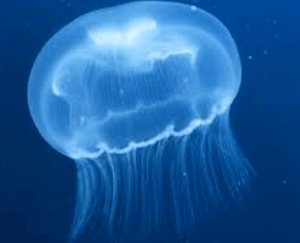
This file-like ribbon of "teeth" is used by molluscs to scrape algae and other food off of rocks and can even drill through the shells of prey.
Calcium Carbonate
Radula
Foot
Mantle
Ctenidia
This is the outer fold of skin on molluscs, and is responsible for excreting the substance that forms the mollusc's shell.
Radula
Mantle
Foot
Ctenidia
Cockle
Since the exoskeleton limits the growth of arthropods, they have to shed their exoskeletons and form a new one. This is called ____.
defecating
molting
morphing
excreting
The term 'arthropod' literally means
bent leg
jointed foot
bent foot
jointed skeleton
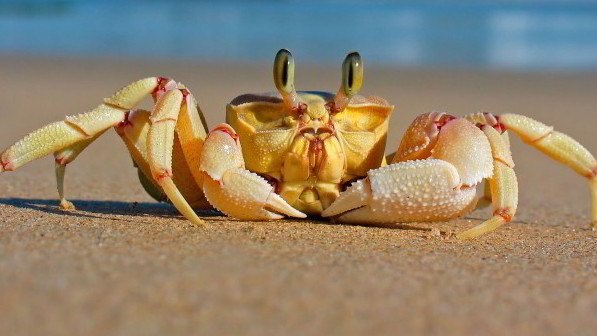
decapods have ______ legs.
8
10
12
20
Which of the following is NOT a characteristic of arthropods?
Exoskeleton
Jointed appendages
Segmented body
Endoskeleton
What does the term echinoderm mean?
tube feet
star shaped
spiny skin
stomach foot
What type of symmetry do most adult echinoderms exhibit?
Asymmetry
Pentamerous radial symmetry
Bilateral symmetry
Trilateral symmetry

Sea stars feed by
Injecting poison that digests the prey
Extruding their stomach to digest prey
Chewing their prey with jaws and teeth
squeezing their prey until it dies
How do sea cucumbers defend themselves?
Calcium carbonate spicules in their skin
Discharging toxic strands of mucus
Expulsing internal organs as a distraction
All answers are correct

The structure used by sea urchins to chew into rock or coral and to eat kelp is called
jaws
chelipeds
Aristotle's lantern
Socrates' shovel

This echinoderm can have up to 200 arms and is a suspension feeder:
sea urchin
sea lily
brittle star
sand dollar
The bulblike sac on the top of each tube foot helps extend and retract them:
ampulla
pedicellariae
madreporite
nerve ring

Segmented worms are known as
Nematodes
Annelids
Planarians
Cnidarians

What is the spear like appendage on the head of ribbon worms that are used for killing prey?
Coelom
Parapodia
Ganglia
Proboscis

What three types of worms are in the Phylum Platyhelminthes (Flat worms)?
turbellarians, trematodes (flukes), cestodes (tape worms)
ribbon worms, round worms, annelids
These worms are parasitic of intestinal tracts of marine fish, marine mammals and even humans.
turbellarians
trematodes (flukes)
cestodes (tape worms)

