
 Worksheets
Enzyme Warmup
Total questions: 25
Worksheet time: 18mins
Enzymes are an example of
Lipids
Carbohydrate
Protein
Nucleic Acid
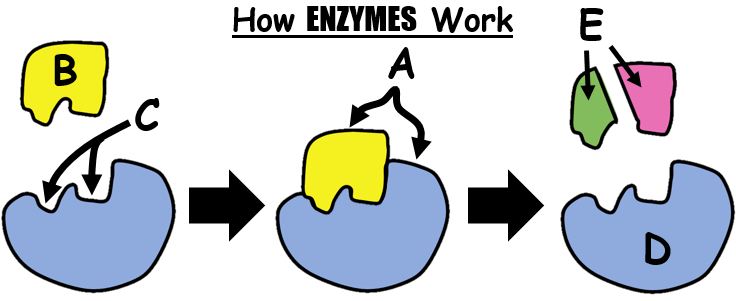

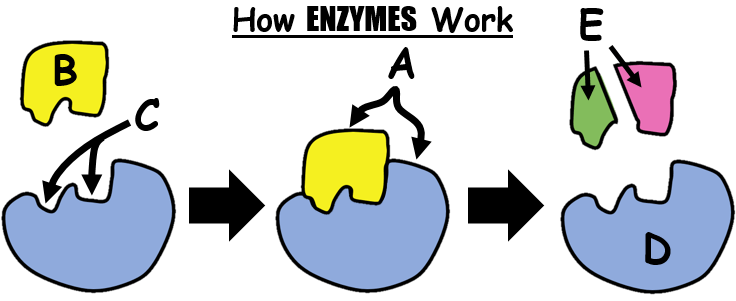
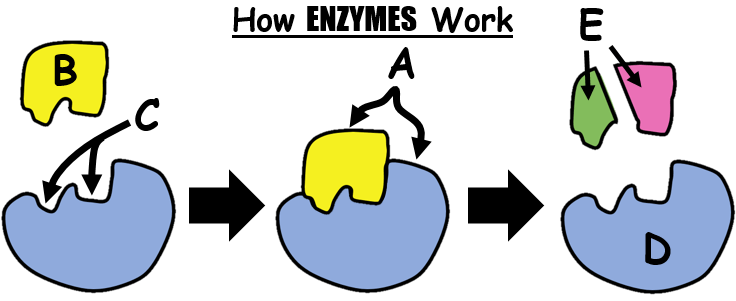
What happens when enzymes are heated to a high temperature?
The enzymes die.
The shape of the enzyme are changed and it denatures
The enzymes' amino acid sequence changes.
The enzymes remain the same
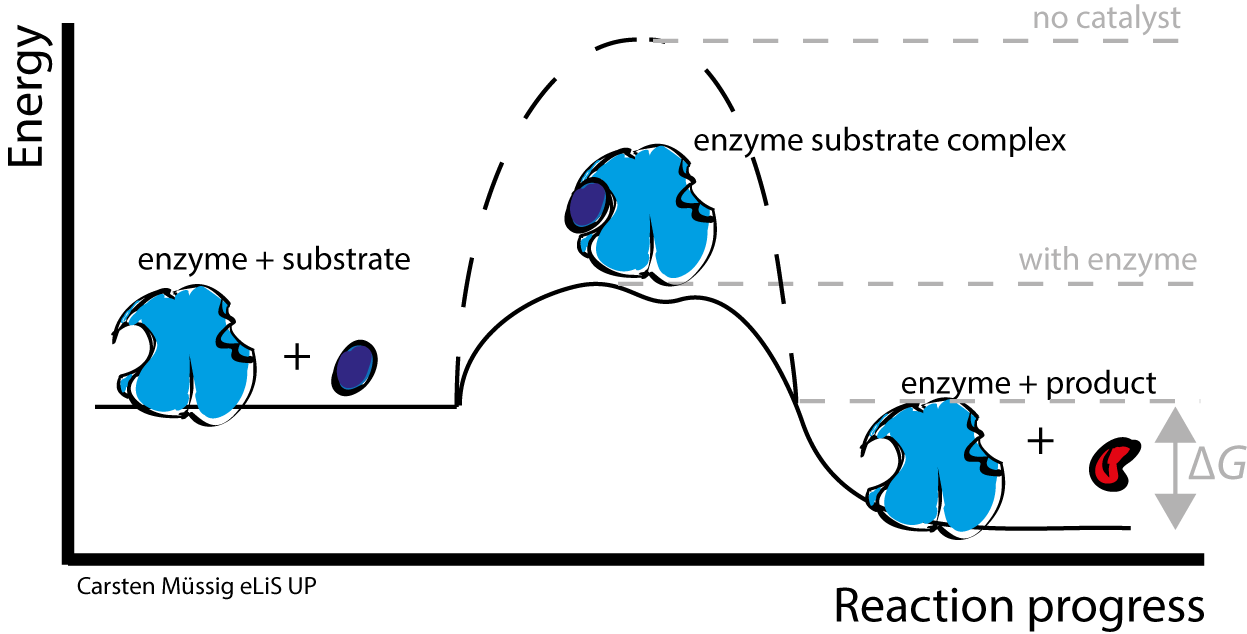
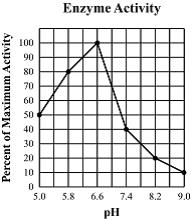
Which of the following best explains why enzymes are necessary for reactions in our cells?
The reactions are too slow to meet the needs of the cell if enzymes are missing.
Enzymes supply the oxygen necessary for the reactions.
Enzymes change reactants from solid to liquid during the reactions.
The reactions take up too much space in the cell if enzymes are missing.
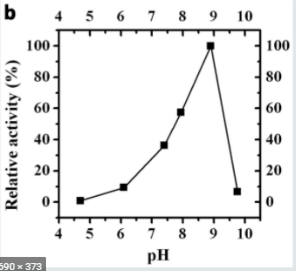
What is the optimal pH for this enzyme?
6
10
9
7
Where do substrates bind to an enzyme?
calcium channels
active site
receptor molecules
voltage-gated channels
The ____________________ mechanism describes how each substrate must fit into the enzyme.
lock and key
hammer and nail
jigsaw puzzle
seesaw

The diagram above shows reaction occurring with and without an enzyme. Which letter shows the energy saved by the use an enzyme?
A
B
C

Which characteristic of enzymes is shown above?
Enzymes are specific in nature
Enzymes speed up chemical reactions
Enzymes work at an optimum pH
Enzymes work at an optimum temperature
What happens to an enzyme when it denatures?
The activation energy of the reaction is doubled.
The activation energy of the reaction is lowered.
It's optimal conditions for temperature of the enzyme are doubled.
The shape of the enzyme molecule is changed.

The attached graph shows the effect of _________ on the rate of an enzyme-assisted reaction.
pH value
Substrate concentration
Enzyme concentration
Temperature
What is the most likely result if the shape of the enzyme changes?
The substrate will change its shape to match the enzyme.
The enzyme will no longer be able to catalyze the reaction with the substrate.

