wayground logo

Free Printable Worksheets

Font size

S
M
L
XL
Worksheets

Atoms&Elements Test Review

Total questions: 54

Worksheet time: 14hrs 30mins

Name
Class
Date
1.
What should you do before you start lab?
a)
Read all the procedures
b)
Make sure your work area is neat
c)
Get teachers permission
d)
All of the above
2.
Horseplay, jokes, and pranks are appropriate in the science classroom at any time.
a)
True
b)
False
3.
Convert 300 meters to centimeters:
a)
3000 cm
b)
0.3 cm
c)
30,000 cm
d)
3 cn
4.
The metric unit for mass is 
a)
newton
b)
kilogram
c)
joule
d)
g/ml
5.
Which lists metric units, in order, from smallest to largest?
a)
milligram, centigram, gram
b)
kilogram, gram, centigram
c)
decagram, hectogram, milligram
d)
kilogram, hectogram, decagram
6.
 The Metric system is based on units of__.
a)
1's
b)
5's
c)
10's
d)
15's
7.
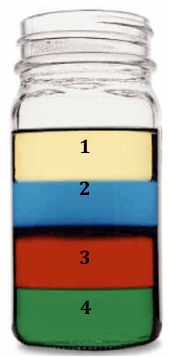
Put the liquids in order from most dense to least dense?
a)
4, 3, 2, 1
b)
1, 2, 3, 4
c)
3, 4, 2, 1, 
d)
4, 3, 1, 2
8.
What is the formula for density?
a)
density = mass x volume
b)
density = mass / volume
c)
density = mass + volume
d)
density = mass - volume
9.
What is the volume of Object X?
a)
10.0 cm3
b)
15.0 cm3
c)
20.0 cm3
d)
25.0 cm3
10.
Why do some substances float on water?
a)
they are warmer than water
b)
they are cooler than water
c)
they are more dense than water
d)
they are less dense than water
11.
Helium balloons rise on earth because
a)
helium is less dense than air
b)
helium is more dense than air
c)
helium is cooler than air
d)
helium is warmer than air
12.
What units are used to measure Density?
a)
cm3/g
b)
g
c)
g/cm3
d)
cm3
13.
An object with which of the following densities will float on water?
a)
0.7 g/cm3
b)
1.2 g/cm3
c)
3.5 g/cm3
d)
11.4 g/cm3
14.
Calculate the density of the cube.
a)
3 g/cm3
b)
4 g/cm3
c)
2 g/cm3
d)
5 g/cm3
15.

Find the volume if you have a substance with a mass of 3.5g and a density of 7.5g/cm3

a)

26.25cm3

b)

2.14cm3

c)

.47cm3

d)

.79cm3

16.

Find the mass if a substance has a volume of 35mL and a density of 15.4g/mL.

a)

539g

b)

2.27g

c)

.44g

d)

6.89g

17.
Frank has a paper clip. It has a mass of 9g and a volume of 3cm3. What is its density?
a)
3 g/cm3
b)
1/3 g/cm3
c)
27 g/cm3
d)
39 g/cm3
18.
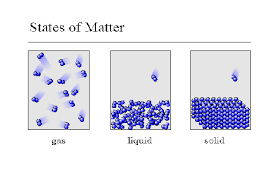
At higher temperatures
a)
particles in an object have less energy
b)
particles in an object move faster
c)
a gas contracts
19.

Freezing

a)

Solid to gas

b)

Liquid to solid

c)

Gas to solid

20.

Boiling

a)

liquid to gas

b)

gas to solid

c)

gas to liquid

21.

Sublimation is the process of

a)

a gas going to a liquid

b)

a solid going to a gas

c)

a liquid going to a solid

d)

a gas going to a solid

22.
Which line segment demonstrates vaporization occurring?
a)
B-C
b)
C-D
c)
D-E
d)
E-F
23.
At what temperature is this substance melting?
a)
50C
b)
100C
c)
0C
24.
At point temperature does this substance finish melting?
a)
B
b)
C
c)
D
d)
E
25.
Which particle has a positive charge?
a)
electron
b)
orbital
c)
proton
d)
neutron
26.
Choose the particle that has no charge.
a)
nucleus
b)
neutron
c)
proton
d)
electron
27.
An electron has a _____ charge.
a)
negative
b)
positive
c)
neutral
28.
Describe an Electron Cloud?
a)
the mist outside of an atom
b)
home of the protons
c)
where electrons are located
d)
nucleus
29.
Which particles make up the nucleus of an atom?
a)
protons and neutrons
b)
electrons and protons
c)
electrons, protons, and neutrons
d)
electrons and neutrons
30.
The subatomic particle that determines the identity of an element.
a)
neutron
b)
proton
c)
electron
d)
outer shell
31.
What is the atomic number of the atom pictured? 
a)
11
b)
12
c)
22
d)
23
32.
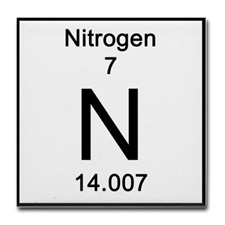
What is the number of protons that the element in this image contain?
a)
14
b)
7
c)
15
d)
18
33.
Which of the following is a substance that can not be broken down into a simpler substance?
a)
Isotope
b)
Element
c)
Compound
d)
Atomic Number
34.
What number indicates an electron?
a)
1
b)
2
c)
3
d)
4
35.

Mass minus Atomic Number Equals (M-A=?)

a)

Neutrons

b)

Protons

c)

Nucleus

d)

Atom

36.

Atomic number equals ______________ and _______________

a)

Neutrons

b)

Protons

c)

Electrons

d)

Elements

37.

How many neutrons does this element have?

a)

1

b)

2

c)

3

d)

4

38.

What goes in place of the question marks?

a)

Element name

b)

Atomic Mass

c)

Atomic Number

d)

Electrons

39.

What goes in place of the question marks?

a)

Neutrons

b)

Electron Cloud

c)

Atomic Number

d)

None of the above

40.

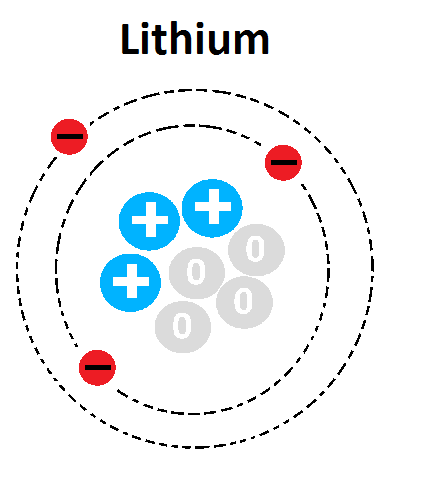
What element is represented in this Bohr Model?

a)

Carbon

b)

Hydrogen

c)

Aluminum

d)

Lithium

41.
What is the name of this element?
a)
Lithium
b)
Boron
c)
Carbon
d)
Neon
42.
What is the mass number of this atom?
a)
1
b)
3
c)
4
d)
7
43.
What is the atomic number of this atom?
a)
2
b)
4
c)
6
d)
none of the above
44.
What group does this element belong to?
a)
Group 1: Alkali metals
b)
Group 18: Noble Gases
c)
Group 2: Alkaline-Earth Metals
d)
Group 17: Halogens
45.
How many valence electrons?
a)
2
b)
3
c)
5
d)
10
46.
What's a valence electron?
a)
electrons in the second energy level
b)
electrons in the outermost energy level
c)
the atomic number
d)
electrons in the first level
47.

On the periodic table, Groups are

a)

Horizontal rows

b)

Vertical columns

48.

On the periodic table, Periods are

a)

Horizontal rows

b)

Vertical columns

49.
Which of these is a property of metals?
a)
It's malleable
b)
It can't conduct electricity
c)
They are used in food
d)
It's very brittle
50.
Which of these grouping of elements could have the characteristic of brittle?
a)
Metal
b)
Nonmetal
51.
Which elements are found on the left to middle of The Periodic Table? 
a)
Metals
b)
Nonmetals
c)
Metalloids
d)
Candles
52.
Silicon is a semiconductor and has properties of both metals and nonmetals. What type of element is Silicon? 
a)
Metal
b)
Nonmetal
c)
Metalloid
d)
Pretty
53.
Which elements are found on the right side of The Periodic Table?
a)
Metals
b)
Nonmetals
c)
Metalloids
d)
Water
54.
Which element is a metalloid?
a)
Titanium
b)
Selenium
c)
Potassium
d)
Polonium