
 Worksheets
Chemical Bonding Review
Total questions: 103
Worksheet time: 52mins
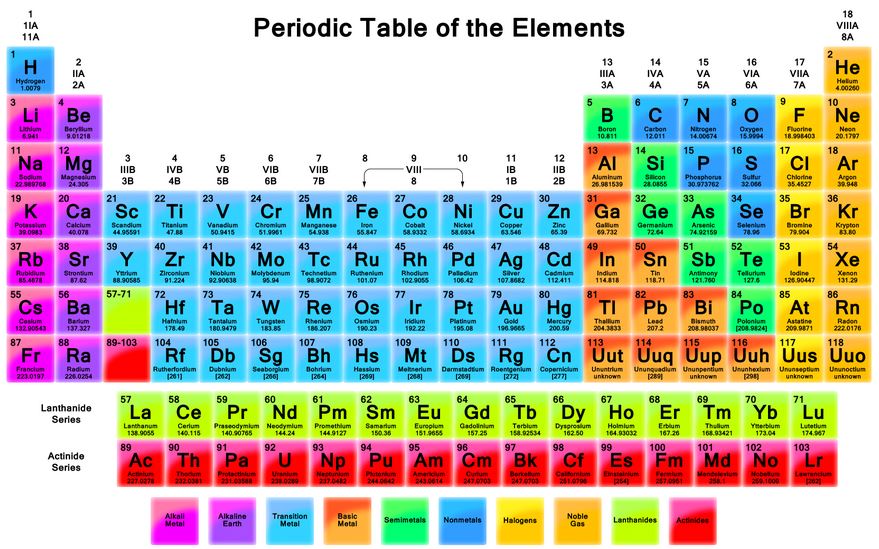
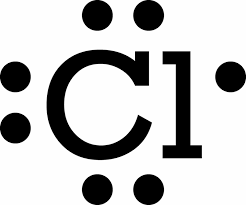
Typically, atoms are more stable when they are
bonded together
apart from each other
Why do atoms bond?
They typically don't bond
To add or take away energy levels
To have a full valance shell.
To have a full inner shell
What happens when magnesium loses 2 electrons?
It stabilizes to a net charge of 0
It turns into an atom
It becomes negatively charged
It becomes positively charged
Predict the bond between Mg and Cl
covalent
ionic
metallic
none of the above
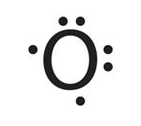
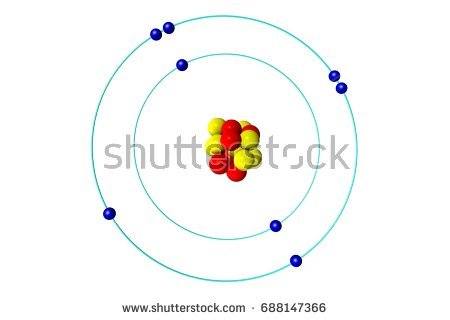
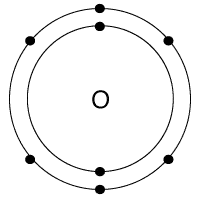
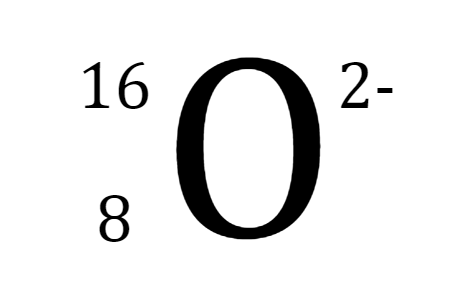
Which is the correct Lewis Structure for oxygen?

Is H2O2 an element or a compound?
element
compound
An atom that gains or loses an electron becomes
an isotope
a new element
an ion
a molecule
Valence electrons are
neutral (no charge)
found in the outer most energy level of the atom
equal to the number of protons
Which type of bonds create compounds?
covalent bonds
ionic bonds
metallic bonds
all type of bonds
Which type of bond occurs between non metals?
covalent bonds
ionic bonds
metallic bonds
all types of bonds
How many different elements are in the C6H12O6
3
6
12
24
How many total atoms are in C6H1206
3
6
12
24
Is this equation balanced? C3H8 + 5O2 = 4H2O + 3CO2
yes
no
How many oxygen atoms on each side of C3H8 + 5O2 = 4H2O + 3CO2
2
3
5
10
In order for a chemical reaction to occur,
there must be an explosion or fire
bubbling or gas must be produced
a new substance must be formed
the substance must turn color
After a chemical reaction occurs, atoms are not created nor destroyed,
just rearranged into a new substance
just changed into different elements
just turned into unstable elements
Most elements bond to create compounds because
their outer electron level is full
they are unstable
they are positively charged
1. Are the atoms more stable when they are bonded together or when they are apart?
Bonded Together
Apart
10. What charges attract?
Opposite
Same
11. What charges repel?
Same
Opposite
16. What is the number of valence electrons for Calcium (Group 2)?
1
2
3
4
17. What is the number of valence electrons for Carbon (Group 14)?
1
2
3
4
18. What is the number of valence electrons for Neon and the other Noble Gases?
5
6
7
8
20. If I was trying to determine if two atoms will bond, what would be helpful to know:
Valence electrons, found by group number
Whether the elements are metals or nonmetals
The electronegativity of the atoms
All of the above, all of which can be found on the Periodic Table
A compound is made of two nonmetals. It is
ionic
metallic
covalent
A chemical bond between oppositely charged ions.
Covalent bonds
Ionic Bonds
Ion
Compound

The small numbers in a chemical formula:
(the BLUE numbers)
Subscripts
Coefficients
Numbers
Molecules
The big/regular sized numbers in a chemical formula:
(the RED numbers)
Subscripts
Coefficients
Numbers
Molecules
How many Hydrogen are in H2O?
1
2
3
Not enough information.
How many Chlorine in 5NaCl?
1
5
3
Not enough information.
How many Oxygen in 3CO2?
3
2
6
Not enough information.

Is this equation balanced?
Yes, everything appears the same amount on each side.
No, there are too many oxygen on the left side.

Is this equation balanced?
Yes, everything appears the same amount on each side.
No, there are too many hydrogen on the left side.
No, there are too many oxygen on the left side.

Is this equation balanced?
Yes, everything appears the same amount on each side.
No, there are too many hydrogen on the left side.
No, there are too many oxygen on the left side.

Is this equation balanced?
Yes, everything appears the same amount on each side.
No, there are too many copper on the left side.
No, there are too many oxygen on the left side.

Is this equation balanced?
Yes, everything appears the same amount on each side.
No, there are too many hydrogen on the left side.
No, there are too many oxygen on the left side.
Al + O2 --> 2Al2O3
HgO --> 2Hg + O2

How many valence electrons does magnesium have?
6
12
2
10
How many valence electrons does elements in group 16 have?
16
1
6
0
How many protons, neutrons, and electrons does a neutral Selenium (Se) have?
34, 45, 34
34, 34, 45
45, 45, 45
45, 34, 34

What does the symbol inside the circle mean?
"yields, or produces"
"dissolved in water"
"forms a precipitate"
"released as a gas"


Al + O2 --> Al2O3
N2 +3 H2 --> 2NH3
Identify the reactants in the following equation.
3HFe2O →H+2FEH+O
H+2FEH+O
3HFe2O
Identify the products in the following equation.
3HFe2O →H+2FEH+O
H+2FEH+O
3HFe2O
How many Carbon atoms on the Reactant side of the equation?
5C4O8→10C+2C5O20
4
5
10
20
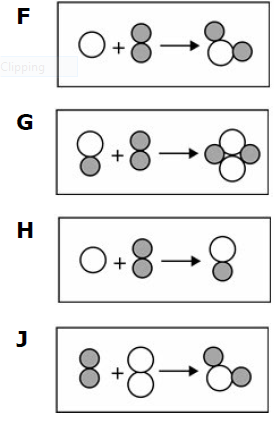
Which of the following models best demonstrates a balanced chemical equation?
F
G
H
J
What does the number 4 represent in 4NH3?
Subscript
Superscript
Coefficient
A student mixes 125 grams of sugar, 250 grams of water and 5 grams of flavoring. The solution weighs...
250 grams
380 grams
375 grams
400 grams
What do we call the chemicals that result from a chemical reaction?
reactants
products
subscripts
coefficients
According to the Law of Conservation of Mass, what happens to the wood and oxygen when it is burned?
The wood disappears.
It stays the same chemically.
The atoms in the wood and oxygen rearrange and form smoke and ash.
Nothing.
________ are the starting substances in a chemical equation.
Reactants
Producer
Reaction
Products
The law of conservation of mass states that ________
the total mass of reactants is more than the total mass of products
the mass of a chemical reaction is not constant
the mass of a chemical reaction remains constant
the total mass of reactants is less than the total mass of products
Which of the following are Subscripts in this Chemical Formula: 3Fe2O4
3,4
3,2
2,4
6
The Coefficient (3) in the Chemical Formula, 3H2O, tells you how many _____________ there are.
Atoms of Hydrogen
Atoms of Oxygen
Atoms of Water
Molecules of Water
The Subscript (2) in the Chemical Formula, 3H2O, tells you how many _____________ there are.
Atoms of Hydrogen
Atoms of Oxygen
Atoms of Water
Molecules of Water

How many oxygen atoms are in this chemical formula?
6 oxygen atoms
2 oxygen atoms
3 oxygen atoms
4 oxygen atoms
32 g of Oxygen completely reacts with 8 g of Hydrogen to produce _____ g Water
8
12
24
40
Solve for the unknown mass: 6.1 g + ? g = 9.1 g
15.2
3 g
15.2 g
3

