
 Worksheets
EARTH & LIFE SCIENCE REVIEW QUIZ FOR PRELIM EXAM
Total questions: 110
Worksheet time: 2hrs 50mins

According to the diagram, what will form when sedimentary rock is exposed to heat and/or pressure?
magma
igneous rock
sediments
metamorphic rock
What is the big bang theory?
A theory that states that the universe started in a large mass and then imploded to form everything.
A theory that states that the universe was there, will be and is there. Is homogeneous and isotropic.
A theory that states that the universe is slowly coming back to a center.
A theory that states that the universe started in a small mass and then expanded, the expansion cooled down the temperature and that resulted in the formation of matter, energy, space and time.
What were the original two elements in our universe?
Hydrogen and Lithium
Helium and Oxygen
Helium and Hydrogen
None of the above
The galaxy we are a part of is called:
Milky Way
Andromeda
Whirlpool
Sombrero
Scientist that developed the law of universal gravitation
Albert Einstein
Georges Lemaitre
Edwin Hubble
Sir Issac Newton
the universe began a tremendous expansion 13-15 billion years ago
big bang theory
red shift
light abundance
theory of life
Which statement is true?
The galaxies are moving toward us.
The galaxies are moving away from us.
The universe remains static or unchanged in motion.
None of the above


Which of the following statements best describes a galaxy?
A system of planets with an elliptical orbit
A giant nuclear reactor held together by gravity
A cloud that produces stars
A system of gas, dust and billions of stars held together by gravity

What is an interstellar cloud of dust and gases where stars can form?
universe
solar system
galaxy
nebula

Which is not a type of galaxy?
spiral
elliptical
regular
irregular

According to the big bang theory, the universe began as an explosion and is still expanding. This theory is supported by observations that the stellar spectra of distant galaxies show a - (hint: which one is moving away?)
a shift toward the red end of the spectrum
a shift toward the blue end of the spectrum
a shift toward the yellow end of the spectrum
a shift toward the white end of the spectrum
A solar system consists of at least one _________ and all the objects that orbit it.
star
planet
nebula
asteroid
Newton helped to show that the force of ___________ influenced objects in space.
gravity
motion
rockets
nebulae

Weak radiation in space that is left over from the first stages of the Big Bang that theoretically created the universe.
Cosmic Background Radiation
Static
Singularity

The study of the origin, history, and current state of the universe, based on observation and the use of theoretical models.
Astrophysics
Astronomy
Cosmology
States that the universe expands but did not change its density
Multiverse Theory
Steady State Theory
Atomic Universe
Primordial Universe
A star is born when:
nuclear fusion starts
a nebula becomes a protostar
gases in a nebula condense
hydrogen is used up in fusion processes

The third planet from the Sun.
Mars
Saturn
Venus
Earth
Most scientists believe the Big Bang Theory explains which of the following questions?
How our planets and moons formed
How our universe began
How the sun turns hydrogen into helium
How fast light travels through space
What is at the center in a geocentric universe?
Sun
Moon
Stars
Earth
Who demonstrated the movement of the celestial objects by putting the sun at the center of the universe?
Nicolaus Copernicus
Aristotle
Isaac Newton
Galileo Galilei
The biblical creation story tells that God is the author of creation. It took Him ______ to create the universe.
7 days
6 days
5 days
4 days
About 13.7 billion years ago, there was a rapid __________ in the universe.
exploitation
exploration
expansion
experiment
Where is the Asteroid Belt located in the Solar System?
near Neptune
between Mercury and Venus
between Mars and Jupiter
around the Sun
Which of the following is an accurate model of how the Sun, Earth, and Moon move?
Sun and moon orbit Earth
Earth and moon orbit Sun
Earth orbits the Sun and the moon orbits Earth
Earth and sun orbit moon

Which planet is NOT one of the
"Gas Giants"?
Uranus
Venus
Neptune
Saturn

What is the largest planet in
our solar system?
Neptune
Jupiter
Uranus
Mars


This table shows the rotation period and revolution period for 6 planets, and Earth’s moon, all relative to Earth’s periods. Which 2 planets have shorter days than Earth?
Jupiter and Saturn
Venus and Mercury
Mars and Jupiter
Saturn and Moon

a large planet composed mostly of gases, such as hydrogen and helium, with a relatively small rocky core. The gas giants of our solar system are Jupiter, Saturn, Uranus and Neptune
terrestrial planets
planetesimals
nebula
gas giant planets
Which planet has the greatest range in daytime and night time temperatures?
Mercury
Earth
Jupieter
Neptune


When a deer drinks water from a creek, which 2 earth systems are interacting?
Atmosphere - Biosphere
Lithosphere - Geosphere
Biosphere - Geosphere
Biosphere - Hydrosphere
An example of a connection between HYDROsphere and GEOsphere is:
waves moving sand on beach
fish swimming in water
water evaporating to make clouds
humans transporting rocks
____________ is the outermost system which is an invisible layer of gases that surround the planet.
biosphere
hydrosphere
geosphere
atmosphere
Which of the following is NOT a layer of the atmosphere?
Troposphere
Mesosphere
Biosphere
Stratosphere
If you climbed a mountain, what would you expect the temperature to do?
decrease (get colder)
increase (get warmer)
stay the same
Which layer of the atmosphere do we live in?
Troposphere
Stratosphere
Mesosphere
Exosphere
What do the geosphere and the hydrosphere have in common?
They both include water.
They both only include non-living things.
They both are man-made.
None of these are correct
Selecciona la correcta
Los minerales son pequeños
Los minerales son piedras preciosas
Los minerales son sustancias sólidas inorgánicas
Two types of igneous rocks are:
Interior and exterior
Intrusive and extrusive
Inside and outside
Enter and exit
Lava is found...
after a volcano erupts.
on the inside of a volcano.
both inside and outside a volcano.
Which is a type of sedimentary rock:
inorganic
intrusive
clastic
mineral
Fossils are a form of:
mineral
igneous rock
sedimentary rock


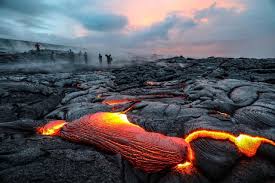
Before lava reaches the surface, the molten material is called ____.
rock
magma
volcanic ash
liquid fire
An igneous rock that is formed from lava is called
Compaction
Intrusive
Extrusive
Fine-Grained
The smaller the particles of rock or the remains of living things that make up sedimentary rocks are called cement?
True
False
The three main layers of the Earth are the _____________, _____________, and _____________.
core
crust
mantle
asthenosphere
litosphere
The _____________ is the plastic (slowly flowing) layer made of solid rock in the mantle
Asthenosphere
Lithosphere
Cryosphere
Mesosphere
Earth's Inner core is?
A layer of rock that forms Earth's outer surface
A layer of molten (liquid) iron and nickle
A layer of solid iron and nickel
A solid/plastic layer of Peridotite that flows over time?
The Earth's Mantle is made up of?
A solid layer of Iron and Nickel
A molten (liquid) layer of of Iron and Nickel
A solid layer of Granite and Basalt
A solid/plastic layer of Peridotite that moves over time through the process of convection
As you move from the surface of the Earth to the center, pressure ......
decreases
increases
The outer layer of the Earth is called the
Crust
Mantle
Inner core
Asthenosphere
In which layer of the Earth would you expect to find the hottest temperature?
Crust
Mantle
Core
Lithosphere
List the Mechanical/physical properties layers of the Earth from the surface to the center?
Lithosphere - Asthenosphere - Mesosphere - Outer core - Inner core
Mesosphere - Asthenosphere - Lithosphere- Inner core - Outer core
Inner core - Outer core - Mesosphere - Asthenosphere - Lithosphere
Lithosphere - Mesosphere - Outer core - Inner core -Asthenosphere
It refers to the internal dynamics or processes of the Earth.
Endogenic
Endergonic
Exogenic
Exergonic
Which of the following is not an example of an endogenic process?
Volcanic Eruption
Metamorphism
Earthquake
Weathering
These are instruments used to record the motion of the ground during an earthquake.
Seismograph
Seismogram
Seismologist
All of these
Caused by the effects of changing temperature on rocks, causing the rock to break apart. The process is sometimes assisted by water.
Chemical Weathering
Mechanical Weathering
Biotic Weathering
Mass Wasting
Caused by rain water reacting with the mineral grains in rocks to form new minerals (clay) and soluble salts. These reactions occur particularly when the water is slightly acidic.
Physical Weathering
Chemical weathering
Soil Erosion
None of the above
When does magma form?
when new minerals form due to chemical changes in the rock
when volcanoes erupt
when temperature are hot enough to melt rock
when grains have been compacted together
It refers to an endogenic process wherein magma are released through the process of eruption.
Tsunami
Tectonic Plates Movement
Volcanic Eruption
Mass Wasting
• Happen on Earth's surface
• EXamples are weathering, erosion, mass and land depletion, transport and sedimentation
Process above is referring to ....
Endogenic
Endegonic
Exogenic
Exegonic

The weathered or corroded materials are moved by the agents such as running water, waves and glaciers.
This process refers to ...
Weathering
Erosion
Mass and land depletion
Transport and sedimentation
Happens when winds carry large amount of fine soil particles.
Wind Erosion
Sheet Erosion
Rill Erosion
Gully Erosion
The term used to describe the difference in temperature as we go downwards the Earth's crust is called geothermal gradient.
TRUE
FALSE

