
 Worksheets
excercise test
Total questions: 105
Worksheet time: 1hrs 27mins
What part of the plant transports water and nutrients to the other parts of the plant?
Roots
Stem
Flower
Leaves
What part of the plant anchors the plant in place and soaks up water and nutrients from the soil?
Leaves
Sepals
Roots
Stem
The _______ are responsible for photosynthesis (making food).
Roots
Stems
Leaves
Flowers
What part of the plant is responsible for reproduction?
Flower
Leaves
Roots
Stem
The female part of the flower is called the _____.
Sepal
Filament
Stamen
Pistil
The male part of the flower is called the _____.
Sepal
Stigma
Stamen
Pistil
In order for a seed to be fertilized, pollen has to be transported from the stamen to the _____.
anther
filament
sepal
pistil
What are the 3 parts of the pistil?
anther, filament, and stigma
stigma, style and ovary
stigma, filament and anther
anther, style and ovary
What are the 2 main parts of the stamen?
anther and filament
stigma and ovary
anther and ovary
filament and style
What part of the stamen produces pollen?
anther
filament
ovary
stigma
What part of the pistil produces the egg cells?
Anther
Stigma
Style
Ovary
Which of the following can be a pollinator?
Birds
Bees
Wind
All of the above
What part of the flower protects the bud (before the flower blooms)?
Leaves
Petals
Sepals
Pistil
How does a plant know when to bloom?
senses the number of day and night hours in a season
when it rains
when it's parent reminds it to bloom
it doesn't know; it just happens randomly throughout the year
If the egg cell in a flower's ovary is pollinated, the result is a _____.
Baby yoda
Seed
Puppy
Sepal
What has to be transported from the male part of a flower to the female part of a flower for a seed to be formed?
Water
Glucose
Pollen
Fertilizer
The process of _____ occurs when a seed sprouts.
Photosynthesis
Respiration
Germination
Pollination
Ferns are seedless plants. They reproduce by spores.
True
False
All plants reproduce by flowers.
True
False
If a certain type of plant's main pollinator is eliminated from an ecosystem, what is the most likely result?
The plant will produce a higher number of flowers.
The plant will produce fewer seeds and the population will decrease.
The plant will produce a lot of seeds and the population will increase.
The current plants will start to die from lack of resources.


Why do we need to break apart the food we eat?
So it can fit in our stomach
So our bodies can use the nutrients
So liquids can be separated from solids
So our bodies enzymes can have something to do
Place the following events in sequence: A) Food enters your large intestine; B) Food enters your small intestine; C) Food enters your esophagus
A, B, C
C, B, A
C, A, B
B, A, C

Waste foods are separated from solids and liquids in the __________________.
small intestine
large intestine
liver
stomach

What does your tongue do?
It produces insulin.
It produces bile.
nothing
It moves food around your mouth.
The place where an organism lives is . . . .
ecosystem
habitat
adaptation
environment
Tropical rainforests are warm and receive a lots of rainfall all year round.
True
False
Indonesia’s forests are the second largest in the world after the forests of Brazil (Amazon).
True
False

We can call this layer as . . . .
emergent layer
ground layer
canopy layer

We can find these plants in . . . .
the coral reef habitat
the forest
the field habitat
the pond habitat
Which animals we can find in the tropical rainforest?


This animal has dark skin to . . . .
absorb the heat from the sun
help it camouflage
scare the animals away
protect from the sunlight

A hump on camel's back is for . . . .
chewing the food
helping the camel to kneel on the hot sand
protecting the eyes from sand
storing fat and nutritions for a long time

Spines on cactus help to . . . .
live in the sand
absorb water
reduce evaporation
Which animal hibernate?


The things which organisms do to survive is called physical adaptation.
True
False
These pictures show you the migration of animals.


Hummingbird has long thin beak to help it reach nectar deep inside the flowers.
True
False

Mahogany tree sheds its leaves in dry season to . . . .
absorb water
reduce evaporation
produce flower
The things which organisms do to survive is called behavioral adaptation.
True
False
Matter that has its own shape and takes up space is a _______.
Matter that always fills the shape in a container, such as air is a _______.
Milk takes the shape of its container because it is a _______.
Molecules are closest together in a _______.
Freezing
Melting
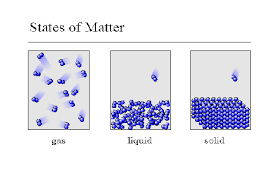
At higher temperatures _________.
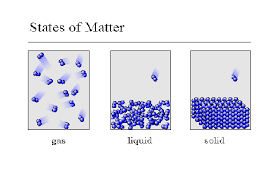
A gas has _________.
has a definite shape and volume
fast-moving particles
Boiling changes from a _________.
liquid to a gas
gas to a solid
liquid to a solid
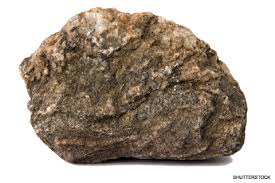
A desk is which of the following states of matter?
solid
liquid
gas
Freezing changes _________.
from a liquid to a solid
from a liquid to a gas
Melting changes a ___________.
liquid to a solid
Evaporation changes a ___________.
liquid to a solid
In a solid, particles ___________.
have a lot of room to move
do not have much room to move

Identify the particles.
solid
liquid
gas

Identify the particles.
solid
liquid
gas

Identify the particles.
solid
liquid
gas
Solution
one substance is dissolved into another
only solute
solute + solvent
only solvent
Solution of soluble solute is called
homogenous mixture
heterogenous mixture
any mixture
The particles of the solution can be separated by filtration
true
false
the substance which being dissolved is called
solvent
solute
solution
the substance that dissolves the other substance
solvent
solution
solute
in salt water solution, water is considered the
(a)
solute + solvent =
(a)
large crystals of solute is dissolved into
small crystals
remain crystals
individual molecules
the measurement of how much solute can be dissolved into a liter of solvent
(a)
dissolving is a reversible process
true
false
A mixture of a solid and a liquid can be physically separated by
sieving
by hand
filtration
An instrument that measures temperature
thermometer
sound meter
mass meter
heat meter
A process that can be changed back to what it was before
(a)
the temperature at which a solid changes into a liquid
(a)
the temperature at which a liquid changes into a gas
(a)
What does boiling means?
below zero degrees the water is
water liquid
solid ice
water vapor
melting ice
boiling water
at zero degrees
water liquid
solid ice
water vapor
melting ice
boiling water
between zero and 100 degrees
water liquid
solid ice
water vapor
melting ice
boiling water
at 100 degrees
water liquid
solid ice
water vapor
melting ice
boiling water
above 100 degrees
water liquid
solid ice
water vapor
melting ice
boiling water
0 degrees
melting point
boiling point
freezing point
the solid takes (a) space than a liquid
When water freezes it
collapses
expands
compressed
move
(a) thermometers are used to measure our body temperature
Which best describes what happens when paper burns?
A new material forms.
Materials are mixed together.
Materials stay the same.
Materials change state.

