
 Worksheets
1st Semester 5th Grade Science Review
Total questions: 100
Worksheet time: 5hrs 43mins

You were tasked with creating a scientific study that NASA would choose to conduct on the International Space Station for 6 months while also designing the room they would research in. Understanding this task was which step of the EDP?
design
prototype
identify a need or problem

After you identified a need or problem, you then did which step of the EDP?
created a prototype
conducted research
tested and evaluated
What's the first step of the engineering design process?
Find a problem
Redesign
Communicate
Test and improve
Thomas Edison used the engineering design process to:
a. Invent a safer alternative to candles
b. Improve an existing light bulb design
c. Demonstrate the danger of electric lamps
d. Replace light bulbs with electric lamps
1. Students have a box of ice pops to take to their soccer game to sell on a hot day. The students know they need a device to keep the ice pops from melting for 3 hours. They have a $15 budget. Which step of the engineering design process does this demonstrate
Identify the problem
Test and evaluate
Redesign
Develop possible solutions
What's the first step of the engineering design process?
Find a problem
Redesign
Communicate
Test and improve
In order to test a new design, engineering teams need to create ___.
data
criteria
protototypes
technology

What is defined as a push or pull?
force
motion
vector
speed
If the net force is equal to zero, the forces acting on the object are
balanced
unbalanced
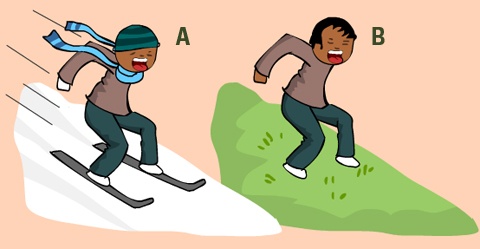
Some students wanted to find out if a tennis ball and a baseball dropped from the same height hit the ground at the same time. This investigation tests the effect of which of the following?
wind
friction
gravity
magnetism

A student makes a swing move by pushing it. If a student pushes the swing harder, the swing will most likely---
stop moving
slow down
go higher
get bigger


What is the sum of forces and direction?
200 N, Up
800 N, Down
600 N, Up
200 N, Down
You and your friend are playing tug of war.
You pull with 50 N of force to the left and your friend pulls with 100 N of force to the right.
Halfway through, your dad jumps in and pulls with 100 N of force to the left.
What will happen to the rope?
It will slow down, stop, and move to the left
It will continue moving to the right
It will stop moving
A cookie on a plate?
Balanced
Unbalanced
A book sitting on a shelf?
Balanced
Unbalanced
A bowling ball knocking over pins?
Balanced
Unbalanced

What is the sum of forces?
(Hint: Notice the direction of the arrows!)
3 N
1 N
4 N
7 N

The force that pulls two objects towards each other;
the greater the mass of an object, the greater the attraction; the further apart the objects,
the weaker the attraction.
Gravitational Attraction
Gravity
Magnetism
Weight

The amount of matter in an object.
Weight
Volume
Mass
Capacity

Why do planets orbit the Sun?
The Sun is the only celestial object that has a gravitational pull.
The Sun’s chemical composition makes it attract planets.
Only celestial bodies that emit light, like the Sun, can be at the center of an orbit.
The Sun is the most massive object in our solar system, so it exerts the greatest gravitational pull.
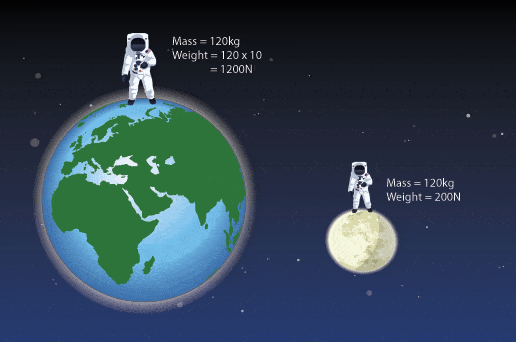
A brick and a pencil are dropped at the same time from the same height. Which one would hit the ground first?
brick
pencil
both would hit at the same time
What two things determine the gravity of an object?
mass & weight
mass & distance
density & mass
volume & distance
When will the forces of gravity between two objects be the GREATEST?
when the masses of both objects are small and the objects are far apart
when the masses of both objects are large and the objects are close together
when the masses of both objects are small and the objects are close together
when the masses of both objects are large and the objects are far apart
When will the gravity between two objects be the LEAST?
when the masses of both objects is small and the objects are close together
when the masses of both objects is small and the objects are far apart
when the masses of both objects is large and the objects are close together
when the masses of both objects is large and the objects are far apart
When you drop a hammer and a feather, why does the feather fall slower?
air resistance causes the feather to slow down
gravity pulls harder on the hammer than the feather
gravity pulls harder on the feather than the hammer
air resistance causes the hammer to fall slower


Why are we pulled to Earth's center and NOT the sun's?
The sun is very LARGE
The sun is very FAR AWAY
Earth has a STRONGER GRAVITY than the sun
Earth ORBITS around the sun

The moon’s gravity is weaker than Earth’s because If you went to the moon, you would
SHRINK and become shorter
WEIGH LESS than you do on Earth
FLOAT OFF into space
Not be able to JUMP

The brightness of a star as we see it from Earth depends on what 2 factors?
Shape and color
Size and age
Size and distance
Age and shape


Alpha Centauri A is a star that is larger than the Sun, yet it appears much less bright. Which of the following is the best explanation for this?
Alpha Centauri A is further away from Earth than the Sun.
The smaller a star the brighter it appears
The older the star the brighter it appears
The larger the star always appears to be brighter

How many of the stars, visible in the night sky, are closer to Earth than the Sun?
3
2
1
0

Rounded or oval shape galaxy.
Elliptical
Irregular
Spiral
Galaxy has no definite shape and is forming many very hot new stars.
Elliptical
Irregular
Spiral
Galaxy with thick center and flattened arms.
Elliptical
Irregular
Spiral
Least common type of galaxy.
Elliptical
Irregular
Spiral
Contains the oldest stars.
Elliptical
Irregular
Spiral
Can have a barred center.
Elliptical
Irregular
Spiral
The Milky Way is an example of this type of galaxy, where new stars are still forming.
Elliptical
Irregular
Spiral

What type of galaxy is pictured here?
Elliptical
Irregular
Spiral

What type of galaxy is pictured here?
Elliptical
Irregular
Spiral
Why do we only see one side of the moon? (1 point)
because of where we live
because the moon rotates as it orbits
because of an eclipse
we actually see all sides of the moon

When viewing from Earth, when will the moon be completely dark?
The moon will always be dark in Position A, but will never be dark in Position H.
The moon will never be completely dark.
The moon will always be dark in Position A and sometimes be dark in Position C.
The moon will always be dark in Position E, but will never be dark in Position H.
What causes moon phases? (1 point)
the moons light
the rotation of the Earth
the moons orbit around the Earth
the tilt of the Earth around the sun

Match the moon phase with its description and picture.
Crescent moon
Full moon
Gibbous moon
New moon
Quarter moon

We see it fully illuminated.
Match the moon phase with its description and picture.
Crescent moon
Full moon
Gibbous moon
New moon
Quarter moon

Name the eclipse.
solar eclipse
lunar eclipse
What is the difference between spring and neap tides?
Both tides are the same.
Neap tides are stronger tides. Spring tides are weaker.
Spring tides only happen in March, April and May.
Spring tides are stronger. Neap tides are less extreme (weak).
Where does the Moon get its light from?
The Moon glows.
The Moon gets light from Earth.
The Moon reflects light from the Sun.
The Moon generates itsown light.

What is this moon phase?
This is the full moon phase.
This is the waxing crescent moon phase.
This is the waning gibbous moon phase.
This is the waning crescent moon phase.


What is this moon phase?
This is the waning crescent phase.
This is the waxing gibbous phase.
This is the waning gibbous phase.
This is the new moon phase.

Based on the diagram, which season would the northern hemisphere be experiencing?
Winter
Spring
Summer
Fall
Which hemisphere do we live in?
Northern Hemisphere
Southern Hemisphere
Western Hemisphere
Eastern Hemisphere
What season is the southern hemisphere experiencing when the northern hemisphere is experiencing summer
Fall
Winter
Spring
Summer
How long does it take for Earth to complete one full revolution around the sun?
365 days
24 years
24 weeks
6 months
Earth experiences seasons as it revolves around the sun because of its
shape
tilt
speed
mass
Around June 22nd we have the greatest amount of day time hours. This day is also known as the
Summer Equinox
Summer Solstice
Summer Hemisphere
Direct Summer
True or False: The Earth is closer to the sun during the summer months.
True
False

What season would we be experiencing with Earth #3?
Winter
Spring
Summer
Fall

The imaginary pole that runs through the center of the Earth is called Earth's _______________.
Pole
Axis
Arm
Hemisphere
How many degrees is the Earth tilted on axis
3.5 degrees
23.5 degrees
35.2 degrees
235 degrees
We experience the same amount of daylight hours and nighttime hours during a(n)
Solstice
Equinox
Revolution
Orbital Period
The spinning of Earth on its axis is known as
Rotation
Revolution
Orbit
Solstice
How long does it take for Earth to complete one full rotation?
2 hour
4 hours
24 hours
240 hours
The sun rises on the ____________
North
South
East
West
When the sun gets higher in the sky, shadows get ______.
longer
gone
shorter
darker
When the sun gets lower in the sky, shadows get______.
longer
gone
shorter
darker
When the Sun is behind you, your shadow is ...
behind you
in front of you
at the side of you
not there
Why do shadows made by the Sun move throughout the day?
Because the weather changes
Because someone moves the objects
Because the sun appears to move across the sky
Because it's magic!
Shadows are longest during _______.
morning and evening
noon
night
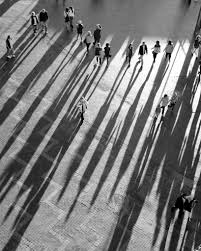
When was this picture most likely taken?
(Hint: think about the shadow's length)
morning or evening
night
noon
afternoon

When was this picture most likely taken?
(Hint: think about the shadow's length)
morning or evening
night
noon

Where will the tree's shadow be?
A
B
C

Where will the tree's shadow be?
A
B
C

Which position of the sun will make the longest shadow?
A
B
C
What do shadows on Earth help show?
Earth's rotation
Earth's revolution
Earth's equator
Earth's axis
The sun rises in the...
East
West
What is a constellation?
A group of patterns that form a star
A group of stars that form a pattern
Fine Italian cuisine
A star
How many named constellations are there?
80
84
88
92

