wayground logo

Free Printable Worksheets

Font size

S
M
L
XL
Worksheets

6th grade 1-3rd 9 weeks

Total questions: 100

Worksheet time: 1hrs 27mins

Name
Class
Date
1.
Which of the following is not a compound?
a)
HCl
b)
Cl
c)
NaCl
d)
CO2
2.
Which of the following represents an element?
a)
H2O
b)
H2
c)
NaCl
d)
CaCO3
3.
What cannot be broken down into other substances?
a)
Compound
b)
Mixture
c)
Solids
d)
Element
4.
What is made up two or more elements that are chemically combined?
a)
Element
b)
Mixture
c)
Compound
d)
Solids
5.
How many elements are represented in the compound?
Na2CO3
a)
1
b)
2
c)
3
d)
4
6.
Is sugar (C12H22O11) an element or a compound?
a)
Element
b)
Compound
7.

The smallest particle of an element; made of electrons, protons and neutrons.

a)

Atom

b)

Mixture

c)

Mass

d)

Lithosphere

8.
What is this element...Au
a)
Iron
b)
Titanium
c)
Gold
d)
Flourine
9.
What is the symbol for Calcium
a)
Cl
b)
Ca
c)
Cm
d)
ca
10.
Which of the following represents an element?
a)
H2O
b)
H2
c)
NaCl
d)
CaCO3
11.
Which of the following is NOT an example of a physical change?
a)
crumpled paper
b)
pencil sharpening
c)
shrunken clothing
d)
rust
12.
A change where one or more new substances are created.
a)
Physical Change 
b)
Chemical Change 
13.
Which of these is NOT an indicator of a chemical change?
a)
a change in color
b)
giving off or taking in of heat
c)
the release of gases
d)
a change in shape
14.

An object undergoes a chemical change when it changes:

a)

shape, form, state of matter

b)

melting, odor, size

c)

color, burning, rusting

15.
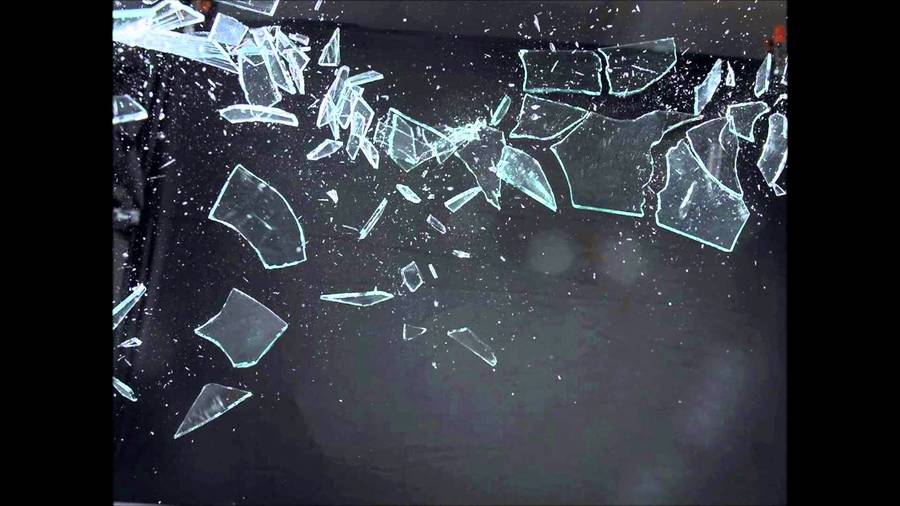
Chemical or Physical?  Glass breaking into tiny shards
a)
Chemical Change
b)
Physical Change
16.
Physical or Chemical Change?  Iron rusts
a)
Physical Change
b)
Chemical Change
17.
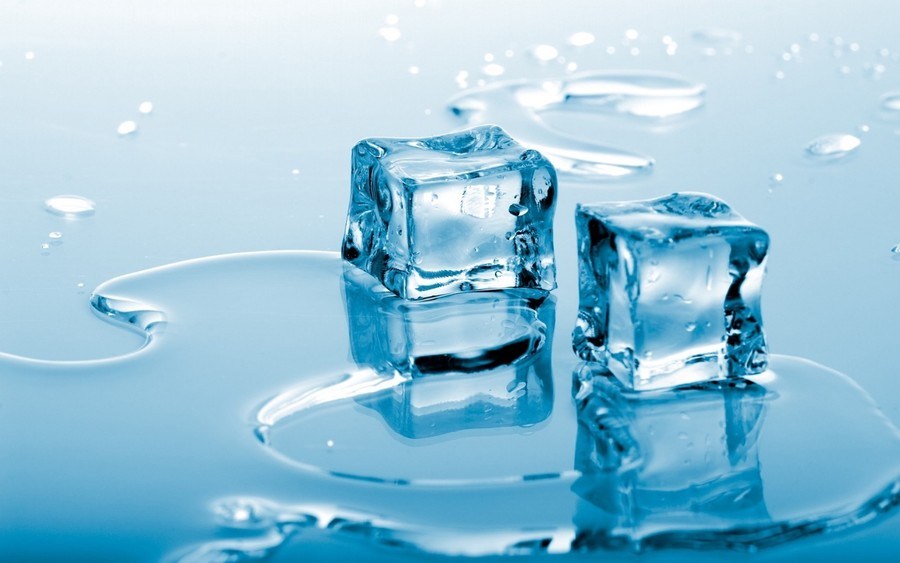
Water freezing into ice is an example of a...
a)
Physical Change
b)
Chemical Change
18.

Which of the following is evidence of a possible chemical change?

a)

chalk breaking

b)

water condensing

c)

an apple rotting

d)

a rock cracking

19.

Which of the following is NOT evidence of a possible chemical change?

a)

bubbles

b)

precipitate

c)

dissolving

d)

breaking chemical bonds

20.

Which of the following is evidence of a possible chemical change?

a)

Temperature increase or decrease when two substances are mixed

b)

Water changing from a liquid to a solid in the freezer

c)

Water warming up on the stove

21.

A force is ____.

a)

a push or pull that can cause movement

b)

a magnet

c)

when someone does not work

22.

It is defined as forces that are equal in magnitude.

a)

Unbalanced Forces

b)

Forces

c)

Balanced Forces

d)

Net force

23.

Use the picture as reference. If the force of the girl pushing is 30N, and the force of the boy who is also pushing is 30N, what is the net force?

a)

0N

b)

60N

c)

900N

d)

1N

24.

If you apply an unbalanced force to an object at rest, what will happen to that object?

a)

the object will remain at rest.

b)

the object will move.

c)

The object will stay.

d)

None of the above.

25.

What operation do we use when forces acting on an object have the same direction?

a)

division

b)

multiplication

c)

subtraction

d)

addition

26.

Beri and Ria are pulling a wagon, the force exerted by Beri is 45N and the force exerted by Ria is 12N. If the two girls are pulling on the same direction, what is the net force?

a)

540N

b)

3.75N

c)

33N

d)

57N

27.
What force holds the planets in motion around the sun?
a)
Magnetic
b)
Electrical
c)
Gravitational
d)
Air Resistance
28.
An _______ force must act on an object for it to CHANGE it's motion
a)
balanced
b)
unbalanced
c)
gravitational
d)
electrical
29.
The unit of force is
a)
m/s
b)
m/s^2
c)
newton
d)
kg
30.
The force that opposes the motion of two surfaces sliding past each other is called ___________.
a)
acceleration
b)
inertia
c)
friction
d)
unbalanced
31.
What is the formula to calculate speed?
a)
S = t/d
b)
S = d/t
c)
S = d x t
d)
S = t x d
32.

A runner races in the 100 meter dash. It takes her 10 seconds to finish. What is her average speed?

a)

10 m/s

b)

1000 m/s

c)

100 seconds

d)

10 seconds

33.
Which of the following is a unit of time?
a)
km/hr
b)
hr
c)
km
d)
mi
34.
Which of the following is a unit of speed ?
a)
sec
b)
mi
c)
m/s
d)
min
35.
Which of the following is a unit of distance ?
a)
miles/hr
b)
mi
c)
s
d)
min
36.
A different runner trains for a marathon for 6 months by eating nothing but bags of french fries from McDonalds. They run a 10 meter dash in 100 seconds. What is their speed?
a)
0.01 m/s
b)
0.1 m/s
c)
1 m/s
d)
10 m/s
37.

Distance formula

a)

S X T

b)

T X S

c)

T/D

d)

D/T

38.
If I choose to walk to school at a speed of 3mph, it will take me 4 hours to arrive. How far away do I live?
a)
7 miles
b)
12 miles
c)
1 mile
d)
.75 miles
39.
What does this graph represent?
a)
Constant Speed
b)
Acceleration
c)
Deacceleration
d)
Not moving
40.
According to the graph how far does the person travel in the first 5 seconds?
a)
2 m
b)
10 m
c)
0 m
d)
5 m
41.
What is the person doing from 5 seconds to 10 seconds?
a)
Walking 
b)
Running
c)
Standing Still 
d)
Walking Fast
42.

Describe the motion in the graph:

a)

Constant Speed (positive slope)

b)

Stopped (at rest)

c)

Acceleration (increasing speed)

d)

Return Home (negative slope)

43.

Describe the motion in the graph:

a)

Constant Speed (positive slope)

b)

Stopped (at rest)

c)

Acceleration (increasing speed)

d)

Constant speed (negative slope)

44.
Energy transformations occur when...
a)
energy is created through conduction
b)
energy changes from one form to another
c)
two forces slide together that are touching
d)
a chemical reaction takes place
45.
Some students observing a classroom device being used, noticed the below energy transformations. 
Electrical → Mechanical → Sound
Which device were the students most likely observing?
a)
A triple beam balance measuring an object’s mass.
b)
A pencil sharpener plugged into a wall outlet.
c)
A projector displaying a diagram on the screen.
d)
A working flashlight used to light up a dark corner.
46.
Which kind of energy change occurs when a candle is burning?
a)

Chemical to radiant.

b)

radiant to electrical.

c)

Solar to thermal.

d)
Chemical to electrical.
47.

What energy conversions take place when you vigorously rub your hands together to warm them up?

a)

friction => heat

b)

chemical => thermal

c)

mechanical => thermal

d)

kinetic => chemical

48.

What is the energy transformation of a solar panel operating?

a)

radiant to Electrical

b)
Mechanical to Electrical
c)
Electrical to Thermal
d)
Kinetic to Sound
49.
Which of the following energy transformations occur when a lamp that is plugged into a wall socket is functioning correctly?
a)

Chemical to radiant

b)
Electrical to chemical
c)

Electrical to radiant

d)
Chemical to electrical
50.
Which of the following shows the correct order of the energy transformations that occur when green plants produce their food from the Sun’s energy?
a)
chemical to thermal
b)

radiant to chemical

c)

thermal to radiant

d)
chemical to electrical
51.
What does the Law of Conservation of Energy state?
a)
That energy is the movement of electrons within an atom.
b)
That energy is a means to an end.
c)
That energy can be created when needed.
d)
That energy cannot be created or destroyed.
52.
The form of energy involved in eating a peanut butter and jelly sandwich can be transformed into riding a bike. What types of energy occur in this transformation?
a)
Nuclear - biomechanical
b)
Chemical - mechanical
c)
Potential - kinetic
d)
Electromagnetic - thermal
53.
The four ways that heat can be transferred are:
a)
kinetic, potential, light, and electrical
b)
conduction, convection, transition, radiation
c)
chemical, mechanical, thermal, nuclear
d)
conduction, convection, radiation, and convection current
54.
The spoon in this picture is an example of ______________.
a)
Convection current
b)
Conduction
c)
Currency
d)
Convection
55.
The water in this picture demonstrates an example of _________.
a)
Convection
b)
Conduction
c)
Radiation
d)
Insulation
56.
Heat transfers from an area of ________temperature to an area of ______ temperature.
a)
high to low
b)
low to high
c)
high to high
57.
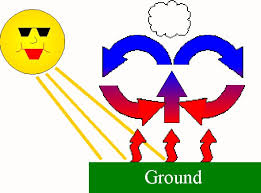
Warm air rises and the cool air sinks. This is...
a)
conduction
b)
convection
c)
radiation
58.
If an object has particles that are moving very quickly, the object 's temperature is probably _____.
a)
cold
b)
slow
c)
big
d)
hot
59.
You're holding hands with your best friend.  Your friend's hands are REALLY warm and yours are really cold.  After a few minutes, this has changed.  How might you explain what happened?
a)
The cold energy from your hand transferred to your friend's hand through conduction.
b)
The heat energy from your friend's hand transferred to your hand through conduction. 
c)
The cold energy from your hand transferred to your friend's hand through convection.
d)
The heat energy from your friend's hand transferred to your hand through convection.
60.
What kind of heat transfer happens when the sun heats your body?
a)
Conduction
b)
Radiation
c)
Convection
d)
Density
61.
When you iron a shirt, the shirt gets warm.  This type of heat transfer is an example of
a)
condensation
b)
conduction
c)
convection
d)
radiation
62.
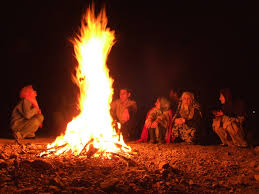
A group of friends gather around a fire to stay warm.  This is an example of
a)
conduction
b)
convection
c)
radiation
63.
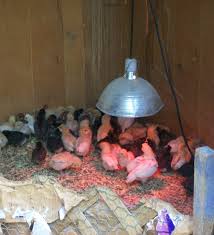
The baby chickens are kept warm from the heat lamps. This demonstrates what kind of heat transfer? 
a)
conduction
b)
convection
c)
radiation
64.
"Lava lamps" contain colored liquids. These liquids form globs that rise to the top due to
a)
conduction
b)
convection
c)
radiation
65.
If heat and pressure inside the Earth cause a rock to melt, the material that formed would be
a)
Metamorphic
b)
Magma
c)
Sedimentary
d)
Igneous
66.
Fossils are only found in
a)
Sedimentary rocks
b)
Foliated Metamorphic rocks
c)
Igneous Rocks
d)
Nonfoliated Metamorphic rocks
67.
What are the 3 major types of rocks?
a)
Igneous, Metamorphic, Sedimentary
b)
Metamorphic, Igneous, Cementation
c)
Brown, Red, Gray
d)
Streak, Hardness, Breakage
68.
This rock was formed when molten rock cooled into a solid. What type of rock is it?
a)
Igneous Rock
b)
Metamorphic Rock
c)
Sedimentary Rock
69.
When sediments are pressed together tightly, this is called ____________.
a)
Compaction
b)
Cementation
c)
Weathering
d)
Erosion
70.
True or False: Once a rock is sedimentary, it cannot become an igneous rock.
a)
True
b)
False
71.
The process by which metamorphic rocks are formed...
a)
heat and pressure
b)
erosion and deposition
c)
melting and cooling
72.
_______ rock forms from magma/lava
a)
Metamorphic
b)
Sedimentary
c)
Igneous
73.
What is process in which water, wind, and heat break down rock?
a)
weathering
b)
exfoliation
c)
cementation
d)
composition
74.

Rocks that are transformed into different rocks under intense heat and pressure are known as _____.

a)

sedimentary rocks

b)

volcanic rocks

c)

igneous rocks

d)

metamorphic rocks

75.
Which layer of Earth is located above the outer core?
a)
crust
b)
inner core
c)
mantle
d)
lithosphere
76.
A dense ball of solid iron and nickel.
a)
crust
b)
inner core
c)
mantle 
d)
outer core
77.
What is the top layer of the Earth's surface called? 
a)
Mantle
b)
Innercore
c)
Outercore
d)
Crust
78.
Is the outer core a liquid or solid?
a)
liquid
b)
solid
79.
Temperature _____________________ as you go deeper into the earth.
a)
increases
b)
decreases
c)
goes up and down depending on the layer
d)
stays the same
80.
Pressure ______________________ as you go deeper into the Earth
a)
increases
b)
decreases 
c)
goes up or down depending on the layer
d)
stays the same
81.
Which layer of Earth is characterized by rock that is plastic, or soft enough to flow?
a)
asthenosphere
b)
crust
c)
lithosphere
d)
inner core
82.

Which layer contains convection currents?

a)

outer core

b)

inner core

c)

mantle

d)

lithosphere

83.

Which is the correct order of the Earths layers?

a)

inner core, outer core, mantle, crust

b)

crust, inner core, outer core, mantle

c)

crust, mantle, inner core, outercore

d)

crust, mantle, outer core, inner core

84.
What layer is the thinnest?
a)
Crust 
b)
Mantle
c)
Core
d)
They are all the same size
85.
What layer is made of plates that move around and bump into each other?
a)
Crust
b)
Mantle
c)
Core
d)
All of them
86.
Which sublayer is made up of the crust and upper mantle?
a)
Inner Core
b)
Outer Core
c)
Lithosphere
d)
Asthenosphere
87.

What is the correct order of the layers from hottest to coolest?

a)

crust, inner core, mantle, outer core

b)

mantle, inner core, outer core, crust

c)

inner core, outer core, mantle, crust

d)

crust, mantle, outer core, inner core

88.
A plate boundary where two plates move away from each other is called
a)
Divergent Boundary
b)
Convergent Boundary
c)
Transform Boundary
d)
Subduction
89.
A Plate Boundary where two plates move toward each other is called
a)
Convergent Boundary
b)
Divergent Boundary
c)
Transform Boundary
d)
Subduction
90.
Identify the Major Plate labeled B
a)
African Plate
b)
Antarctic Plate
c)
Pacific Plate
d)
Eurasian Plate 
91.
Identify the Major Plate labeled N
a)
African Plate
b)
Antarctic Plate
c)
Pacific Plate
d)
Eurasian Plate 
92.
Identify the Major Plate labeled J
a)
African Plate
b)
Antarctic Plate
c)
Pacific Plate
d)
Eurasian Plate 
93.
Identify the Major Plate labeled D
a)
Indo-Australian Plate
b)
North American Plate
c)
South Americana Plate
d)
Eurasian Plate 
94.
This boundary is described as two plates moving past eachother ALONG THE EDGES horizontally.  These boundaries will get stuck or lock against eachother causing earthquakes when they slip and release. 
a)
Convergent Boundary
b)
Divergent Boundary
c)
Transform Boundary
95.
This boundary is described as moving toward one another  When the plates are both continental plates the will crumple up and form a mountains. When they are continental and oceanic plates, subduction occurs  and earthquakes and volcanoes form. 
a)
Convergent Boundary
b)
Divergent Boundary
c)
Transform Boundary
96.
Trenches, deep underwater canyons on the sea floor are created at this type of boundary 
a)
Divergent
b)
Convergent, Subduction Zone
c)
Transform 
97.
Mid Ocean Ridge Formation  is created at this type of  boundary.
a)
Divergent 
b)
Convergent
c)
Transform 
98.

The process by which the ocean floor sinks beneath a deep-ocean trench and back into the mantle is known as _______

a)

convection.

b)

continental drift.

c)

subduction.

d)

conduction.

99.

Most geologists think that the movement of Earth’s plates is caused by _______

a)

convection.

b)

continental drift.

c)

subduction.

d)

conduction.

100.

A place where two plates slip past each other, moving in opposite directions, is known as a _______

a)

transform boundary

b)

divergent boundary.

c)

convergent boundary.

d)

rift valley.