wayground logo

Free Printable Worksheets

Font size

S
M
L
XL
Worksheets

Review Quiz #2

Total questions: 100

Worksheet time: 3hrs 26mins
Name
Class
Date
1.
In heat transfer, heat always flows from the _______________ substance to the _______________ substance.
a)
Hotter to colder
b)
Colder to hotter
c)
Hotter to hotter
d)
Colder to colder
2.
The type of heat transfer that happens through direct contact of molecules or particles with each other is ___________________.
a)
Convection
b)
Conduction
c)
Radiation
d)
insulation.
3.
The kind of heat transfer that travels through space in electromagnetic waves is ______________________.
a)
insulation.
b)
Radiation
c)
Conduction
d)
Convection
4.
___________________ is the type of heat transfer that occurs in fluids, such as warm air rising and cold air sinking; creating wind.
a)
Convection
b)
Conduction
c)
Radiation
d)
insulation.
5.
When you use a microwave, what is the main way that heat is transferred?
a)
Convection
b)
Conduction
c)
Radiation
d)
insulation.
6.
The handle of a metal spoon warms up when it is placed in a hot bowl of soup because of
a)
Convection
b)
Conduction
c)
Radiation
d)
insulation.
7.
The handle of a metal spoon warms up when it is placed in a hot bowl of soup because of
a)
Convection
b)
Conduction
c)
Radiation
d)
insulation.
8.
Which of the following is the best example of conduction?
a)
A light bulb warming a lampshade
b)
An egg cooking in a frying pan
c)
Water boiling in a pot
d)
Gases circulating in the atmosphere
9.
What kind of heat transfer happens when the sun is heating your body?
a)
Conduction
b)
Radiation
c)
Convection
d)
Density
10.
Which of the following is an example of convection?
a)
A hair dryer is drying up your hair.
b)
When the AC or heater changes the temperature.
c)
When a car engine turns hot after being turned on.
d)
When you are making soup and the water is rising and lowering.
11.
Which state of matter has tightly packed molecules?
a)
solid
b)
liquid
c)
gas
12.
Which state of matter has a definite shape?
a)
solid
b)
liquid
c)
gas
13.
Define a liquid.
a)
Indefinite shape, indefinite volume
b)
Definite shape, definite volume
c)
Found in stars
d)
Definite volume, indefinite shape
14.
The speed of the molecules determines the _____.
a)
volume
b)
density
c)
pressure
d)
temperature
15.
The slower the particles in a substance move,
a)
the colder it is.
b)
the warmer it is.
c)
the more energy it has.
d)
the less energy it has.
16.
A chemical change
a)
doesn't really change much.
b)
creates a new substance
c)
is a change in the state of matter
17.
A physical change is...
a)
a change that doesn't change the identity
b)
a change that makes something new.
c)
a chemical reaction
18.
sodium and potassium react violently with water
a)
physical change
b)
chemical change
19.
pancakes cook on a griddle
a)
physical change
b)
chemical change
20.
food digested in the stomach
a)
physical change
b)
chemical change
21.
tire inflated with air
a)
physical change
b)
chemical change
22.
water absorbed by a paper towel
a)
physical change
b)
chemical change
23.
fireworks explode
a)
physical change
b)
chemical change
24.
clouds form in the sky
a)
physical change
b)
chemical change
25.
Something that takes up space and has mass.
a)
volume
b)
matter
c)
mass
d)
density
26.

All matter is made of what ?

a)

energy

b)

atoms

c)

electrons

d)

compounds

27.

________________________ is an electrically charged gas.

a)

Plasma

b)

A colloid

c)

Matter

d)

A molecule

28.

Stars, sun , and lightening are examples of ______________.

a)

plasma

b)

colloids

c)

atoms

d)

molecules

29.

____________________ is a mixture that contains two separate phases of matter.

a)

A colloid

b)

Plasma

c)

An atom

d)

A molecule

30.

Butter, gelatin, and paint are all examples of ________________.

a)

colloids

b)

molecules

c)

atoms

d)

plasma

31.
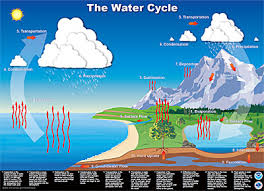
What is the energy source for the water cycle?
a)
the sun
b)
the earth
c)
water
d)
the moon
32.
Which of these is an example of precipitation?
a)
snow
b)
air
c)
clouds
d)
vapor
33.
Which best explains why runoff is important?
a)
It returns water to other locations on Earth
b)
It increases the chance of flooding
c)
It makes evaporation occur faster
d)
It increases condensation
34.
What happens after groundwater at the very end/beginning of the water cycle?
a)
Evaporation
b)
Transpiration
c)
Condensation
d)
Groundwater
35.
What is it called when plants give off water vapor as a waste product?
a)
condensation
b)
evaporation
c)
sublimation
d)
transpiration
36.
When water _________, dew forms.
a)
Melts
b)
Evaporates
c)
Condenses
d)
Precipitates
37.
What is the water cycle?
a)
the 3 forms of water
b)
the movement of water on, above, or below the surface of the Earth
c)
when water melts
d)
when clouds form
38.
During which stage do clouds form?
a)
condensation
b)
evaporation
c)
precipitation
39.
Which stages does liquid water from the ocean turn into water vapor?
a)
condesantion
b)
evaporation
c)
precipitation
d)
run off
40.
A __________ includes all living and non-living things in an environment. 
a)
population
b)
niche
c)
abitotic
d)
ecosystem
41.
Which best explains why many kinds of plants and animals can live together in an ecosystem?
a)
The plants and animals are all part of a food chain and depend on each other to live.
b)
Plants and animals are interdependent of one another.
c)
One species may overpopulate, killing all plant life.
d)
Over population of a species results in a biodiversity.
42.
_______ are consumers that eat only meat.
a)
Herbivore
b)
Omnivore
c)
Carnivore
43.
________ are consumers that eat plants and meat.
a)
Herbivore
b)
Omnivore
c)
Carnivore
44.
Which organism make their own food through the process of photosynthesis? 
a)
decomposer
b)
consumer
c)
herbivore
d)
producer 
45.
Which describes a decomposer?
a)
an organism that eats only plants
b)
an organism that makes its own food
c)
an organism that breaks down dead matter
d)
an organism that recieves energy from the sun
46.
What are interconnected food chains called?
a)
consumers
b)
predators
c)
food web
47.
If the population of prey increases, the population of predators will ________because of the availability of food.
a)
decrease
b)
stay the same
c)
increase
48.
What would most likely happen if an ecosystem no longer received sunlight?
a)
The number of herbivores would increase
b)
The number of plants would increase
c)
all organisms would adapt
d)
All living organisms would eventually die
49.
All food chains_____________________
a)
have more consumers than producers
b)
produce and use same amount of energy
c)
begin with a producer
d)
are unhealthy 
50.
A lion, captures and eats other animals. What is he considered? 
a)
prey
b)
predator
c)
producer 
d)
healthy 
51.
All the members of one species that live within an area of an ecosystem is a?
a)
population
b)
community
c)
niche
52.
Which organism do the owl and the weasel compete for in the food web?
a)
Hawk
b)
Spider
c)
Grasshopper
d)
Shrew
53.
A relationship between two organisms in which one organism benefits and the other is unharmed...
a)
Mutualism 
b)
Competition
c)
Parasitsm 
d)
Commensalism 
54.
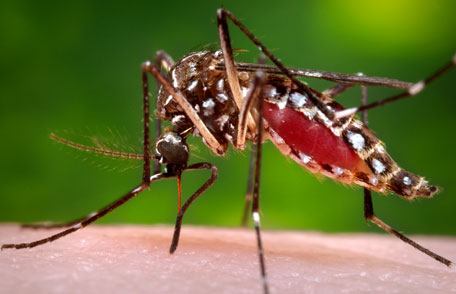
When a mosquito bites you, you are the __________ and the mosquito is the  ____________.
a)
host, hostess
b)
parasite, host
c)
host, parasite
d)
prey, predator
55.
Mistletoe extracts water and nutrients from a spruce tree. The spruce tree is harmed. 
a)
parasitism
b)
commensalism
c)
mutualism
56.
Oxpeckers feed on the ticks found on a rhinoceros. The oxpeckers get a meal and the rhinoceros is helped by the removal of the ticks.
a)
parasitism
b)
commensalism
c)
mutualism
57.
Which are abiotic factors?
a)
fish
b)
humans
c)
rocks
d)
cats
58.
The availability of shelter, food,water and space can change plant and animal survival. These are called
a)
multiplying factors
b)
competitive factors
c)
limiting factors
d)
survival factors
59.
Which organisms are in competition for the same food?
a)
fox and owl 
b)
spider and fly 
c)
rabbit and mouse
d)
deer and owl 
60.
What is an adaptation?
a)
A feature or behavior that helps an animal survie.
b)
The food that an animal eats.
c)
How energy moves in a food web.
61.
a treeless biome that has permafrost
a)
Tundra
b)
Desert
c)
Taiga
d)
Deciduous
62.
the trees in this biome are characterized by needle-like leaves that are called conifers
a)
Desert
b)
Taiga
c)
Tundra
d)
Grasslands
63.
Plants in this biome are adapted to poor soil, extreme temperatures and less than 25 centimeters of rainfall per year.
a)
Tundra
b)
Taiga
c)
Desert
d)
Grasslands
64.
this biome has rich, fertile soil and much of the crop production in the U.S. is from this biome
a)
Grasslands
b)
Tundra
c)
Desert
d)
Tropical Rainforest
65.
this biome has the largest diversity (largest number of different kinds) of plant and animal species
a)
Desert
b)
Tundra
c)
Deciduous Forest
d)
Tropical Rainforest
66.
This biome gets the highest percentage of rain yearly
a)
Taiga
b)
Temperate Deciduous Forest
c)
Tropical Rainforest
d)
Grasslands
67.
Aquatic biomes cover roughly how much of the Earth's surface
a)
10%
b)
25%
c)
50%
d)
75%
68.

Define an estuary

a)

Body of water where one or more streams enter

b)

a salt water body of water on the coast

c)

A habitat for grown up fish and sharks

d)

Water that is directly connected to the ocean

69.

Brackish water is

a)

water with a very high salinity

b)

a mix of fresh and salt water

c)

water with low salinity

d)

fresh water part of a stream

70.

True/False: Wetlands provide a resting point for migratory birds.

a)

True

b)

False

71.

An estuary is best defined as a place where--

a)

fresh and salt water meet

b)

a river meets the Chesapeake Bay

c)

a group of animals are gathered

d)

the water from the land flows into a river

72.
Estuaries are known as the __________ of the sea.
a)
nurseries
b)
classroom
c)
grocery store
d)
garden
73.
True or False:
Sharks can live in Estuaries
a)
True
b)
False
c)
Huh...?
74.
True or False:
Estuaries are the most productive Ecosystem/Biomes in the world
a)
False
b)
Huh..?
c)
True
75.
Which is an example of a single-celled organism?
a)
Acorn
b)
Amoeba
c)
Honey Bee
d)
Grasshopper
76.
Which best describes the main job of most cells in multicellular organisms?
a)
Cells work to keep themselves alive.
b)
Cells work to keep the organism alive.
c)
Cells work to release needed materials.
d)
Cells work to store unneeded materials. 
77.
Which is the BEST way to classify grasshoppers?
a)
Multicellular organisms because they are made up of one cell that carries out all of their life processes. 
b)
Single-celled organisms because they are made up of one cell that carries out all of their life processes.
c)
Single-celled organisms because they are made up of many cells that carry out all of their life processes.
d)
Multi-celled organisms because they are made up of many cells that carry out all of their life processes.
78.
A unicellular organism is best described as being...
a)
A complex organism.
b)
A microorganism.
c)
An organism with specialized cells.
d)
An organism with different types of tissues.
79.
Which of the following must get nutrients from a transport system?
a)
Amoeba
b)
Euglena
c)
Skin Cell
d)
Bacteria
80.
Which organism is single-celled?
a)
Bacteria
b)
Tree
c)
Dog
d)
Human
81.
Sue and Allie read about different kinds of organisms. They read about an organism with a respiratory system, digestive system, skeletal system, and muscular system. Which can Sue and Allie most likely conclude about this organism?
a)
The organism is unicellular.
b)
The organism is microscopic.
c)
The organism is multicellular.
d)
The organism does not have any cells.
82.
Which BEST describes a single-celled organism?
a)
A small group of organisms.
b)
A small organism with a variety of parts.
c)
An organism that relies of other organisms to survive.
d)
An organism that is able to carry out all of its life processes.
83.
A single-celled organism can do everything a cell from a multicellular organism can do except...
a)
specialize
b)
reproduce
c)
use energy
d)
make protein
84.
Why does a human require specialized cells to live?
a)
Specialized cells allow humans to adapt to changes in their environment.
b)
Human bodies have systems that require cells with different functions.
c)
Specialized cells allow for life processes to occur in one cell.
d)
Human bodies are simple and require few cells.
85.
Which of the following is the smallest unit of life that can carry out all life functions?
a)
the mitochondria
b)
the vacuoles
c)
the nucleus
d)
the cell
86.
Which structures are found in every living cell?
a)
cell membrane and cytoplasm
b)
chloroplasts and mitochondria
c)
a cell wall and nucleus
d)
chloroplasts and cell wall
87.
Which cell structure is found in plant and animals cells and controls what can come into or leave a cell?
a)
cell membrane
b)
cytoplasm
c)
nucleus
d)
vacuole
88.
What is the function of the cell nucleus found in both plant and animal cells?
a)
to produce energy
b)
to control cell activity
c)
to remove waste products
d)
to allow molecules to enter the cell
89.
What is one basic function of the vacuoles?
a)
circulating oxygen
b)
producing food
c)
controlling cell processes
d)
storing water
90.
Chloroplasts in plant cells allow the plant to perform a function that animal cells cannot do.  What is the main function of the chloroplasts found in plant cells?
a)
to absorb light energy and manufacture food
b)
to remove waste materials by active transport
c)
to manufacture chemical energy from food
d)
to control the shape of the cell
91.
All cells need energy to function.  Which cell organelle is responsible for producing energy in the cell?
a)
chloroplasts
b)
mitochondria
c)
nucleus
d)
vacuoles
92.
What is the function of a cell wall?
a)
to protect and support the cell
b)
to perform different functions in each cell
c)
to prevent water from passing through it
d)
to prevent oxygen from entering the cell
93.
In what part of the plant cell does the process of photosynthesis take place?
a)
nucleus
b)
mitochondria
c)
chloroplasts
d)
vacuoles
94.
The basic unit of structure and function in a living things.
a)
chloroplast
b)
nucleus
c)
cell
d)
cell membrane
95.
A group of friends gather around a fire to stay warm.
a)
conduction
b)
convection
c)
radiation
96.
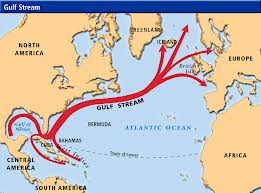
The Gulf Stream is a current that brings warm ocean water from the south to the north.
a)
conduction
b)
convection
c)
radiation
97.
Blow drying your wet hair.
a)
conduction
b)
convection
c)
radiation
98.
Which direction will the heat flow while this ice cap melts?
a)
there is no heat transfer
b)
from the icecap to the water
c)
from the water to the icecap
99.
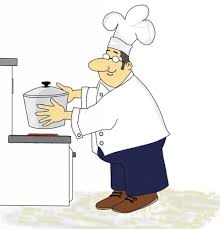
The man goes to take the hot pot off the stove with his bare hands.
a)
conduction
b)
convection
c)
radiation
100.
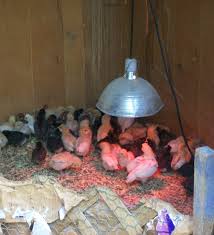
The baby chickens are kept warm from the heat lamps.
a)
conduction
b)
convection
c)
radiation