
 Worksheets
5th Grade Science Milestones Practice
Total questions: 100
Worksheet time: 6hrs 50mins

Which table shows the materials used by the student and correctly explains why each material is needed to make the circuit work?


A student is investigating whether certain materials are conductors or insulators. The student puts each material to be tested into a circuit to see whether a light bulb will light. The observations from the investigation are shown in the table. Which Investigation Results table correctly explains the observations from the student’s investigation?


The student has a variety of materials to test. Which steps would BEST complete the procedure and which conclusion should the student make?
step 5: Connect a test material to the open ends of wire 1 and wire 3. step 6: Make observations, and repeat step 5 with a different test material. conclusion: If the bulb lights up, the material is a conductor. If the bulb does not light up, the material is an insulator.
step 5: Connect a test material to the open ends of wire 1 and wire 3. step 6: Make observations, and repeat step 5 with a different test material. conclusion: If the bulb lights up, the material is an insulator. If the bulb does not light up, the material is a conductor
step 5: Connect the open ends of wire 1 and wire 3 to each other to complete the circuit. step 6: Touch a test material to the completed circuit, and record observations. conclusion: If the bulb lights up, the material is an insulator. If the bulb does not light up, the material is a conductor
step 5: Connect the open ends of wire 1 and wire 3 to each other to complete the circuit. step 6: Touch a test material to the completed circuit, and record observations. conclusion: If the bulb lights up, the material is a conductor. If the bulb does not light up, the material is an insulator.

Based on the evidence, which TWO arguments correctly match a magnet to its best use?
. Magnet 1 should be used to pick up many small magnetic objects at once because the temporary magnet can pick up as many objects as the permanent magnet can.
Magnet 1 should be used to pick up magnetic objects in one location and drop them off in another location because temporary magnets can be turned on and off.
Magnet 1 can be used in all the ways magnet 2 is used because temporary magnets can be made stronger or weaker and permanent magnets cannot.
Magnet 2 should be used to pick up magnetic objects in places where there is no power supply because permanent magnets do not run out of energy.
Magnet 2 should be used to pick up large magnetic objects because permanent magnets are stronger than temporary magnets
A student is investigating chemical changes by using different materials. Which investigation would provide evidence of a chemical change and why?
Melting a solid with fire would provide evidence of a chemical change because the solid would change shape.
Cutting cardboard into many smaller pieces would provide evidence of a chemical change because the pieces cannot be put back together
Placing a solid into hot water and stirring while the solid dissolves would provide evidence of a chemical change because the dissolved material is lost
Combining two liquids that give off heat and gas would provide evidence of a chemical change because the particles react to make a new material with different properties
Which investigation would provide evidence of a chemical change?
Spray perfume into the air, and when the air and perfume mix, observe the change in odor that happens as they mix
Put an antacid tablet in water, and when the antacid and water mix, observe the bubbles that form as a new substance is created.
Heat water in a pan on a stove, and observe the steam that forms as the state of matter of the water changes.
Blow air through a wand filled with soap solution, and observe the bubbles that form as the air becomes trapped.
Students are investigating chemical changes that occur in different materials. Which TWO investigations would provide evidence of a chemical change?
Placing a liquid in a freezer until the liquid becomes a solid would provide evidence of a chemical change because the state of matter changes.
Using a saw to cut a solid into two different pieces would provide evidence of a chemical change because the pieces cannot be put back together
. Using a hot plate to heat a solid until it changes color and releases an odor would provide evidence of a chemical change because the particles cannot be changed back.
Placing two different liquids together in a beaker and observing that a solid forms when they mix would provide evidence of a chemical change because a new material is formed.
Placing a mixture containing a solid and a liquid on a windowsill and letting the liquid evaporate would provide evidence of a chemical change because the evaporated material is lost

Which argument BEST describes the student’s claim?
The student’s claim is correct because water fills small cracks in rocks, freezes, and expands, making the cracks larger over time
The student’s claim is correct because the rock was carried from the top of the volcano to its base by a glacier, creating many cracks over time.
The student’s claim is not correct because the rock was picked up by moving water and rolled against other rocks, smoothing its surface and causing cracks in a short period of time
The student’s claim is not correct because large cracks in rocks are caused when lava from a volcano covers the rock so its temperature rises and falls in a short period of time, causing it to break.

Which question can be studied by using a drone to observe recent changes in Earth’s surface along coastal areas?
. How fast are the cliffs eroding?
How many people live near cliffs?
How old are rock layers at the bottom of the cliff?
How can people stop the erosion of cliffs near the coast?

Based on the picture, which steps would produce the BEST model of how the Himalayas formed over time?
step 1: Label one cardboard box as the Eurasian Plate. step 2: Label another cardboard box as the Indian Plate. step 3: Slowly push both plates toward each other. step 4: Observe and record how the sizes of both plates change when the edges push against each other
step 1: Label one cardboard box as the Eurasian Plate. step 2: Label another cardboard box as the Indian Plate. step 3: Slowly push the Indian Plate toward the Eurasian Plate. step 4: Observe and record how the size of the Indian Plate changes when it touches the edge of the Eurasian Plate
. step 1: Use light-colored clay to make the shape of the Eurasian Plate. step 2: Use dark-colored clay to make the shape of the Indian Plate. step 3: Slowly push the dark-colored plate toward the light-colored plate. step 4: Observe and record how the shapes of both plates change when the edges push against each other.
step 1: Use light-colored clay to make the shape of the Eurasian Plate. step 2: Use dark-colored clay to make the shape of the Indian Plate. step 3: Slowly push the light-colored plate toward the dark-colored plate. step 4: Observe and record how the shape of the Eurasian Plate changes when it touches the edge of the Indian Plate.
Sugar dissolves in water
Salt dissolves in water

Is copper tarnishing a physical or chemical change?
Physical
Chemical
A physical change _____________ the identity of the substance.
changes
maintains
Which of the following is an example of a CHEMICAL change?
Shattering a window with a baseball
Ripping paper into 1,000,000,000 tiny pieces
Rusting an iron bar on a humid day
Melting a block of copper metal
When a new substance has formed during a chemical reaction, it is considered to be what type of change occurring?
(a)
Which of the following is an example of a PHYSICAL change?
Neutralizing vinegar with baking soda
Breaking your iPad with a rock due to school stress
Creating a precipitate by mixing Lead Nitrate and Sodium Iodide
Burning popcorn in the microwave
Which of the following underwent a chemical change?
boiling water
rusting iron
baking cake
both rusting and baking
An ice cream cone melts on a hot summer day. What is this an example of?
Physical property
Chemical property
Physical change
Chemical change
Which choice describes the behavior of electric charge?
Like charges attract. Unlike repel.
Like charges repel. Unlike charges attract.
Like charges attract. Unlike charges attract.
Like charges repel. Unlike charges repel.
Which of these is caused by static electricity?
A Magnet attracts a paper clip.
Glue holds two peaches of paper together.
Socks taken from a clothes dryer stick together.
Ice sticks to a car's windshield.
In order for a circuit to work it must be...
open
closed
round
square
Mary has a light bulb and several pieces of copper wire. What else does Mary need to be able to convert electrical energy to light energy?
battery
switch
insulator
buzzer


Deposition is the-
process of wind or water dropping sediment in a new location
the movement of sediment by wind, water, or ice
the breaking down of rocks by water, wind, or ice
Erosion is the-
process of wind or water dropping sediment in a new location
the movement of sediment by wind, water, or ice
the breaking down of rocks by water, wind, or ice
Weathering is the-
process of wind or water dropping sediment in a new location
the movement of sediment by wind, water, or ice
the breaking down of rocks by water, wind, or ice
Canyons are formed by the process of-
weathering and erosion by water
erosion by ice
deposition by water
freeze thaw weathering
Deltas are formed by the process of-
weathering and erosion by water
erosion by ice
deposition by water
freeze thaw weathering
Sand dunes are formed by the process of-
weathering and erosion by wind
erosion by ice
deposition by water
freeze thaw weathering

Which of these is an example of erosion?
Light shining onto a mountain.
Rain breaking down rocks on a mountain into smaller pieces.
Wind blowing away sediment to a new place on the mountain.
All of the above.

What is the process that picks up and moves weathered rocks?
Erosion
Landslide
Weathering
The process that breaks down rocks and other materials on Earth's surface is called
Weathering
Erosion
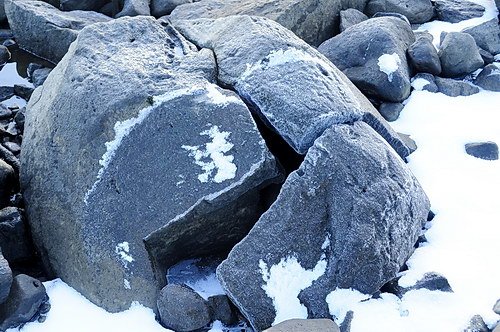
How does freezing water cause the weathering of rocks? The freezing water—
keeps the rocks in place.
makes the rocks last longer.
expands cracks and breaks rocks.
causes rocks to fall in landslides.
what is a Sea Wall?
A object created to cross the ocean
a wall created to stop flooding
a wall created to see fish in the ocean
a wall to stop fires
Is Lava constructive or deconstructive?
constructive
deconstructive
none
what is Terrace Farming?
a farming method everyone uses
a farming method used for water loss
a farming method used to stop crows

The carrying away of rocks and soil from one place to another
weathering
erosion
glacier
earthquake
Rocks break down due to ____________ and move to new places during ________________
weathering, erosion
erosion, weathering
tornado, hurricane
hurricane, tornado

As it moves, a ___________ picks up rocks in its path
erupt
glacier
volcano
weathering

Glaciers, rivers and wind cause ______________
weathering
landslide
erosion
hurricane
Vertebrate or Invertebrate? Snake
Vertebrate
Invertebrate
What do fish, amphibians, birds, and mammals all have in common?
They are all vertebrates.
They are all invertebrates.
They are all vascular.
They are all nonvascular.
Plants are classified as
Vertebrates/Invertebrates
Vascular/Non-vascular
uni-cellular/multi-cellular
What is a "single kind of organism that can reproduce among its own kind"?
Organism
Species
Producer
Consumer
____________________ is a flowering plant whose seeds are surrounded by fruit
gymnosperm
xylemsperm
angiosperm
phloem
How is a fish different from a jellyfish?
A fish can reproduce.
A fish is in the animal kingdom.
A fish has a backbone.
A fish lives in water.

Which choice below does not belong to the invertebrate group?
Mollusks
Echinoderms
Worms
Amphibians
What example of animal is cold-blooded, lays eggs, and has scaly skin?
whale
alligator
bird
spider
Which is NOT true of a horse, cat, and pig.
They are warm-blooded.
They breathe through lungs.
They have scales.
They have live babies.
Vertebrate or Invertebrate? Clam
Vertebrate
Invertebrate
Warm-blooded animals always
change their body temperatures based on their surroundings
live in water.
keep the same body temperature regardless of surroundings.
_________________ are animals with a backbone.
Invertebrates
Consumers
Decomposers
Vertebrates
________________ are animals without a backbone.
Species
Mammals
Invertebrates
Vertebrates
All living things belong to one of five major groups: Bacteria, Protist, Fungi, Plant, and Animal. These are known as
Orders
Phylums
Kingdoms
Scientists classify plants and animals into groups based on similar traits. What does classify mean?
to group by using a a set of guides or rules.
to find the differences between plants and animals.

Rosa was given a list of ten animals and asked to develop a model to sort them into groups. When she turned in her model, she was told she had made one mistake. Her teacher asked her to correct and explain her mistake.
A jellyfish is not an invertebrate. It is a fish because it lives in water and it is cold-blooded.
A dolphin is not a mammal. It is a fish because it lives in water and it is warm-blooded.
A snake is not an invertebrate. It is a reptile because it has a backbone, is cold-blooded, lays eggs, and lives on land.
A turtle is not a reptile. It is an invertebrate because it has a hard external shell or exoskeleton instead of a backbone.
Sally likes playing catch.
brown eyes
Jordan loves swimming
Cheetahs have a long tail.
size of your hands
ability for a cheetah to run fast
how tall you are
table manners
How do you increase the strength of an electromagnet?
add more magnets
larger core
increase the number of coils around the core
salt water

