
 Worksheets
Nature of Science and Experimental Design
Total questions: 100
Worksheet time: 3hrs 33mins
Which has a mass of about 1 gram?


What units measure mass? Pick 2!
inch
gram
kilogram
liter
What tool is used to measure mass?
Graduated cylinder
Meter stick
Balance
Scale
What is length?
The distance from one point to another
The amount of matter in an object
The amount of space an object takes up
The measure of the pull of gravity
What tool is used to measure length?
Graduated cylinder
Triple beam balance
Meter stick
Scale


A baseball bat is about a _______
kilometer
Meter
Centimeter
millimeter
The vertical axis of a line graph is called the __________.
slope
line of best fit
x-axis
y-axis

What can we conclude from this graph?
The cooler the temperature, the louder the crickets chirp.
The crickets cannot chirp at temperatures lower than 10 degrees C.
The warmer the temperature, the more often crickets chirp.
The temperature and the chirping of crickets are not related.


Which month had the greatest number of books read?
November
December
January
February

The scatterplot shows the amount of rainfall during six thunderstorms and the length of time that each storm lasted. Based on the scatterplot, which statement is true?
During each storm that lasted longer than 1 hour, there was less than 1 inch of rain.
During each storm that lasted longer than 1 hour, there was more than 1 inch of rain.
No storms produced more than 2 inches of rain.
No storms lasted longer than 1 hour.

Thinking about the Scientist's Toolbox, which does NOT belong?
liter
cubic centimeter
gram
graduated cylinder
Thinking about the Scientist's Toolbox, which does NOT belong?
mass
triple beam balance
cubic centimeter
the amount of matter in an object

What is the volume of the water?
24 mL
25 mL
24 g
25 cubic centimeters
The average kinetic energy of molecules is measured by using a
beaker
thermometer
electronic balance
triple beam balance

What is this tool?
balance
thermometer
flask
pipet
This variable in an experiment is purposefully changed.
dependent variable
independent variable
data
control group
Experiments should be repeated over and over to see if the results are the same each time. What is this called?
Repeated trials
Validity
Constants
Hidden variables
This part of the experiment serves as a basis of comparison; it does NOT receive the independent variable.
experimental group
control group
data
variables
What part of the scientific method is this an example of?
The part of the experiment that remains the SAME for the control and experimental group.
constants
control
independent
dependent

In this graph, what is the dependent variable?
Walla Walla Island
Time
Number of Deer
Same type of animal
After you complete your experiment, you look carefully at data. This may involve creating a chart or graph. When you do this you _____________ the data.
Analyze
Conclude
Communicate
Predict


Something we observe over and over again
model
pattern
system
theory
It is important for scientists to write down every step of their experiment so that other scientists can ________ it.
repeat
judge
tell about
make fun of
"If a child drinks milk everyday, then his bones will get stronger." The independent variable is
strength of bones
white milk vs chocolate milk
milk
there is no independent variable
Jane is investigating to find out if bean plants grow taller in ordinary topsoil or special potting soil over a three week period. She sets up her investigation with 10 bean plants of equal size in each type of soil. What should Jane do each day to make sure she gets valid results?
Water only the plants in special potting soil.
Calculate the average plant height for each soil type.
Move the plants in ordinary topsoil to different locations.
Use a special fertilizer if the plants don't seem to be growing well.
Jonathan and Sarah have performed an experiment and are not sure their results are valid. What should they do to check their results?
average their data
change their lab report
perform a new experiment
repeat the same experiment
Which of the following statements about science is true?
Science always contains the opinions of the investigator.
Science proves the predictions of scientists to be correct.
Science is based on observation or measurement that answers a question.
Science answers all questions using strict rules called the scientific method
6th grade science students are experimenting with the mass of a planet and its gravitational pull. It is true that a planet with more mass will have more gravity. With this understood, which statement is true?
There is no gravity on the moon.
The mass of a planet is the independent variable. The gravitational pull is the dependent variable.
The gravitational pull is the independent variable. The mass of the planet is the dependent variable.
Mars has a larger gravitational pull because it is larger and contains more mass than Earth.
It is the Latin word meaning "knowledge"
Scientia
Nomia
Cella
Atomos
What is the dependent variable?
What is a constant in this experiment?
What would you graph on the Y axis from this statement?
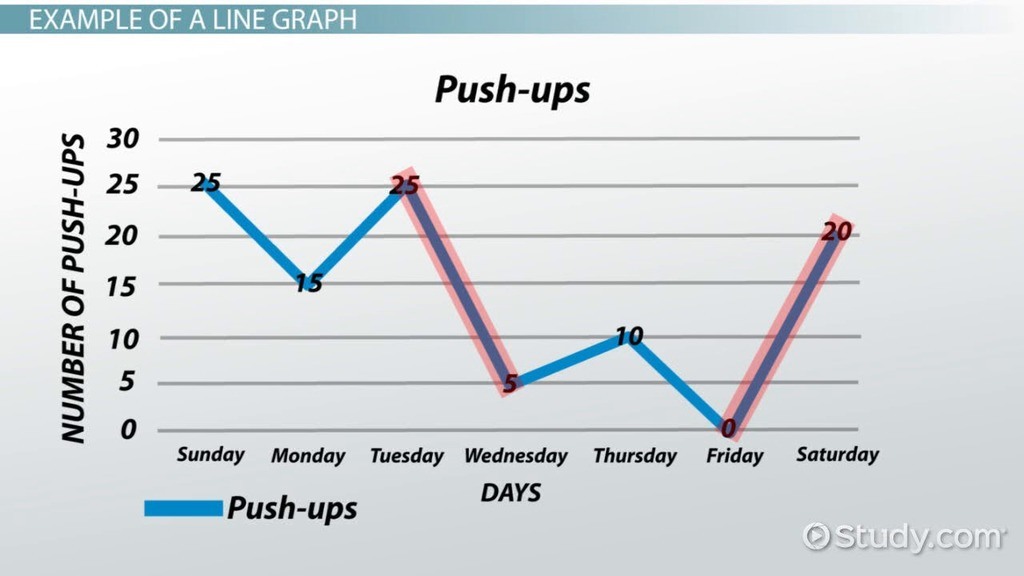
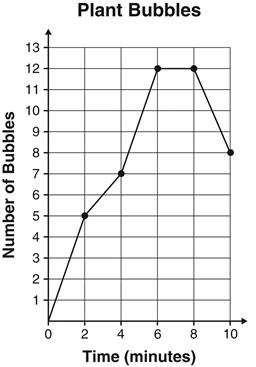
During an experiment, students counted the number of bubbles given off by water plants every 2 minutes during a 10-minute period. The results are graphed below.
At which two times were the same number of bubbles given off?
2 and 4 minutes
4 and 6 minutes
6 and 8 minutes
8 and 10 minutes
What kind of graph shows change over time?
bar graph
line graph
line plot
pie graph

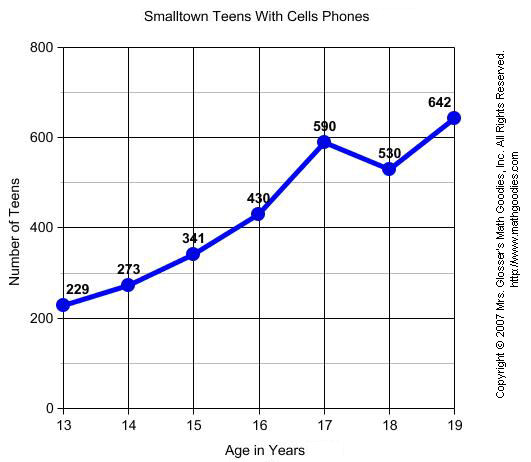

Facts about something that can be used in calculating, reasoning, or planning are called
hypothesis
conclusions
data
graphs
Bonita wondered - Will adding mass to a paper helicopter cause it to stay in the air longer? In her experiment, the helicopter with no additional mass is considered the
dependent variable
control
a boring helicopter
hidden variable
Something we observe to be similar over and over again is called
results
model
pattern
theory
A well-supported explanation of some aspect of the natural world is called a
scientific law
hypothesis
valid idea
scientific theory
Which variable is graphed along the y-axis
independent variable
dependent variable
hidden variable
Any variable can be graphed along the y-axis.


Annabelle wanted to know if Bic pens would last longer if she used cardstock rather than copy paper. She used 5 Bic pens on cardstock and 5 Bic pens on copy paper. She used the same color ink in every pen.

Which of these questions would be part of a true scientific experiment?
What happens when you add Mentos to coke?
Does the type of salt affect the fluffiness of the cake?
What is the best soda brand?
How do you make homemade play-doh?
Which is the best scientific question?
Who prefers multicolored bouncy balls over solid colored bouncy balls?
What makes a ball bounce?
Why do some bouncy balls bounce higher than others?
Does increasing the temperature of a bouncy ball change the height it bounces?
Ms. Frizzle wanted to know what color flower attracted the most butterflies. She already had white flowers planted, but she added red and purple flowers to her garden. Every day she watched the flowers from 10 -11 in the morning and counted how many butterflies landed on each colored flower. Each flower was planted in the band courtyard and was watered at 3:30 every day.
Number of butterflies is the ______________
independent variable
constant
dependent variable
control
If plants are exposed to increased sunlight, then they will grow taller because light is an important component in photosynthesis.
What part of the scientific method is this an example of?
Procedure
Hypothesis
Question
Results
Sarah hypothesized that because heat moves from warmer objects to cooler objects until it reaches equilibrium, hot tea would lose its heat faster in cold weather than in warm weather.
In order to test this hypothesis, which of the following should be the independent variable?
the type of tea used
the rate at which hot tea cools
the air temperature
the final temperature of the tea
To examine in detail means
to predict
to analyze
to conclude
to calculate
A model, object, diagram, or computer program that helps us understand something by making it simpler or easier to see
model
pattern
scientific law
system
Which hypothesis is best?
If I eat eggs for breakfast, I will feel more alert in the morning.
If eggs are eaten for breakfast, then it will cause a person to be more alert.
Eating eggs causes for a better morning.
Eggs are awesome.
Which problem question is stated most correctly?
How does the mass of an ice cube affect its melting rate?
Does ice melt quickly?
Temperature affects the way ice melts.
If the mass of an ice cube is greater, then it will take longer to melt.
Mr. Lord believes that if a student stays up late on a school night, then that student will yawn more the next day. What is his dependent variable?
number of students who stay up late
time that students go to bed
number of times a student yawns
grade on the next day's test
Mr. Lord believes that if a student stays up late on a school night, then that student will yawn more the next day. Which would be the best way to graph his data?
pie chart
line graph
scatterplot
bar graph
A detailed list of all types and exact amounts of items used in an experiment.
Procedure
Hypothesis
Materials
Grocery List

