
 Worksheets
Sem 1 Review Quiz Motion, Gravity, Solar System
Total questions: 103
Worksheet time: 1hrs 17mins
What is the primary source of all energy on Earth?
moon
people
plants
sun
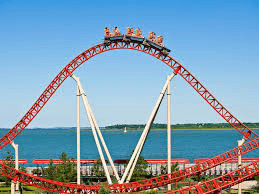
When a roller coaster is at the top of a hill it has
high potential energy
high kinetic energy
low potential energy
equal amounts of kinetic and potential energy

The roller coaster cart has the most kinetic energy at position-
W
X
Y
Z
A scientist performed an experiment during which she measured the energy transferred in each step of her experiment. The total quantity of energy transferred in all of the steps was less than the amount she measured at the beginning. What is the most likely explanation for this result?
Energy was destroyed during certain steps in the experiment.
The steps in the experiment required more energy than was available.
The experiments created energy that was then used up at a faster rate.
Some energy was transformed into unwanted heat or sound that was not detected.
What energy transformation takes place when a hair dryer is used?
Energy from the sun is transformed to chemical energy.
Sound energy is transformed to thermal energy and electrical energy.
Electrical energy is transformed to mechanical, sound and thermal energy
Electrical energy is transformed to thermal energy and sound energy.
A hockey player uses her stick to hit a hockey puck. Which statement describes the overall energy transfer?
Energy is transferred from the stick to the puck.
Energy is transferred from the player to the puck.
Energy is transferred from the puck to the player.
Energy is transferred from the stick to the player.
Which of these best illustrates chemical potential energy?
a dog playing fetch
gasoline in a gas tank
water moving down a hill
a skydiver about to jump out of a plane
Which of these has elastic potential energy?
a vase sitting on a shelf
a stretched rubber band
a child moving down a slide
sugars stored in the molecules of food
Which of these has kinetic energy?
a book sitting on a shelf
hat and gloves on a table
cars parked in a parking lot
a child kicking a soccer ball
A nuclear power plant captures the energy created by the fission of the nuclei of uranium atoms and uses the generated energy to boil water. The boiled water creates steam that spins a series of turbines as it rises. As each turbine spins, it generates power that is sent into the power grid. Choose the correct sequence to fill in the blanks below. The uranium atoms contain __________ energy. The heat from their fission increases the __________ energy of the water. The spinning of the turbines is __________ energy that then generates __________ energy used in people’s homes.
nuclear, thermal, kinetic, electrical
nuclear, kinetic, thermal, electrical
nuclear, electrical, thermal, kinetic
nuclear, electrical, kinetic, thermal
Energy that something has because it is moving.
gravitational potential energy
electrical energy
kinetic energy
mechanical energy
Stored energy that an object has because of how high or how low it is off the ground.
gravitational potential energy
electrical energy
kinetic energy
mechanical energy
Stored energy before it is released.
energy
chemical energy
potential energy
mechanical energy
A form of energy resulting from the flow of certain type of charge.
gravitational potential energy
electrical energy
kinetic energy
mechanical energy


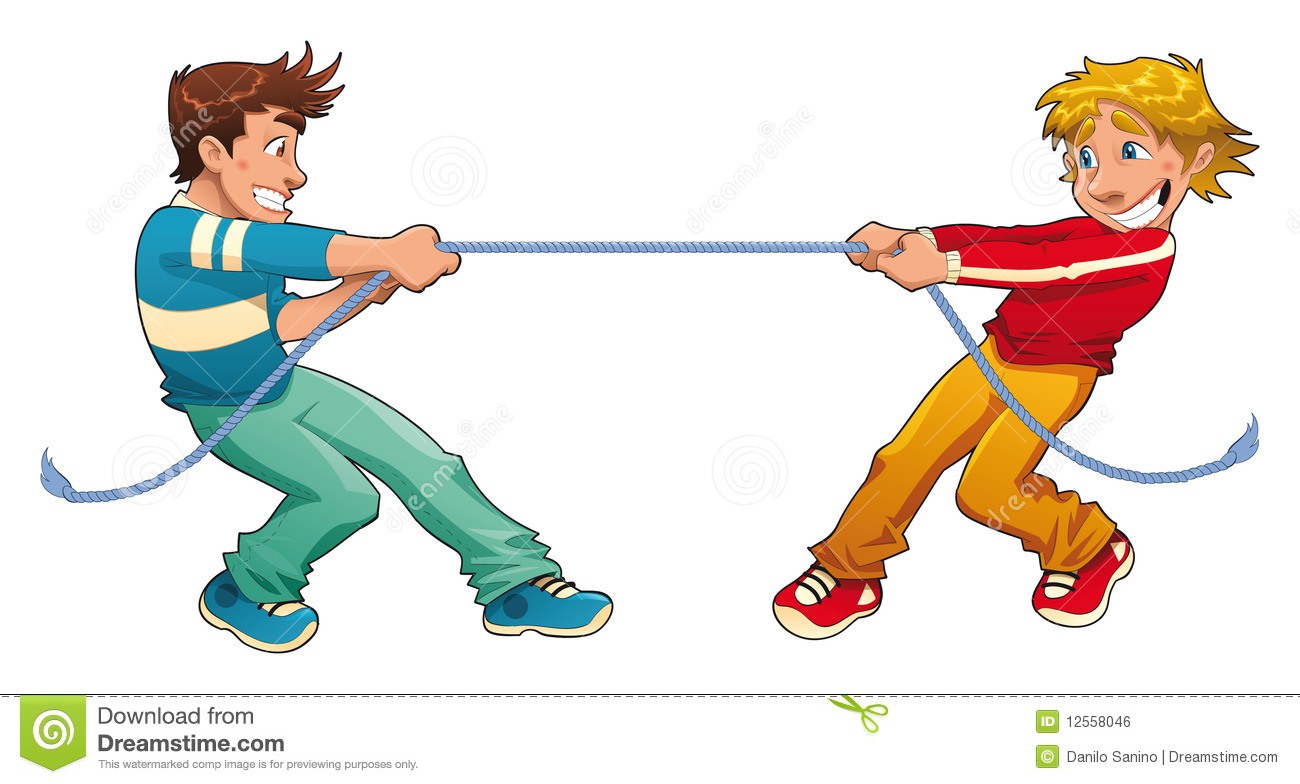
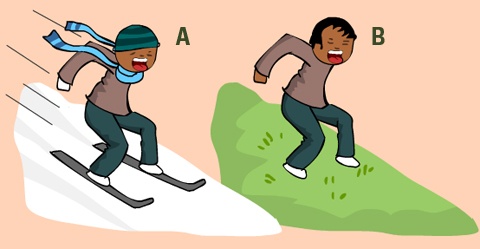
1st
Law of Motion
2nd
Law of Motion
3rd
Law of Motion

Whats Newtons First Law?
The more force applied to an object the faster it will accelerate.
An object in motion will stay in motion and an object at rest will stay at rest unless acted by an outside force.
for every ection there is an equal and oposite reaction

The Law of Inertia
Newtons 1st Law of motion
Newtons 2nd Law of motion
Newtons 3rd Law of motion

Acceleration: is the rate of change in _____.
distance
Speed
Velocity
displacement
Neap tides happen at _________ and _________ phases of the moon.
first quarter and new moon
last quarter and full moon
waxing and waning
1st quarter and 3rd quarter
Why does the moon's gravitational pull have more of an effect on tides than the sun's gravitational pull?
they are the same
the moon is larger than the sun
tides are not caused by the moon
the moon is closer to the Earth than the sun


Which type of tides would this arrangement of the Earth-Moon-Sun create?
neap tide
spring tide
Which of the following is not an effect of tides?
Fishermen use tides to maximize fishing and time fishing trips.
Energy from the moving water can be used in hydroelectric dams.
Tides can be used to predict weather events.
Tides help keep the oceans clean and provide animals with nutrients.
A star is made up of dust and gas. Which two elements make up the majority of a star's mass?
Hydrogen and Carbon
Helium and Carbon
Hydrogen and Helium
Carbon and Nitrogen
What group of stars are the brightest stars?
giants
white dwarfs
supergiants
main sequence

The temperature of the star determines the wavelength of visible light that is produced. The visible portion of the electromagnetic spectrum is shown. Stars with the highest temperature will emit most of their light at wavelengths that are near-
red light
orange light
green light
blue light
Which statement about stars is correct?
Star formation begins in a nebula.
White dwarfs become main-sequence stars when they gain mass.
Supergiants are stars that can absorb black holes.
Main-sequence stars are formed by comets.
A supernova is the explosion of a dying:
medium-mass star
high-mass star
protostar
low-mass star


What is the name of Earth's star?
Antares
Betelguese
Polaris
the Sun
Our solar system is in which galaxy?
The Clouds of Magellan
Andromeda
The Milky Way
Betelguese
What element is the chemical symbol Au?
gold
silver
Augium
Auxiom
How many atoms of Oxygen are in this compound?
CuSO4
1
3
4
6

What is the atomic mass of Beryllium?
4
Be
9.01
alkaline earth metal
Which element is atomic number 16?
nitrogen
oxygen
sulfur
carbon

Does this picture represent element, compound, or mixture?
element
compound
mixture

Does this picture represent element, compound, or mixture?
element
compound
mixture
A compound is ....
two or more types of atoms bonded together
one kind of atom
a mixture of two or more substances
a type of bone in your leg
Elements contain ______ type of atom
one
two or more
large
mixture
If you have two or more different substances, but they are NOT bonded together, you would have a ___.
element
compound
mixture
chemical reaction

What is the correct formula for this molecule?
HHHN
H3N
N3H
NH4
What is the temperature at which a substance changes from a liquid to a gas?
boiling point
condensation point
dew point
melting point
Elements were arranged in order of increasing atomic mass on Mendeleev's first periodic table.
True
False
Copper is a metal and is a conductor of electricity.
True
False


What is an Equinox
Full tilt toward sun
Full tilt away from sun
Shortest day
Equal day and night

What season is represented by this diagram?
Fall
Summer
Winter
Spring

How long does it take for the Earth to revolve around the Sun?
(a)

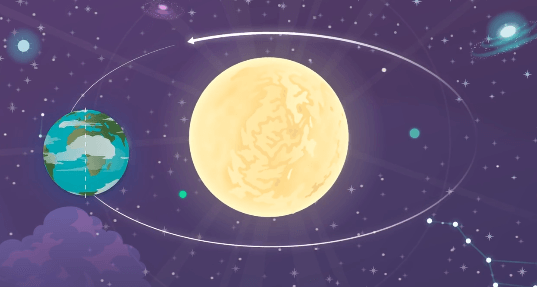

Which season is taking place in the Northern Hemisphere in Position 3?
Winter
Spring
Summer
Fall
The path Earth takes around the sun
Axis
Hemisphere
Orbit
Ellipse
A half of Earth as divided by the equator or a meridian
Hemisphere
Latitude
Longitude
Magnetosphere
When is the longest day of the year?
winter solstice
summer solstice
vernal equinox
autumnal equinox
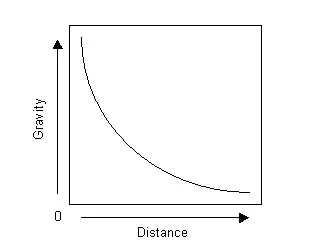
As the distance between two objects decreases, the gravity between them
stays the same
increases
decreases
does not change in a predictable way
Is gravity a push, a pull, or both?
push
pull
both
forces that are equal in size, but opposite in direction
(0 Newtons)
balance forces
unbalanced forces
net force
weight
a push or a pull
Newtons
net force
force
mass
rate of change in velocity over time
acceleration
speed
friction
weight
On the periodic table there are 7 _________ that help us keep elements organized by
_______________ chemical attributes.
groups, similar
periods, similar
groups, different
families, no
An elements ___________ is a vertical column on the periodic table.
These atoms share the same number of valence electrons.
power
color
group
strength
There are _________ element groups.
499
1000
10
18
Metals are found on the left side of the periodic table.
TRUE
FALSE
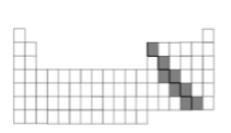
Elements in the shaded area can best be described as -
Shiny and brittle
Insulators
Good conductors

Fill in the blank: Nonmetals have a ___________ surface, and they do not conduct heat or electricity.
electricity
dull
changed
luster
metals
What ocean tends to have more hurricanes in warmer months?
Atlantic
Indian
Arctic
Pacific
If you are concerned about a tsunamis, you should be mindful when considering going
on a cruise leaving from __________________.
Las Vegas, the Mississippi River
Galveston, the Gulf of Mexico
Canada, the Arctic Ocean
California, the Pacific Coast
Which of the following is a physical change?
Iron is oxidized to iron oxide
Aluminum metal is pounded into thin sheets
Copper reacts with a strong acid
Sodium metal explodes on contact with water
Which of the following is a common sign that a chemical change has occurred?
A chemical has changed size.
A chemical has changed to a different state (solid, liquid or gas)
A chemical has become a different shape.
A chemical has turned a different color.



