
 Worksheets
Preterm 1
Total questions: 83
Worksheet time: 1hrs 23mins
The relationship between the atomic radius (r) and edge length (a) of a simple, fcc, bcc cubic unit cell will be respectively
2a 42a 43a
2a 43a 42a
42a 43a 2a
43a 2a 43a
The ability of crystalline solids to change values of physical properties when measured in different directions is called _______.
polymorphism
isomorphism
anisotropy
isotropy
This type of solid forms a regular repeating
three-dimensional structure called a crystal lattice. What type of solid is this?
amorphous
crystalline
glass
diamond
Which type of solid typically has the lowest melting point of the four types of crystals?
Ionic
Molecular
Metallic
Covalent Network
Anionic sites occupied by unpaired electrons are called
F Centres
Interstitial Centres
Cationic Centres
Anionic Centres
What is contribution of a lattice point present at the body centre towards a unit cell
100%
50%
25%
0
What fraction of a sphere present at the face of a unit cell is present in one unit cell
1/8
1/4
1/2
1
3. Alkali halides do not show Frenkel defect because
(a) cations and anions have almost equal size
(b) there is a large difference in size of cations and anions
(c) cations and anions have low coordination number
(d) anions cannot be accommodated in voids
Oxygen is an example of
diamagnetic substance
paramagnetic substance
ferromagnetic substance
none of these
Molarity is the number of moles of a _______________________________ dissolved per liter of solution.
M
solution
molar
solute
Physical properties (observed/measured) influenced by the number/amount of solute particles are called:
qualitative properties
analytical properties
colligative properties
quantitative properties
Which of the following is NOT a colligative property?
freezing point
density
boiling point
vapor pressure
Find the boiling point of a solution containing 15.0 g sucrose (molar mass = 342.3g/mol), in 100g of water. (Kb = 0.512 oC/m)
100.2
99.8
0.2
-0.2
Which of the following interface cannot be obtained?
liquid-liquid
solid-liquid
liquid-gas
gas-gas
In aqueous solution, an amino acid exist as
cation
anion
zwitter ion
neutral molecule
Proteins are found to have two different types of secondary structures viz. α-helix and β-pIeated sheet structure, α-helix structure of protein is stabilised by
Peptide bonds
van der Waals forces
Hydrogen bonds
Dipole-dipole interactions
Each polypeptide in a protein has aminoacids linked with each other in a specific sequence. This sequence of amino acids is said to be __________ .
primary structure of proteins.
secondary structure of proteins
tertiary structure of proteins.
quaternary structure of proteins.
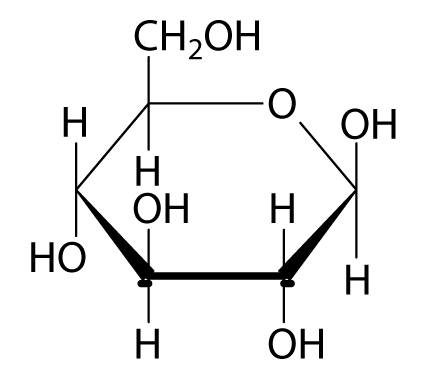
α-D (+) glucose and β-D (+) – glucose are
Enantiomers
Geometrical isomers
Anomers
Epimers
The sugar present in milk is
Sucrose
Maltose
Glucose
lactose
Keratin present in hair is an example of
Fibrous protein
Globular protein
Conjugated protein
Derived protein
Which of the following reactions of glucose can be explained only by its cyclic structure?
Glucose forms pentaacetate
Glucose reacts with hydroxylamine to form an oxime.
Pentaacetate of glucose does not react with hydroxylamine.
Glucose is oxidised by nitric acid to gluconic acid
Glycosidic linkage is an
amide linkage
ester linkage
ether linkage
acetyl linkage
Which reagent is used to convert glucose into saccharic acid?
Br2/H2O
Nitric acid
Alkaline solution of iodine
Ammonium hydroxide
Which of the following is a non-reducing sugar?
Glucose
Sucrose
Maltose
Lactose
Maltose is made up of
two α-D-glucose
normal β-D-glucose
α- and β-D-glucose
fructose
What is the basic formulae for starch?
(C6H12O6)n
(C6H10O5)n
C12O12O11
(C6H12O4)n
Which of the following treatment will convert starch directly into glucose?
Heating with dilute H2SO4
Fermentation by diastase
Fermentation by zymase
Heating with dilute NaOH

What type of reaction is the breakdown of polysaccharides to form monosaccharides?
hydrolysis
condensation
substitution
substitution

Which elements are contained in all protein molecules?
carbon, nitrogen, and oxygen
carbon, sulfur, and oxygen
carbon, nitrogen, and sulfur
carbon, nitrogen, and iron

The characteristic functional groups of a protein are
-OH and -NH2
-COOH and -CH2
-COOH and -NH2
-COOH and -SH

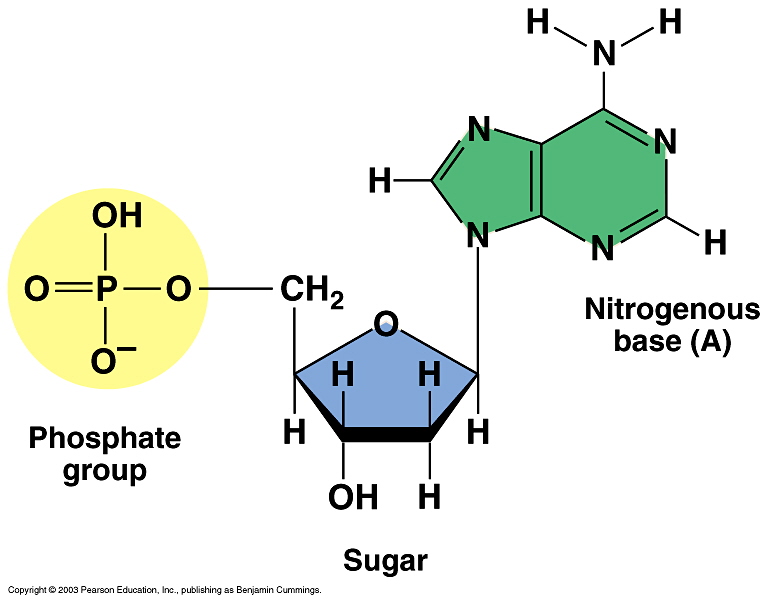
The components of a nucleic acid are
sugars, phosphate groups, and amino acids
sugars, phosphate groups, and nitrogen-containing bases.
sugars, amino acids, and nitrogen-containing bases.
peptides, phosphate groups, and nitrogen-containing bases.

The symbol -TGCAGCAA- could represent a portion of
a DNA molecule.
an RNA molecule
Both (a) and (b)
Neither (a) nor (b)

The shape of a DNA molecule is described as
a spring
a double helix
a cross-linked spiral
a double coil

The process by which DNA makes a copy of itself is called
gene mapping
protein synthesis
fingerprinting
replication
The unit of ebulioscopic constant is _______________.
K kg mol–1 or K (molality)–1
mol kg K–1 or K–1(molality)
kg mol–1 K –1 or K–1(molality)–1
mol kg–1 or K (molality)
Value of Henry’s constant KH ____________.
increases with increase in temperature.
decreases with increase in temperature
REMAIN CONSTANT
first increases then decreases.
Assertion : When NaCl is added to water a depression in freezing point is observed.
Reason : The lowering of vapour pressure of a solution causes depression in the freezing point.
Assertion and reason both are correct statements and reason is correct explanation for assertion.
Assertion is wrong statement but reason is correct statement.
Assertion and reason both are incorrect statements
Assertion is correct statement but reason is wrong statement.
Assertion and reason both are correct statements but reason is not correct explanation for assertion.
Which of the following binary mixtures will have same composition in liquid and vapour phase?
Benzene - Toluene
n-Hexane - n-Heptane
Water- hCl
Water-Ethanol
A brown ring is formed in the ring test for NO3 – ion. It is due to the formation of
[Fe(H2O)5 (NO)]2+
FeSO4 .NO2
[Fe(H2O)4 (NO)2 ] 2+
FeSO4 .HNO3
In the preparation of compounds of Xe, Bartlett had taken O2 + Pt F6 – as a base compound. This is because
both O2 and Xe have same size.
both O2 and Xe have same electron gain enthalpy
both O2 and Xe have almost same ionisation enthalpy
both Xe and O2 are gases
In solid state PCl5 is a _________
covalent solid
octahedral structure
ionic solid with [PCl6 ] + octahedral and [PCl4 ] – tetrahedra
ionic solid with [PCl4 ] + tetrahedral and [PCl6 ] – octahedra
Which of the following options are not in accordance with the property mentioned against them? (i) F2 > Cl2 > Br2 > I2 Oxidising power.
(ii) MI > MBr > MCl > MF Ionic character of metal halide. (iii) F2 > Cl2 > Br2 > I2 Bond dissociation enthalpy.
(iv) HI < HBr < HCl < HF Hydrogen-halogen bond strength.
I,II
II,III
III,I
IV,II
Which of the following statements are correct for SO2 gas?
It acts as bleaching agent in moist conditions.
It’s molecule has linear geometry.
It’s dilute solution is used as ANALGESIC
It can be prepared by the reaction of dilute H2SO4 with metal sulphide
Which of the following statements are correct?
(MORE THAN 1 OPTION CAN BE ANSWER)
All the three N—O bond lengths in HNO3 are equal
All P—Cl bond lengths in PCl5 molecule in gaseous state are equal.
P4 molecule in white phosphorus have angular strain therefore white phosphorus is very reactive.
PCl is ionic in solid state in which cation is tetrahedral and anion is octahedral.
Match the compounds given in Column I with the hybridisation and shape given in Column II and mark the correct option. Column I Column II
(A) Xe F6 (1) sp3d 3 – distorted octahedral
(B) Xe O3 (2) sp3d 2 - square planar
(C) Xe OF4 (3) sp3 - pyramidal
(D) Xe F4 (4) sp3 d2 - square pyramidal
(i) A (1) B (3) C (4) D (2)
(ii) A (1) B (2) C (4) D (3)
(iii) A (4) B (3) C (1) D (2)
(iv) A (4) B (1) C (2) D (3)
Assertion : Both rhombic and monoclinic sulphur exist as S8 but oxygen exists as O2 .
Reason : Oxygen forms pπ – pπ multiple bond due to small size and small bond length but pπ – pπ bonding is not possible in sulphur.
(i) Both assertion and reason are correct statements, and reason is the correct explanation of the assertion. .
(ii) Both assertion and reason are correct statements, but reason is not the correct explanation of the assertion
(iii) Assertion is correct, but reason is wrong statement.
(iv) Assertion is wrong but reason is correct statement. (
v) Both assertion and reason are wrong statements.
Assertion : SF6 cannot be hydrolysed but SF4 can be. Reason : Six F atoms in SF6 prevent the attack of H2O on sulphur atom of SF6
(i) Both assertion and reason are correct statements, and reason is the correct explanation of the assertion.
(ii) Both assertion and reason are correct statements, but reason is not the correct explanation of the assertion.
(iii) Assertion is correct, but reason is wrong statement.
(iv) Assertion is wrong but reason is correct statement.
(v) Both assertion and reason are wrong statements.
Assertion : KCN reacts with methyl chloride to give methyl isocyanide Reason : CN – is an ambident nucleophile
(i) Assertion and reason both are correct and reason is correct explanation of assertion. (
(ii) Assertion and reason both are wrong statements.
(iii) Assertion is correct but reason is wrong statement
(iii) Assertion is correct but reason is wrong statement
v) Assertion and reason both are correct statements but reason is not correct explanation of assertion.
Assertion : Phosphorus chlorides (tri and penta) are preferred over thionyl chloride for the preparation of alkyl chlorides from alcohols. Reason : Phosphorus chlorides give pure alkyl halides.
(i) Assertion and reason both are correct and reason is correct explanation of assertion. .
(ii) Assertion and reason both are wrong statements.
(iii) Assertion is correct but reason is wrong statement.
(iv) Assertion is wrong but reason is correct statement
(v) Assertion and reason both are correct statements but reason is not correct explanation of assertion.

Arrange the compounds in the decreasing order of acidic character
A
B
C
D

The correct acidic strength of the following
A
B
C
D
Phenol reacts with bromine in CS2 to give
o-bromophenol
m-bromophenol
o-and p-bromophenol
2,4,6-tribromophenol
When phenol is treated with excess of bromine water, it gives which of the following product?
m-bromophenol
o-and p-bromophenol
2,4-dibromophenol
2,4,6-tribromophenol
Phenols are more acidic than alcohols because
Phenoxide ion is stablised by resonance
Phenols are more soluble in polar solvents
Phenoxide ion does not exhibit resonance
Alcohols do not lose H atoms at all

Arrange the given compounds in order of decreasing
melting points.
I>II>III
I=II=III
III>II>I
III>I>II
II>I>III
CH3CH2OH can be converted into CH3CHO by
catalytic hydrogenation
treatment with LiAlH4
treatment with pyridinium chlorochromate
treatment with KMnO4
Hydroboration-oxidation reaction gives
primary alcohol
secondary alcohol
tert- alcohol
all the three
Acetone with methylmagnesium bromide followed by hydrolysis yeild
propan-2-ol
2-methylpropan-2-ol
propan-1-ol
no reaction
An ether's common name is: methyl propyl ether. What is its IUPAC name?
propanemethoxy
methoxypropane
propoxymethane
methanepropoxy
The Williamson synthesis of ethers involves the reaction of a primary, secondary or tertiary alcohol with a...
Primary haloalkane
Primary or secondary haloalkane
Primary, secondary or tertiary haloalkane

The IUPAC name for this ether is...
Butyl methyl ether
Butoxymethane
Methoxybutane
Methyl butyl ether
Which one gives turbidity immediately with Lucas reagent?
2- propanol
1-propanol
2-methyl 2-propanol
2-methyl 1-propanol
Alkyl halide formation from primary alcohols follow ____mechanism
SN2
SN1
E1
E2
Which group will have the highest boiling points and melting points for similarly sized molecules?
alkanes
alkenes
alcohols
ethers

What is the name of this product?
1– propanol
1– propene
ethylene glycol
3– propanol
1,2,3 – propanetriol

Which of the following name reactions produces salicyldehyde?
Kolbe's reaction
Rosenmund reduction
Williamson's synthesis
Reimer Tiemann reaction
Conversion of Salicylic acid to Aspirin is an example of ________
Rearrangement reaction
Esterification reaction
Dehydration reaction
Alkylation reaction

a
b
c
d

a
b
c
d

A
B
C
D

A
B
C
D

A
B
C
D

A
B
C
D

