wayground logo

Free Printable Worksheets

Font size

S
M
L
XL
Worksheets

QCE chemistry unit 1 topic 2 yr 11

Total questions: 101

Worksheet time: 3hrs 45mins

Name
Class
Date
1.
What are the steps of operation in the mass spectrometer?
a)
Accelerate, Deflect,Ionize, Detect
b)
Deflect,Ionize, Accelerate, Detect
c)
Ionize, Accelerate, Deflect, Detect
d)
Detect, Accelerate, Deflect, Ionize
2.
Which species would get deflected by the greatest degree in the mass spectrometer?
a)
12C+
b)
13C+
c)
13C2+
d)
14C+
3.
What do the peaks on the mass spectrum represent?
a)
anions
b)
different isotopes
c)
atoms with differing numbers of electrons
d)
numbers of electrons
4.
What do the heights of the peaks represent in the mass spectrum?
a)
number of isotopes
b)
relative abundance of each isotope
c)
average atomic mass
d)
charge:mass ratio
5.
How many isotopes are shown in this mass spectrum?
a)
1
b)
84
c)
86
d)
4
6.
A sample of pure chlorine gas is analyzed in the MS. Which of the following is a correct interpretation?
a)
Chlorine has an isotope with a mass of 70 amu
b)
Chlorine has three known isotopes
c)
Chlorine is diatomic
d)
Chlorine is highly reactive
7.
Use your periodic table.  There are two isotopes of rubidium: 85Rb and 87 Rb. Which is more abundant?
a)
equally abundant
b)
rubidium-85
c)
rubidium-85.47
d)
rubidium-87
8.
Carbon has three known isotopes. Which is the most abundant?
a)
carbon-12.011
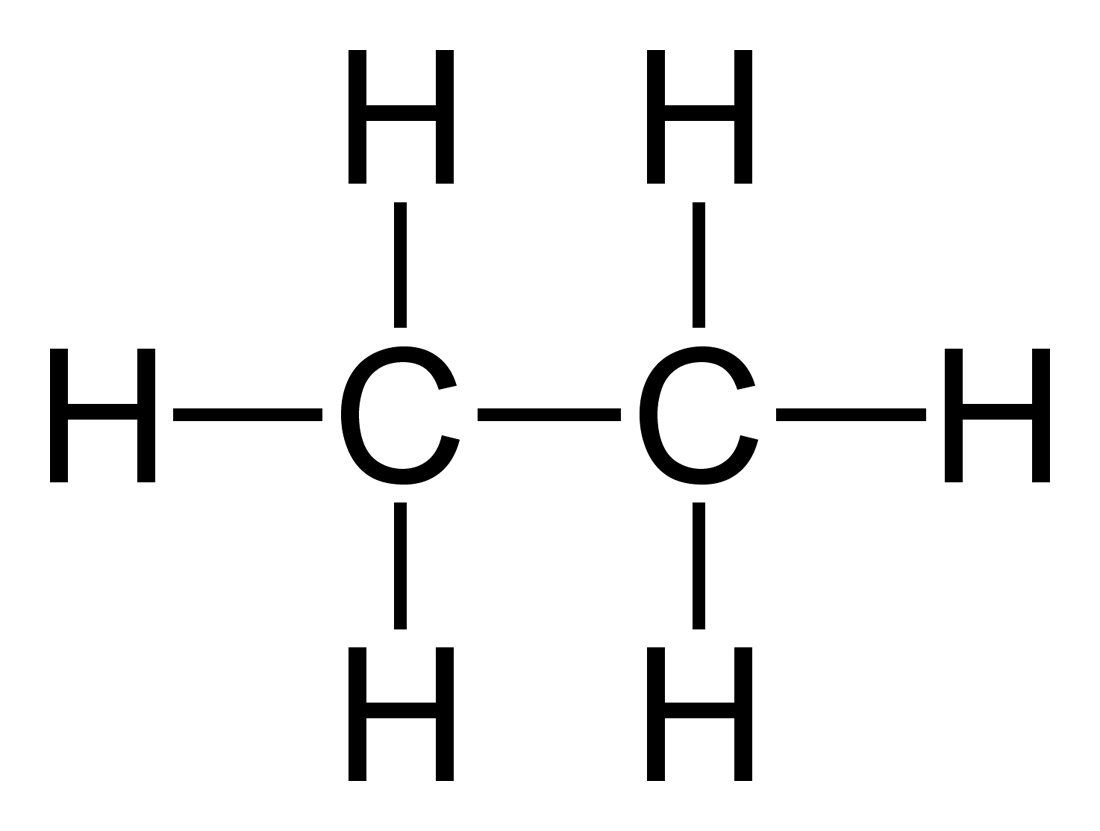
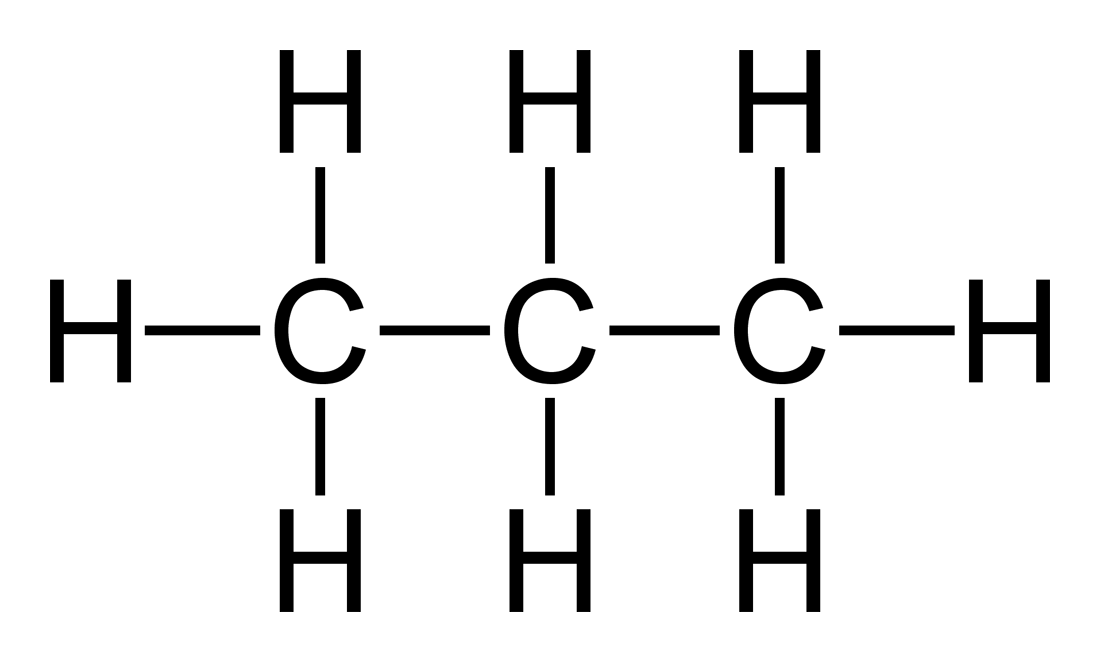
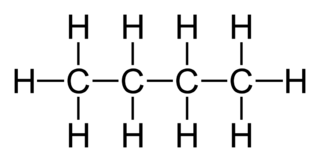
b)
carbon-12
c)
carbon-13
d)
carbon-14
9.
What is the average atomic mass for this element?
a)
10 amu
b)
10.8 amu
c)
19.9 amu
d)
11 amu
10.

How many grams of K2Cr2O7, are soluble in 100 g of water at 95 ºC?

a)

83 grams

b)

75 grams

c)

40 grams

d)

12 grams

11.

Which substance is MOST soluble at 0 ºC?

a)

KI

b)

NaNO3

c)

NaCl

d)

Ce2(SO4)3

12.
Which solute is the most soluble at 10 ⁰C?
a)
KI
b)
KClO3
c)
NH4Cl
d)
NH3
13.
When 20 grams of KNO3 is dissolved in 100 grams of water at 80 ºC, the solution can be correctly described as:
a)
supersaturated
b)
saturated
c)
unsaturated
14.
An ionic compound of calcium and chlorine would be named
a)
calcium chlorine.
b)
calcium chlorite.
c)
calcium chloride.
d)
chlorine calcium.
15.
The covalent compound N2O5 would be named
a)
nitrogen oxide.
b)
dinitrogen oxide.
c)
nitrogen pentoxide.
d)
dinitrogen pentoxide.
16.

What is produced by a hydrogen-oxygen fuel cell?

a)

Water and Carbon Dioxide

b)

Carbon Dioxide

c)

Water

17.

Which of these is a disadvantage of cars driven by hydrogen-oxygen fuel cells rather than by petrol engines?

a)

They have fewer moving parts

b)

There are fewer suitable filling stations

c)

They emit little pollution

18.

What is the main reason why hydrogen is more difficult to store than diesel?

a)

Hydrogen is a gas at room temperature but diesel is a liquid

b)

Hydrogen can be liquefied by cooling it

c)

Hydrogen can be stored under pressure

19.
Fuel cells produce
a)
Fossil Fuels
b)
Hydrogen gas
c)
Electricity
d)
Gasoline
20.

N2 + 3H2 → 2NH3

What is the mole ratio between N2 and NH3 in the above reaction?

a)

1 moles NH3 / 2 moles N2

b)

2 moles NH3 / 1 moles N2

c)

2 moles N2 / 3 moles NH3

d)

1 moles N2 / 3 moles NH3

21.
4NH+ 5O2-->4NO + 6H2O
What is the total number of moles of H2O produced when 12 mole of NH3 is completely consumed?
a)
15
b)
18
c)
20
d)
24
22.
6CO2 + 6H2O --> C6H12O6 + 6O2 
What is the total number of moles of water needed to make 2.5 moles of C6H12O6?
a)
2.5
b)
6
c)
12
d)
15
23.
Using the following equation:
Fe2O3(s) + 3H2(g) → 2Fe(s) + 3H2O(l)
How many moles of iron can be made from  6 moles H2
a)
4 moles Fe
b)
6 moles Fe
c)
9 moles Fe
d)
2 moles Fe
24.
Mole ratios are obtained from the
a)
balanced chemical equation
b)
periodic table
c)
molar mass
25.
When does a chemical reaction stop?
a)
When the lab is finished
b)
When the excess reactant is used up
c)
When the limiting reactant is used up
d)
Chemical reactions never stop
26.
What is the other name for the mole?
a)
El Ocho
b)
Guacamole
c)
Avogadro's number
d)
De Wey
27.
What is a Excess Reagent?
a)
amount you end with
b)
what you run out of first
c)
what you have left over
d)
what you start with
28.
When does a chemical reaction stop?
a)
When the lab is finished
b)
When the excess reactant is used up
c)
When the limiting reactant is used up
d)
Chemical reactions never stop
29.

2 C2H6 + 7 O2 → 4 CO2 + 6 H2O

Ethane (C2H6) combusts in the above reaction. What is the mole ratio of ethane to oxygen gas?

a)
b)
c)
d)
30.

What is Avogadro's number?

a)

6.02 x 10²³

b)

1 mole

c)

600 million

d)

6.02

31.

One mole of carbon dioxide (CO2) contains 6.02 x 10²³ _____.

a)

atoms

b)

formula units

c)

ions

d)

molecules

32.
Which conversion factor should be used for the following question " How many molecules are there in 4.00 moles of glucose, C6H12O6
a)
1 mole = 78.12 g
b)
1 mole = 22.4 L 
c)
1 mol = 6.02x 10²³ particles 
d)
more than one
33.
Which conversion factor should be used to solve the following, "How many moles in 28 grams of CO2?"
a)
1 mol = 22.4 L 
b)
1 mol = 44.01 g
c)
1 mol = 6.02x10²³ atoms
d)
more than one
34.
What is the molar mass of Hydrogen Peroxide (H2O2)?
a)
48 g/mole
b)
34.02 g/mole
c)
36.5 g/mole
d)
35.5 g/mole
35.
The number 6.02 x 10²³, which is the number of particles found in a mole. 
a)
molar mass
b)
mole
c)
Avogadro's number
d)
hydrate
36.
How many moles are in 16.94g of water?
a)
16.94 mol H2O
b)
0.9401 mol H2O
c)
305.3 mol H2O
d)
1.063 mol H2O
37.
How many molecules are in 9.44 moles of AlCl3?
a)
5.68 molec AlCl3
b)
5.68x1024 molec AlCl3
c)
0.705 molec AlCl3
d)
1.25x10²³ molec AlCl3
38.
How many molecules of sugar (C6H12O6) are in a mole?
a)
24 molecules
b)
180 molecules
c)
180 g
d)
6.02 x 10²³ molecules
39.
For the reaction represented by the equation Cl2 + 2KBr → Br2 + 2KCl, how many grams of potassium chloride can be produced from 356 grams potassium bromide?
a)
749 g
b)
225 g
c)
479 g
d)
814 g
40.

How many grams are in 7.8 moles of NaCl?

a)

476 grams

b)

460 grams

c)

452 grams

d)

462 grams

41.

What is the general formula for the computation of percentage composition of the given element?

a)

% mass of element = mass of element in the compound divided by mass of the compound times 100

b)

% mass of element = mass of element in the compound divided by mass of the compound

c)

% mass of element = mass of element in the compound divided by 100

d)

% mass of element = mass of element in the compound

42.

What is the percent by mass of magnesium in MgO?

a)

20%

b)

40%

c)

50%

d)

60%

43.

What is the percent by mass of fluorine in CaF2 (gram-formula mass = 78 g/mol)?

a)

24%

b)

49%

c)

49%

d)

65%

44.

Which of the following is NOT needed to calculate percent composition?

a)

Mass of specific element

b)

Molar Mass

c)

Avogadro's Number

d)

Division

45.

Find the percent composition of Cu2S?

a)

%Cu= 67.987 %S= 32.013

b)

%Cu= 79.854 %S= 20.145

c)

%Cu= 35.946 %S= 64.054

46.

What is the percent by mass of chlorine in NaCl?

a)

39%

b)

61%

c)

35%

d)

35%

47.
What is the percentage of oxygen in carbon dioxide? (CO2)
a)
27.3%
b)
72.7%
c)
30%
d)
70%
48.

The Law of Conservation of Matter

a)

tells how many atoms of an element are contained in one molecule or formula unit.

b)

the starting materials in a chemical reaction

c)

the new substances that are formed in a chemical reaction

d)

A law stating that atoms are not created or destroyed during a chemical reaction.

49.

Is the equation balanced?: 2H2O + O2 --> 4MgO + 3Fe

a)

yes

b)

no

50.

Balance this equation

_Al +_HCl --> _H2 +_AlCl3

a)

2,6,3,2

b)

it's already balanced

c)

4,12,3,4

d)

2,1,4,5

51.

What is the left part of a chemical equation called?

2H2 + O2 ---> 2H2O

a)

Reactants

b)

Yields

c)

Products

d)

Chemical equation

52.

What is the right part of a chemical equation called?

2H2 + O2 ---> 2H2O

a)

Reactants

b)

Yields

c)

Products

d)

Chemical Equation

53.
ΔH value in an endothermic reaction is a positive number.
a)
True
b)
False
54.
A catalyst works by
a)
changing the order of the reaction
b)
increasing the temperature
c)
lowering the activation energy
d)
making the activated complex
55.
Define 'Enthalpy'
a)
a) Energy stored in the movement of molecules in a substance
b)
b) The opposite of temperature
c)
c) The temperature of a molecule
d)
d) Energy stored in the chemical bonds in a substance
56.
Which statement is true regarding endothermic reactions?
a)
a) Temperature change is positive and enthalpy change is positive
b)
b) Temperature change is positive and enthalpy change is negative
c)
c) Temperature change is negative and enthalpy change is positive
d)
d) Temperature change is negative and enthalpy change is negative
57.

What is the Heat of Reaction  ΔH\Delta H  for this reaction?

a)

-200 KJ

b)

200 KJ

c)

400 KJ

d)

-300 KJ

58.

How much activation energy is needed for this reaction?

a)

300 KJ

b)

500 KJ

c)

400 KJ

d)

100 KJ

59.

Are the products or reactants of this reaction storing more energy in their chemical bonds?

a)

Both storing the same

b)

No way to tell

c)

Products

d)

Reactants

60.

What type of reaction is this?

a)

Exothermic

b)

Endothermic

c)

Energy Producing

d)

No way to tell

61.
At higher temperatures
a)
particles in an object have less energy
b)
particles in an object move faster
c)
a gas contracts
62.

Boiling

a)

liquid to gas

b)

gas to solid

c)

gas to liquid

63.
The temperature of a substance increases as___.
a)
the substance expands
b)
the average kinetic energy of its particles increases
c)
the substance's volume increases
d)
the substance's mass increases
64.
Which of the following is the correct equation for PHOTOSYNTHESIS?
a)
CO+ light + H2O --> O+ Sugar
b)
CO+ sugar + H2O --> O+ light
c)
O2 + light + H2O --> CO+ Sugar
d)
CO+ O2 + H2O --> Light+ Sugar
65.
What are the products of photosynthesis?
a)
water and carbon dioxide
b)
oxygen and glucose
c)
oxygen and carbon dioxide
d)
oxygen and water
66.

What is the chemical equation for cellular respiration?

a)

Glucose + Oxygen -> Carbon dioxide + Water + Energy

b)

Oxygen + Carbon dioxide + Energy -> Glucose + Water

c)

Carbon dioxide + Glucose -> Oxygen + Water + Energy

d)

Water + Carbon dioxide + Energy -> Oxygen + Glucose

67.

What is NOT product of complete combustion?

a)

carbon dioxide

b)

water

c)

carbon monoxide

d)

water

68.

Propane is burned with a blue flame

a)

propane + oxygen --> carbon dioxide + water

b)

propane + carbon dioxide --> oxygen + water

c)

propane + oxygen --> carbon monoxide + water

69.

This burning of methane resulted in the formation of soot

a)

methane + carbon monoxide --> oxygen + carbon + water

b)

methane + oxygen --> carbon dioxide + carbon + water

c)

methane + oxygen --> carbon monoxide + carbon + water

70.
Another term for burning is
a)
Fire triangle
b)
Magnesium oxide
c)
Combustion
d)
Bustion
71.

Hydrocarbon fuel + oxygen ----> ___+____

(Select 2)

a)

CO2

b)

O2

c)

H2O

d)

CxHy

72.

Which of the following reactions is/are an incomplete combustion reaction?

a)

C5H10 + 5 O2 → 5 CO + 5 H2O

b)

C2H4 + 3O2 → 2CO2 + 2H2O

c)

2CH4 + 3O2 → 2CO + 4H2O

d)

Both A and C

73.
How does coal form?
a)
Pressure builds in wetlands
b)
Pressure builds in trees
c)
Pressure builds in peat bogs
d)
Forms at the North Pole
74.
How does petroleum form
a)
build up of layers of trees and leaves
b)
build up of once-living aquatic organisms underneath pressure and heat. 
c)
Build up of different rocks
d)
It's formed from gasses in the air
75.
How does natural gas form? 
a)
lower pressures and temperatures
b)
the hydrosphere layer
c)
deepest sediment where there are higher pressures and temperatures 
d)
In the atmosphere 
76.
What is a greenhouse gas?
a)
a gas created from a plant
b)
gas that causes the atmosphere to get warmer
c)
a green colored gas
d)
a gas that kills you right away
77.

Is the name of single bonded, saturated hydrocarbons.

a)

Alkanes

b)

Alkenes

c)

Alkynes

d)

Tanins

78.

Is the name of doubled bonded, unsaturated hydrocarbons.

a)

Alkanes

b)

Alkenes

c)

Allkynes

d)

Tanins

79.

Is the name of triple bonded, unsaturated hydrocarbons.

a)

Alkanes

b)

Alkenes

c)

Alkynes

d)

Tanins

80.

is the alkene with 3 carbons in its chain.

a)

Ethene

b)

Propene

c)

Methene

d)

Decene

81.

Is the simplest alkane

a)

Ethane

b)

Methane

c)

Propane

d)

Decane

82.

What is the correct name for the alkyne shown?

a)

butyne

b)

1-butyne

c)

2-butyne

d)

1-methyl-1-propyne

83.
How many carbon atoms are in ethane?
a)
1
b)
2
c)
3
d)
4
84.
How many carbon atoms are in ethane?
a)
1
b)
2
c)
3
d)
4
85.
Hydrocarbons are compounds that contain
a)
  Carbon and Nitrogen
b)
Carbon and Hydrogen 
c)
  Carbon, and Oxygen
d)
Carbon, Oxygen, and  Hydrogen 
86.
Which of the following elements must be present in any organic compound?
a)
Carbon
b)
Oxygen
c)
Potassium
d)
Hydrogen
87.
Which of the following compounds is an example of hydrocarbon?
a)
CO2
b)
C2H6
c)
C2H5OH
d)
CH3COOH
88.
Name this alkane
a)
Methane
b)
Ethane
c)
Propane
d)
Butane
89.
Name this alkane
a)
Methane
b)
Ethane
c)
Propane
d)
Butane
90.
Name this alkane
a)
Methane
b)
Ethane
c)
Propane
d)
Butane
91.
Name this alkane
a)
Methane
b)
Ethane
c)
Propane
d)
Butane
92.
Name the organic family for this structure:
a)
alkanes
b)
alkenes
c)
alkynes
d)
aromatics
93.
Name the organic family for this structure:
a)
alkanes
b)
alkenes
c)
alkynes
d)
aromatics
94.
What is the suffix for single bonded hydrocarbons?
a)
-yne
b)
-ene
c)
-ane
d)
-one
95.
Give the name of this compound...
C3H8
a)
Propene
b)
Butyne
c)
Butene
d)
Propane
96.

How many chemical bonds can each carbon atom form?

a)

one

b)

two

c)

three

d)

four

97.

What could you use for fuel in your car?

a)

Corn

b)

Acetic Acid

c)

Ethanol

d)

Sunlight

98.

What percentage of renewable resources are currently being used to fuel our world?

a)

8%

b)

50%

c)

22%

d)

13%

99.

A biofuel can be:

a)

a liquid

b)

a solid

c)

a gas

d)

A liquid, a solid or a gas

100.

What were an example of biofuels?

a)

Ethanol

b)

petrol

c)

Diesel

d)

natural gas

101.

What is a drawback to using biomass energy?

a)

Burning generates air pollution

b)

Some biofuels release greenhouse gases like carbon dioxide

c)

It uses a lot of land to grow biomass crops

d)

Habitats can be destroyed when building farms to grow biomass crops

e)

All of the above