
 Worksheets
Review for PMA 1 Environmental Science
Total questions: 47
Worksheet time: 2hrs 21mins
SC.912.N.1.2 Describe and explain what characterizes science and its methods.
SC.912.N.2.2 Identify which questions can be answered through science and which questions are outside the boundaries of scientific investigation, such as questions addressed by other ways of knowing, such as art, philosophy, and religion.
What is the difference between Ecology and Environmental Science?
Ecology is the study of how organisms interact with their environments.; and environmental science is the study of how the natural world works, and how humans and the environment affect each other.
Ecology studies nature; environmental science studies an organism only
Ecology is the study of an organism and environmental science does not study any organisms
None of these answers are correct
Sustainability is defined as…
1) Consuming at a rate to satisfy the current generation.
2) Rapidly increasing resource consumption over time.
3) Maintaining a rate of resource consumption that will allow the population to survive indefinitely.
4) Not consuming any resources at all.
What is made up of all the living and nonliving things which an organism interacts with?
1) Atmosphere
2) Water Supply
3) Environment
4) Soil
A natural resource that is naturally formed much more slowly than we use it is called
1) renewable
2) ecological
3) non-renewable
4) sustainable
SC.912.N.1.1
Define a problem based on a specific body of knowledge, for example: biology, chemistry, physics, and earth/space science.
Which of these contains steps in the right order?
Ask a question, state your hypothesis, research, experiment, analyze, make a conclusion
State your hypothesis, ask a question, research, experiment, analyze, make a conclusion
Ask a question, research, state your hypothesis, experiment, analyze, make a conclusion
State your hypothesis, ask a question, research, make a conclusion, experiment, analyze

SC.912.L.18.12
Discuss the special properties of water that contribute to Earth's suitability as an environment for life: cohesive behavior, ability to moderate temperature, expansion upon freezing, and versatility as a solvent.
Water striders can walk across the surface of calm water. Their feet push the surface of the water down slightly, but they do not break the surface. Why?
The insects are light enough so they do not break the hydrogen bonds holding the water molecules together
The insects actually use their wings to hover slightly above the water’s surface and they only skim it with their feet.
The insect’s feet are non-polar, so they are repelled by the polar water molecules and are pushed away from the water’s surface.
The insects are small enough to see the individual water molecules, so they are able to step carefully from one molecule to the next

SC.912.E.7.1
Analyze the movement of matter and energy through the different biogeochemical cycles, including water and carbon.
SC.912.L.17.10
Diagram and explain the biogeochemical cycles of an ecosystem, including water, carbon, and nitrogen cycle.
Nitrogen that is not combined with other elements and found in the atmosphere as gas is _____.
free nitrogen
nitrogen compounds
ammonia
nitrates

Denitrifying bacteria
Turn nitrogen gas into nitrates so that plants can synthesize amino acids.
Turn nitrates into nitrites so that nitrogen fixing bacteria can synthesize DNA.
Returns nitrogen into the atmosphere in the form of N2 gas.
Use phosphorus as fertilizer.

Snow, sleet, ice, hail, and rain are examples of _____
evaporation
condensation
precipitation
ground water

SC.912.L.17.19
Describe how different natural resources are produced and how their rates of use and renewal limit availability.
SC.912.L.17.11
Evaluate the costs and benefits of renewable and nonrenewable resources, such as water, energy, fossil fuels, wildlife, and forests.
Rainwater flows over land without sinking into the soil.
runoff
spring
groundwater
aqueduct
All are ways human lives are impacted because of changing water resources. Which of the following is an example of a POSITIVE impact?
Dried up rivers/seas can mean that people lose fishing jobs
Dust storms from the newly dried area can impact breathing and air quality
Dried up rivers/seas can mean loss of farmland and income
Water is able to reach farms and towns further away from a river, opening up more places for people to live
SC.912.L.15.13
Describe the conditions required for natural selection, including: overproduction of offspring, inherited variation, and the struggle to survive, which result in differential reproductive success
____ is when members of a species that are best suited for their environment survive and reproduce at a higher rate than other members of the species
natural selection
artificial selection
speciation
adaptation


Changes in inherited characteristics can cause a species to change into a new one. This change over time is called?
Graduation
Revolution
Selective breeding
Evolution

A grizzly bear survives because he is well-adapted to his environment. When he reproduces he passes on those traits to his offspring. this process is called
Natural selection
Random mutations
Selective breeding
Variations in a species
Which of the following is a factor in natural selection?
Individuals of species compete with one another to survive.
All species are genetically diverse.
Individuals better able to adapt to changes leave more offspring.
All of the above.
The Asian shore crab invaded parts of the eastern coast of the United States about 15 years ago. The Asian shore crab preys on blue mussels. In the time since the Asian shore crab arrived, the average shell thickness of the blue mussel population has increased.
Which of the following is the most likely reason that this increase in shell thickness has occurred?
Blue mussels with thick shells attract more crabs that mussels without thick shells.
Blue mussels with thick shells grow in larger colonies than mussels without thick shells.
Blue mussels with thick shells catch more food per day than mussels without thick shells.
Blue mussels with thick shells survive and reproduce more successfully than mussels without thick shells.

SC.912.L.17.6
Compare and contrast the relationships among organisms, including predation, parasitism, competition, commensalism, and mutualism.
Cattle egrets forage (feed) in fields among cattle. The egret gets easy access to flying insects stirred up by the cattle, and the cattle don't care if they are there or not.
mutualism
commensalism
competition
parasitism
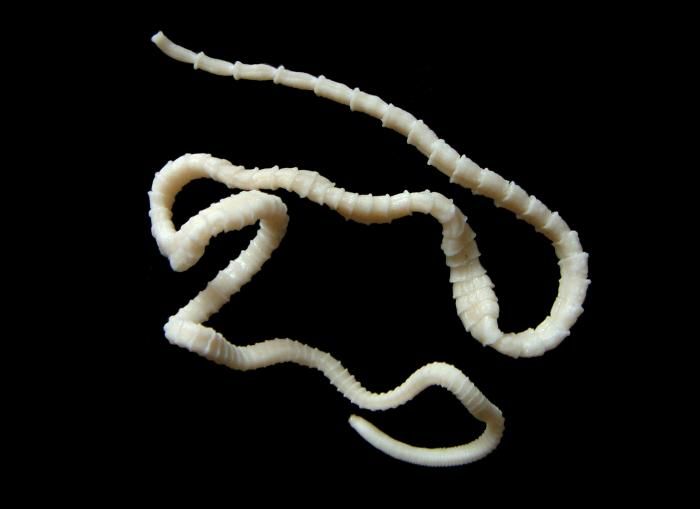

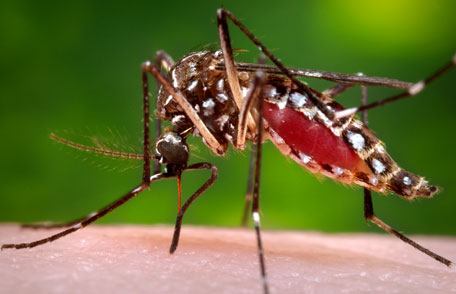
E. Coli is a bacteria that lives in the gut of humans. The human provides the ideal habitat for e coli reproduction and the e coli provides the extra vitamin K that we use.
symbiosis
parasitism
mutualism
commensalism
Remoras attach themselves to a shark’s body. They travel with the shark and feed on the leftover food scraps after the shark has finished its meal, not taking any food from the shark or slowing it down when swimming.
symbiosis
parasitism
mutualism
commensalism

SC.912.L.17.9
Use a food web to identify and distinguish producers, consumers, and decomposers. Explain the pathway of energy transfer through trophic levels and the reduction of available energy at successive trophic levels.
The relationship between ALL the organisms in a community showing who eats whom is called a ___________________________.
Food Web
Food Chain
Abiotic Factors
Biotic Factors

Which of the following statements is true about natural systems?
Consumers form the bottom levels of both the energy pyramid and the biomass pyramid.
Producers are at the bottom level of both the energy pyramid and the biomass pyramid.
Consumers are at the second level of the energy pyramid, but at the top of the biomass pyramid.
Producers are at third level of the energy pyramid, but at the top of the biomass pyramid.


