wayground logo

Free Printable Worksheets

Font size

S
M
L
XL
Worksheets

heat

Total questions: 100

Worksheet time: 3hrs 49mins

Name
Class
Date
1.
There are four cups of hot cocoa. The cup sizes are shown. The temperature of the cocoa in each cup is 25 degrees celsius. Which cup has the MOST thermal energy?
a)
Large cup (Trenta)
b)
Small cup (Tall)
c)
Venti
d)
All three are the same temperature so they have same thermal energy
2.
What would be the effect on the particles if more heat is supplied to the system?
a)
They would slow down
b)
They would stop moving
c)
They would speed up
d)
There would be no effect
3.
What is the symbol for Thermal Energy?
a)
Q
b)
T
c)
m
d)
Cp
4.
What unit do you use to measure Thermal Energy?
a)
J/Kg ºC
b)
Kg
c)
ºC
d)
J
5.
The symbol for specific heat is .......
a)
Cp
b)
Q
c)
m
d)
T
6.

Which of the following is NOT a heat source?

a)
b)
c)
d)
7.

What is Earth's main heat source?

a)
b)
c)
d)
8.

Which shows the use of heat?

a)
b)
c)
d)
9.

Which shows the use of heat?

a)
b)
c)
d)
10.

Yes or No. We use heat to dry our clothes.

a)
b)
11.

Yes or No. We use heat when we sweep the floor.

a)
b)
12.

Yes or No. We use heat when we cook food.

a)
b)
13.

Yes or No. We use heat when read a book.

a)
b)
14.

Yes or No. A book is a source of heat.

a)
b)
15.

Yes or No. A hair dryer is a source of heat.

a)
b)
16.
Heat is a form of _______________.  
a)
movement
b)
energy
c)
melting
17.
Heat makes things _______________________
a)
colder
b)
warmer
c)
faster
18.
What will happen to ice if you leave it out in the room?
a)
it will melt
b)
it will stay the same
c)
it will freeze
19.
Something will melt faster in the _______________.
a)
shade
b)
freezer
c)
sun
20.
Does this give off heat? 
a)
yes 
b)
no
21.
Does this give off heat?
a)
yes
b)
no
22.
Does this give off heat?
a)
yes
b)
no
23.
Does this give off heat? 
a)
yes 
b)
no
24.
Does this give off heat? 
a)
yes 
b)
no
25.
Does this give off heat? 
a)
yes
b)
no 
26.

Without the sun's heat, what would happen to earth?

a)

aliens would invade

b)

the earth would explode

c)

it would be too cold to survive

27.

Which is NOT a way that heat can be produced?

a)

electricity

b)

rubbing your hands together

c)

fire

d)

rain

28.

What is the earth's main source of heat?

a)

the moon

b)

the sun

c)

the ocean

d)

forests

29.

What is a conductor?

a)

a material that heat moves through easily

b)

a material that heat does not move through easily

c)

a material that turns cold when heated

d)

a tool for measuring temperature

30.

What is an insulator?

a)

a material that heat moves through easily

b)

a material that heat does not move through easily

c)

a material that turns cold when heated

d)

a tool for measuring temperature

31.

Which of these is a better conductor?

a)
b)
32.

Which of these is a better insulator?

a)
b)
33.

Which of these is a measure of how hot or cold something is?

a)

temperature

b)

radiation

c)

insulation

d)

friction

34.

What temperature is shown on the thermometer?

a)

24°F

b)

24°C

c)

20°F

d)

30°C

35.

The tool used to measure temperature is called a/an

a)

insulator

b)

conductor

c)

thermometer

d)

radiation

36.
Can heat be created or destroyed?
a)
Yes
b)
No
c)
Only when things are cooling off
d)
Only when things are warming up
37.
When things are hot molecules are moving...
a)
Fast
b)
Slow
c)
They are not moving
d)
They are moving by not fast or slow
38.
When things are cold molecules are moving...
a)
Fast
b)
Slow
c)
They are not moving
d)
They are moving by not fast or slow
39.
Everything has heat
a)
True
b)
False
40.
Heat and Temperature are the same thing
a)
True
b)
False
41.
Heat that is transferred because of touching is called...
a)
Radiation
b)
Conduction
c)
Convection
d)
Reflection
42.
Energy that does NOT need a medium to transfer heat is called...
a)
Radiation
b)
Conduction
c)
Convection
d)
Reflection
43.
Energy that does need a medium (usually air or water) to transfer heat is called...
a)
Radiation
b)
Conduction
c)
Convection
d)
Reflection
44.
Heat passes from...
a)
High to low
b)
Cold to hot
c)
Hot to cold
d)
Heat cannot be passed
45.
What is an insulator?
a)
Something that does NOT absorb heat very well.
b)
Something that absorbs heat.
46.
What is a conductor?
a)
Something that does NOT absorb heat very well.
b)
Something that absorbs heat.
47.
Why do objects cool down?
a)
All heat will slowly be destroyed.
b)
The cold attacks the heat.
c)
Heat is always transferring so the heat will always move to a cooler place.
d)
The heat disappears.
48.
what is the meaning of convection?
a)
cold rises heat falls
b)
heat
c)
cold
d)
hot rises cold falls
49.
what is the meaning of conduction
a)
when heat transfers from objects that are not touching
b)
heat rise 
c)
cold fall
d)
when heat transfers from objects that are touching
50.
what kind of heat is happening when the sun heats your body
a)
conduction
b)
convection
c)
density
d)
radiation
51.
heat rises
a)
true
b)
false
52.
heat energy traveling through space is an example of _____
a)
convection
b)
density
c)
radiation
d)
conduction
53.
A group of friends gather around a fire to stay warm.
a)
conduction
b)
convection
c)
radiation
54.
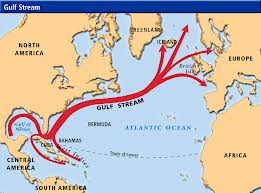
The Gulf Stream is a current that brings warm ocean water from the south to the north.
a)
conduction
b)
convection
c)
radiation
55.
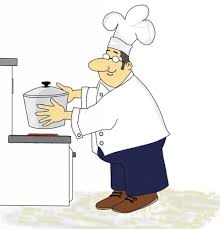
The man goes to take the hot pot off the stove with his bare hands.
a)
conduction
b)
convection
c)
radiation
56.
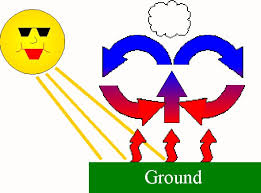
Warm air rises and the cool air sinks.
a)
conduction
b)
convection
c)
radiation
57.
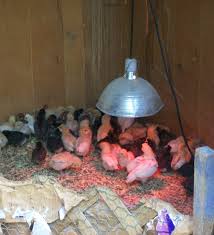
The baby chickens are kept warm from the heat lamps.
a)
conduction
b)
convection
c)
radiation
58.
In some cultures, walking on fire is the ultimate sign of strength.
a)
conduction
b)
convection
c)
radiation
59.
In this experiment, the WARM red dye and the COLD blue dye was placed in the water at the same time. The warm red dye rose to the top while the cold blue dye sank to the bottom.
a)
conduction
b)
convection
c)
radiation
60.
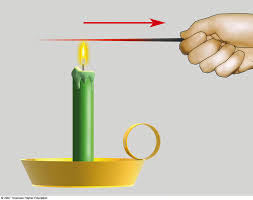
The candle will slowly heat the metal and transfer the heat directly to the mans hand.
a)
conduction
b)
convection
c)
radiation
61.
The warm air from this heater creates a current when the warm air rises and the cold air sinks.
a)
conduction
b)
convection
c)
radiation
62.
Heat transfers from an area of ____temperature to an area of ___ temperature.
a)
high to low
b)
low to high
c)
high to high
63.
The chocolate bunny and the iron.
a)
conduction
b)
convection
c)
radiation
64.

What letter is used to represent specific heat capacity?

a)

H

b)

P

c)

C

d)

T

65.
What unit do you use to measure Thermal Energy?
a)
J/Kg ºC
b)
Kg
c)
ºC
d)
J
66.
What unit do you use to measure Thermal Energy?
a)
J/Kg ºC
b)
Kg
c)
ºC
d)
J
67.
The symbol for specific heat is .......
a)
c
b)
Q
c)
m
d)
t
68.
A high specific heat means...
a)
It heats up quickly with energy added
b)
It requires more energy to change temperature
69.
___________ is measured by the unit Joules.
a)
Heat energy
b)
Temperature
c)
Specific heat
70.

The specific heat of platinum is 0.133 J/g°C. How much heat(Q) is released when a 10 g piece of platinum cools from 100°C to 50°C?

a)

66.5 J

b)

665 J

c)

0.0266 J

d)

0.665 J

71.
Copper, Stainless Steel, Carbon Steel, and Zinc were all heated using the same thermal energy.  What material would be the coolest after being heated?
a)
Copper
b)
Carbon Steel
c)
Zinc
d)
Stainless Steel
72.
If an object has greater mass, it has greater
a)
Temperature
b)
Thermal Energy
c)
Heat 
d)
All of the above 
73.
It is cooler outside than inside of my house.  Is an example for which concept?
a)
Thermal Energy
b)
Heat 
c)
Temperature
74.
My hands feel warm because 
a)
The temperature is cold outside
b)
The molecules are moving
c)
The heat is transferring 
75.
Sum of the kinetic and potential energy of the particles 
a)
Thermal Energy
b)
Temperature
c)
Heat
76.
Average of kinetic energy
a)
Thermal Energy
b)
Temperature
c)
Heat
77.
Movement of thermal energy
a)
Thermal Energy
b)
Temperature
c)
Heat
78.
Heat 
a)
Moves from hot to cold
b)
Moves from cold to hot
c)
Always rises up
d)
It depends on the molecules
79.
When heat transfers from warmer to cooler, the molecules
a)
move closer and slow down
b)
move closer and speed up
c)
spread out and slow down
d)
spread out and speed up
80.
The molecules of a liquid vs. a solid....
a)
Move slower in a liquid.
b)
Move slower in a solid.
81.
If you place some Gatorade in a cooler with ice...
a)
It's particles will speed up.
b)
It's particles will slow down.
82.
A measure of the average kinetic energy of the individual particles in an object is called:
a)
thermal energy
b)
conduction
c)
convection
d)
temperature
83.
To turn a liquid into a gas, you _____ energy.
a)
Add
b)
Remove
84.

Observe the diagram. Which statement is true about the kinetic energy of the molecules in the containers?

a)

The molecules are moving faster in Diagram A

b)

The molecules are moving slower in Diagram A

c)

The molecules are moving at the same rate in both diagrams

85.
Which of the following containers of sand has atoms/molecules with the greatest average kinetic energy?  
a)
1 kg at 20oC
b)
2 kg at 20oC
c)
4 kg at 20oC
d)
none has a greater amount because all have the same average kinetic energy
86.
There are four cups of hot cocoa. The cup sizes are shown. The temperature of the cocoa in each cup is 25 degrees celsius. Which cup has the MOST thermal energy?
a)
Large cup (Trenta)
b)
Small cup (Tall)
c)
Venti
d)
All three are the same temperature so they have same thermal energy
87.

Which description defines heat?

a)

total thermal energy of an object or substance

b)

change in the temperature of a substance in degrees Celsius

c)

energy transferred between objects at different temperatures

d)

average kinetic energy of the particles that make up a substance

88.
Water has a specific heat of 4184 J/KgºC.  Wood has a specific heat of 1760 J/KgºC.  What material needs more energy to raise the temperature 1ºC
a)
Wood
b)
Water
c)
Both are the same
89.
A high specific heat means...
a)
It heats up quickly with energy added
b)
It requires more energy to change temperature
90.
Heat is the movement of ______.
a)
radiation
b)
thermal energy
c)
cold
d)
fire
91.
Thermal energy ALWAYS moves from _____ to _____.
a)
solid to liquid
b)
ice to water
c)
hot to cold
d)
solid to gas
92.
Heat moves by ______ when it travels through waves.
a)
radiation
b)
conduction
c)
insulator
d)
convection
93.
Heat moves by ______ when it travels from one solid to another solid.
a)
radiation
b)
convection
c)
thermal energy
d)
conduction
94.
The way heat moves in liquids and gases is called _______.
a)
convection
b)
radiation
c)
conduction
d)
temperature
95.
All matter is made of _____ that are constanly moving.
a)
insulators
b)
particles
c)
convection
d)
pieces of plastic
96.
If an object has particles that are moving very quickly, the object 's temperature is probably _____.
a)
cold
b)
slow
c)
big
d)
hot
97.
If an object has particles that are moving very slowly, the object's temperature is probably ______.
a)
hot
b)
small
c)
cold
d)
big
98.
The flow of thermal energy from warmer objects to cooler objects is called ______.
a)
heat
b)
movement
c)
friction
d)
energy
99.
To measure the temperature difference between two cups of water, you would use a _____.
a)
measuring cup
b)
ruler
c)
thermometer
d)
balance scale
100.
Which material would NOT make a good baking pan (for high temperatures in the oven)?
a)
aluminum
b)
plastic
c)
steel
d)
glass