wayground logo

Free Printable Worksheets

Font size

S
M
L
XL
Worksheets

Science 7 LT 1 Revision S2

Total questions: 100

Worksheet time: 1hrs 15mins

Name
Class
Date
1.
Where does photosynthesis take place in the plant cell?
a)
Nucleus
b)
Cytoplasm
c)

Chloroplast

d)
Mitochondria
2.
Pigment in green plants that captures the energy in sunlight is called _______.
a)
Pigment
b)
Chlorophyll
c)
Stomata
d)
Green Thing
3.
Where does CO2 enter the leaves through?
a)
Roots
b)
Stem
c)
Chloroplasts
d)
Stomata
4.
Plants take in Oxygen to give us Carbon Dioxide to breathe.
a)
True
b)
False
5.
What is photosynthesis?
a)
The process in which humans eat their food
b)
When a photographer takes a photo.
c)
To get your pictures from the photo lab.
d)
The process in which plants make their food.
6.
The main source of energy for all life comes from ____.
a)
the Earth
b)
the moon
c)
the sun
d)
the food we eat/make
7.
What gas is released by plants during photosynthesis?
a)
sulfur
b)
carbon dioxide
c)
oxygen
d)
hydrogen
8.
What are the products of photosynthesis?
a)
water and carbon dioxide
b)
oxygen and glucose
c)
oxygen and carbon dioxide
d)
oxygen and water
9.
What are the reactants of photosynthesis?
a)
carbon dioxide and oxygen
b)
water and oxygen
c)
carbon dioxide and water
d)
water and glucose
10.

This is the chemical formula for a molecule of...

a)

Oxygen

b)

Carbon dioxide

c)

Glucose

d)

Water

11.
Most plants appear green because chlorophyll
a)
absorbs green light.
b)
absorbs violet light.
c)
does not absorb green light.
d)
does not absorb violet light.
12.
Which gas is removed from the atmosphere during photosynthesis?
a)
hydrogen
b)
oxygen
c)
nitrogen
d)
carbon dioxide
13.
What are the bubbles rising in the test tube?
a)
nitrogen gas
b)
carbon dioxide gas
c)
glucose
d)
oxygen gas
14.

1. Define the term 'balanced diet'.

a)

A diet containing some nutrients in the correct proportions.

b)

A diet containing most nutrients in the correct proportions.

c)

A diet containing none nutrients in the correct proportions.

d)

A diet containing all nutrients in the correct proportion

15.

Which nutrient provides the most amount of energy per gram?

a)

Carbohydrate

b)

Fats

c)

Protein

d)

Vitamin

16.

________________ is necessary to building maintenance and repair of body tissue.

a)

sugar

b)

protein

c)

salt

d)

oil

17.

Foods that are high in Saturated Fat will

a)

lead to a risk of heart disease

b)

keep you healthy

c)

build strong bones and muscles

d)

help the immune system

18.

Which component of a healthy, balance diet is responsible for aiding digestion?

a)

Fibre

b)

Fats

c)

Minerals

d)

Protein

19.

Eating too much sugary food causes,

a)

Tooth decay

b)

High on energy

c)

Health probems like diabetes, heart problems.

d)

All of the above

20.

Elements essential for good health. e.g. Calcium, Iron, Potassium

a)

Protein

b)

Fat

c)

Minerals

d)

Carbohydrates

21.

Carbohydrates help elite Marathon runners by...

a)

Giving the body nutrients to repair itself

b)

Giving the body nutrients for energy to the muscles

c)

Giving the body nutrients for health

d)

Carbohydrates are bad for the body

22.

Which foods contains carbohydrates?

a)

Fish

b)

Pasta

c)

Egg

d)

Carrot

23.

The formula for Speed is...

a)

Speed = distance/ time

b)

Speed = time/ distance

24.

If you are solving for the distance, you would calculate the...

a)

time divided by speed

b)

speed divided by time

c)

speed multiplied by time

d)

distance multiplied by speed

25.
According to the graph how far does the person travel in the first 5 seconds?
a)
2 m
b)
10 m
c)
0 m
d)
5 m
26.
What does this graph represent?
a)
Constant Speed
b)
Acceleration
c)
Decceleration
d)
Not moving
27.
How long did it take this object to travel 10 m?
a)
0 s
b)
10 s
c)
15 s
d)
20 s
28.
How long did it take this object to travel back to its reference/starting point?
a)
20 s
b)
30 s
c)
60 s
d)
100 s
29.

Paul swims at a speed of 5 km/h for 1.5 hours. Find the distance traveled in km.

a)

7.5km

b)

125km

c)

120km

d)

80km

30.

Paul drives at a speed of 80 km/h for a distance of 200 km. Find the time taken.

a)

2.5 hours

b)

3.5 hours

c)

2 hours

d)

3 hours

31.

According to the graph what was the average speed?

a)

0 m/s

b)

1.2 m/s

c)

0.8 m/s

d)

12 m/s

32.
What is happening at D?
a)
Stationary
b)
Accelerating
c)
Fast steady speed; moving away from the starting position
d)
Slower steady speed; moving away from the starting position
33.
What is the speed of this object at 3 seconds?
a)
5 m/s
b)
45 m/s
c)
5 s/m
d)
45 s/m
34.
How far did they run?
a)
A)100 seconds  
b)
B)100 meters
c)
C)18 meters 
d)
D)18 seconds
35.
What is speed?
a)
how far you go
b)
how much distance is covered over a period of time
c)
how fast you accelerate
d)
the change in the location of a object
36.
A runner races in the 100 meter dash.  It takes her 10 seconds to finish.  What is her average speed?
a)
10 m/s
b)
1000 m/s
c)
100 seconds
d)
10 seconds
37.
Total distance divided by total time is
a)
average speed
b)
constant speed
c)
instantaneous speed
d)
acceleration
38.
Alan travels 100 km in 5hrs. Find his average speed in km/h
a)
5km/hr
b)
10km/hr
c)
50km/hr
d)
20km/hr
39.
A boat travels at 22 km/hr for 10 hrs, what distance will it travel?
a)
220 miles
b)
2.2 km
c)
220 km
d)
22 km
40.
Which of the following is a unit of speed?
a)
km/hr
b)
hr
c)
km
d)
s
41.
All of the following are examples of speed except:
a)
Rambo dropkicking cheese at 98 miles/hr
b)
A piece of chocolate melting in your mouth
c)
Jube skydiving at 72 Km/Min
d)
Allison driving at 34 Meters/Second
42.
What is the person doing from 5 seconds to 10 seconds?
a)
Walking at a constant speed
b)
Running fast
c)
Not moving
d)
Walking slow
43.

30 seconds is equal to

a)

1 minute

b)

0.5 minute

c)

3 minutes

d)

2 minutes

44.

30 minutes is equal to

a)

1 hour

b)

0.5 hour

c)

3 hours

d)

2 hours

45.
Calculate the speed:
A Car traveled 240 Km in 5 Hours
a)
48 Km/Hr
b)
1200 Km/Hr
c)
4.8 Km/Hr
d)
0.02 Km/Hr
46.
Calculate the speed:
A Motorcycle traveled 368 Km in 8 Hours
a)
2944 Km/hr
b)
4.5 Km/hr
c)
46 Km/hr
d)
0.02 Km/hr
47.
Calculate the speed:
A truck traveled 208 Km in 4 Hours
a)
52 Km/hr
b)
25 Km/hr
c)
0.019 Km/hr
d)
832 Km/hr
48.
Calculate the speed:
A bus traveled 98 Km in 2 Hours
a)
94 Km/hr
b)
49 Km/hr
c)
196 Km/hr
d)
0.02 Km/hr
49.

The simplest natural substance is called a(n)

a)

Element

b)

Compound

c)

Mixture

d)

Solution

50.

Two or more elements chemically combined together are called a

a)

Element

b)

Compound

c)

Mixture

d)

Solution

51.

The smallest amount you can have of one element is a(n)

a)

Molecule

b)

Compound

c)

Atom

d)

Sprinkle

52.

Scientists use a _____________ as an abbreviation for an element name.

a)

Atom

b)

Molecule

c)

Compound

d)

Chemical Symbol

53.

The first letter of a chemical symbol is always a

a)

Capital

b)

Lowercase

c)

Number

d)

Symbol

54.

The first letter of a chemical symbol is always a

a)

Capital

b)

Lowercase

c)

Number

d)

Symbol

55.

H2O is an example of

a)

Compound

b)

Element

56.

Ne is an example of

a)

Compound

b)

Element

57.
What is the chemical symbol for the element hydrogen
a)
H
b)
He
c)
h
d)
he
58.
What is the chemical symbol for the element Silicon
a)
S
b)
Si
c)
si
d)
Sl
59.
What is the chemical symbol for the element Aluminum
a)
A
b)
AL
c)
Al
d)
al
60.
What is the chemical symbol for the element Nitrogen
a)
Ni
b)
N
c)
No
d)
Nb
61.
How many elements are in H2O?
a)
1
b)
2
c)
3
d)
4
62.
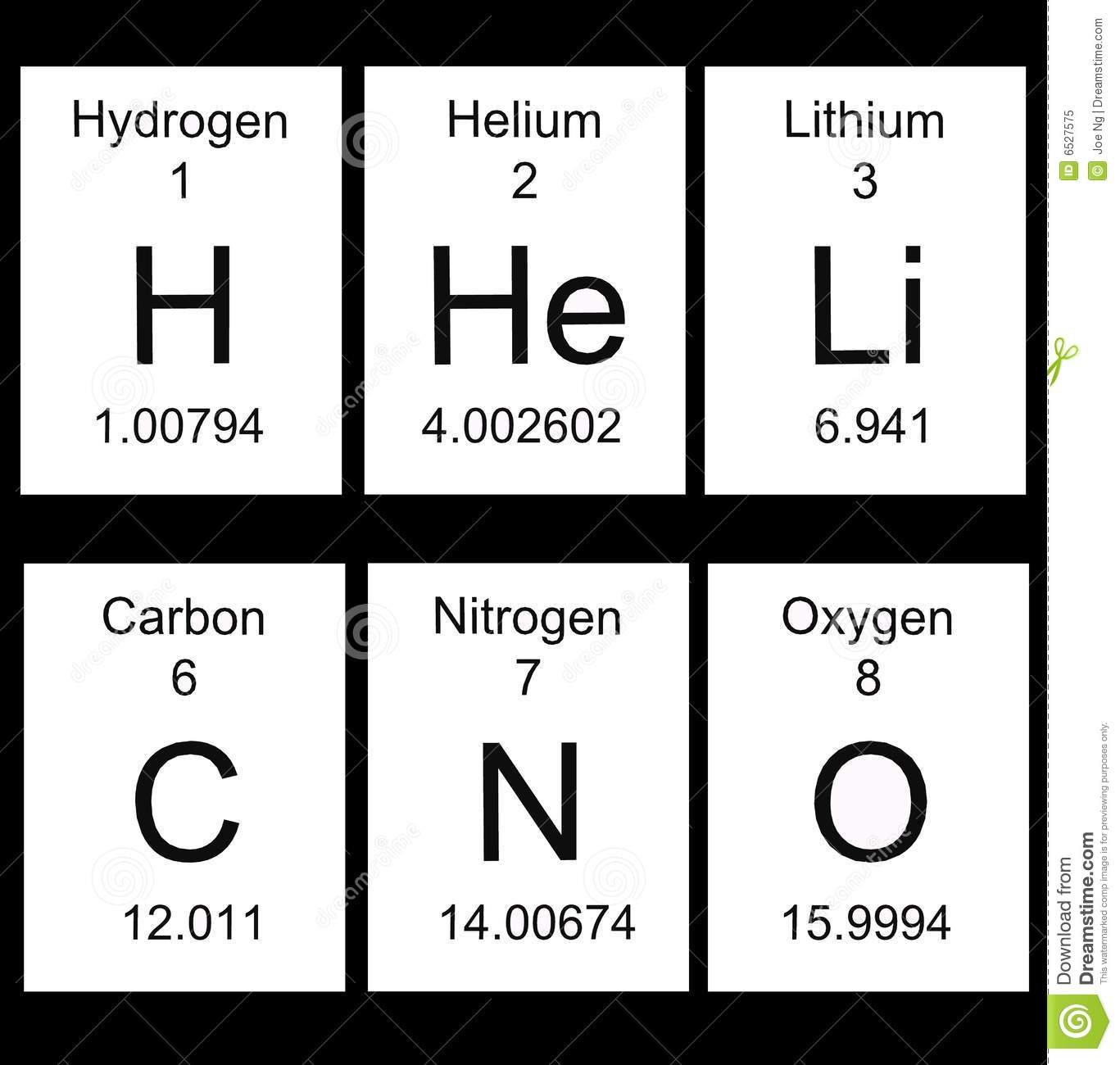
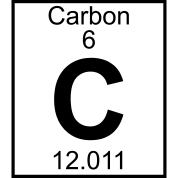
The number at the top of each square on the periodic table is the ...
a)
atomic number
b)
atomic mass
c)
Chemical Symbol
d)
Element Name
63.
________ are the COLUMNS on the periodic table and are organized by similar properties.
a)
Classifications
b)
Groups
c)
Periods
d)
Elements
64.
which one can be found on the periodic table
a)
Compound 
b)
Element
65.
What does the C represent?
a)
atomic mass
b)
atomic number
c)
element name
d)
chemical symbol 
66.
What two types of measurements make up DENSITY
a)
Mass and Volume
b)
Temperature and Mass
c)
Grams and Centimeters
d)
Volume and Weight
67.
Look at this image.  Which object has the LOWEST density in water? How
a)
The Ping Pong Ball because it floats to the top 
b)
The bolt because it has sunk to the bottom
c)
The soda cap because it is not just full of air like the Ping Pong ball
68.

Jack has a rock. The rock has a mass of 14g and a volume of 2cm3. What is the density of the rock?

a)

7 mL

b)

7 g/cm3

c)

28 g/cm3

d)

1/7 g/cm3

69.

If an object has a density of 0.6 g/cm3 and you put it into water, will it sink or float? Water's density is 1 g/cm3.

a)

sink

b)

float

70.

If an object has a density of 3.6 g/cm3 and you put it into water, will it sink or float? Water's density is 1 g/cm3.

a)

sink

b)

float

71.
Calculate the density of the cube.
a)
2 g/cm3
b)
4 g/cm3
c)
6 g/cm3
d)
8 g/cm3
72.
You can measure ______ with grams.
a)
mass
b)
volume
c)
conductivity
d)
melting point
73.

What is the density of water?

a)

0 g/cm3

b)

1 g/cm3

c)

10 g/cm3

d)

100 g/cm3

74.
What is the volume of the fish?
a)
18.0 cm3
b)
6.0 cm
c)
38.0 cm3
d)
32.0 mL
75.

Jack has a rock. The rock has a mass of 14g and a volume of 2cm3. What is the density of the rock?

a)

7 mL

b)

7 g/cm3

c)

28 g/cm3

d)

1/7 g/cm3

76.
Which box has a higher density?  
a)
Box A
b)
Box B
c)
cannot be determined
d)
they are the same
77.

Use the density chart to identify the substance. If the substance has a volume of 5 cm3 and a mass of 52.5.

a)

lead

b)

aluminum

c)

silver

d)

water

78.

when an object is compressed so that its mass is packed into a smaller space, its density

a)

increases

b)

decreases

c)

remains constant

79.
What units are used to measure Density?
a)
cm3/g
b)
g
c)
g/cm3
d)
cm3
80.

A. gasoline 0.7 g/ cm3

B. lead 11.3 g/ cm3

C. mercury 13.6 g/ cm3

D. Paraffin(wax) 0.87 g/ cm3

E. platinum 21.4 g/ cm3

Which will not sink in water?

a)

A & B

b)

C & E

c)

B & C

d)

A & D

81.

Why does ice float

a)

Liquid water is less dense than solid water.

b)

Solid water is less dense than liquid water.

c)

Gaseous water is less dense than solid water.

d)

Liquid water is less dense than gaseous water.
82.
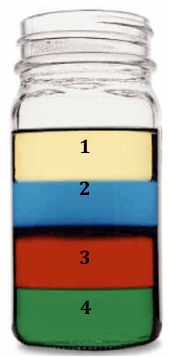
Put the liquids in order from most dense to least dense?
a)
4, 3, 2, 1
b)
1, 2, 3, 4
c)
3, 4, 2, 1, 
d)
4, 3, 1, 2
83.
Why do some substances float on water?
a)
they are warmer than water
b)
they are cooler than water
c)
they are more dense than water
d)
they are less dense than water
84.
Helium balloons rise on earth because
a)
helium is less dense than air
b)
helium is more dense than air
c)
helium is cooler than air
d)
helium is warmer than air
85.
What is this tool to get mass?
a)
triple beam balance
b)
ruler
c)
thermometer
d)
graduate cylinder
86.

What is this tool to get volume?

a)

triple beam balance

b)

ruler

c)

thermometer

d)

graduated cylinder

87.
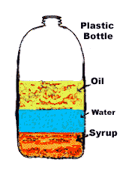
Which liquid is the least dense?
a)
oil
b)
water
c)
syrup 
d)
plastic bottle
88.
What is the volume of Object X?
a)
10.0 cm3
b)
15.0 cm3
c)
20.0 cm3
d)
25.0 cm3
89.

Mass is the amount of __________ in an object

a)

matter

b)

weight

c)

space

d)

volume

90.

These two blocks have the same volume. Which is more dense?

a)

Red Block

b)

Blue Block

91.

Which of the three blocks has the greatest density?

a)

A

b)

B

c)

C

92.

What is the mass shown on the triple beam balance?

a)

480.5 g

b)

485.0 g

c)

80.5 g

d)

405.0 g

93.

How do the particles move in diffusion?

a)

From a region of low concentration to a region of high concentration

b)

From a region of high concentration to a region of low concentration

c)

From a region of low concentration to a region of low concentration

d)

From a region of high concentration to a region of high concentration

94.

What happens to the coffee particles when coffee is added to hot water?

a)

They sink to the bottom of the cup

b)

They spread out

c)

They clump together

95.

When does diffusion stop?

a)

After a day and a night

b)

When the particles are evenly spread out

c)

When there are no particles left

d)

When all the particles leave the system

96.
The picture  is an example of _________________.
a)
isotonic
b)
diffusion
c)
osmosis
d)
active transport
97.
An increase in temperature does what to diffusion?
a)
Speeds it up
b)
Slows it down
c)
Has no effect
d)
I wish i knew. Really I do.
98.
The faster an object moves, the ________ kinetic energy it has. 
a)
more
b)
less
c)
none of the above
d)
all of the above 
99.

What happens to the concentration of carbon dioxide in you cells when you exercise

a)

Increase

b)

Decrease

c)

Remain constant

100.

What does a 'region with high concentration' mean?

a)

An area with a SMALL number of particles

b)

An area with a LARGE number of particles

c)

An area with an UNEVEN number of particles

d)

An area with no particles